You cut a bunch of Thai, holy, or lemon basil and within hours the leaves start to wilt on the counter. This herb is more delicate than Italian, and treating it the same way will turn the leaves black by tomorrow. The good news is that four storage methods each solve a different problem, and once you know which one matches how you cook, you can keep a harvest good for a week, a month, or half a year.
Why this herb wilts so fast
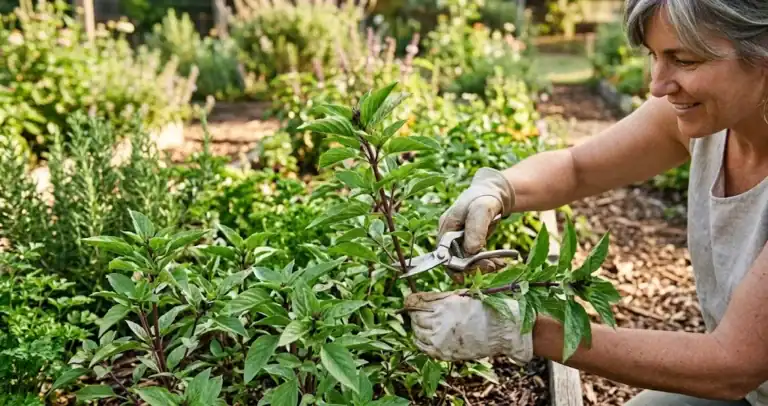
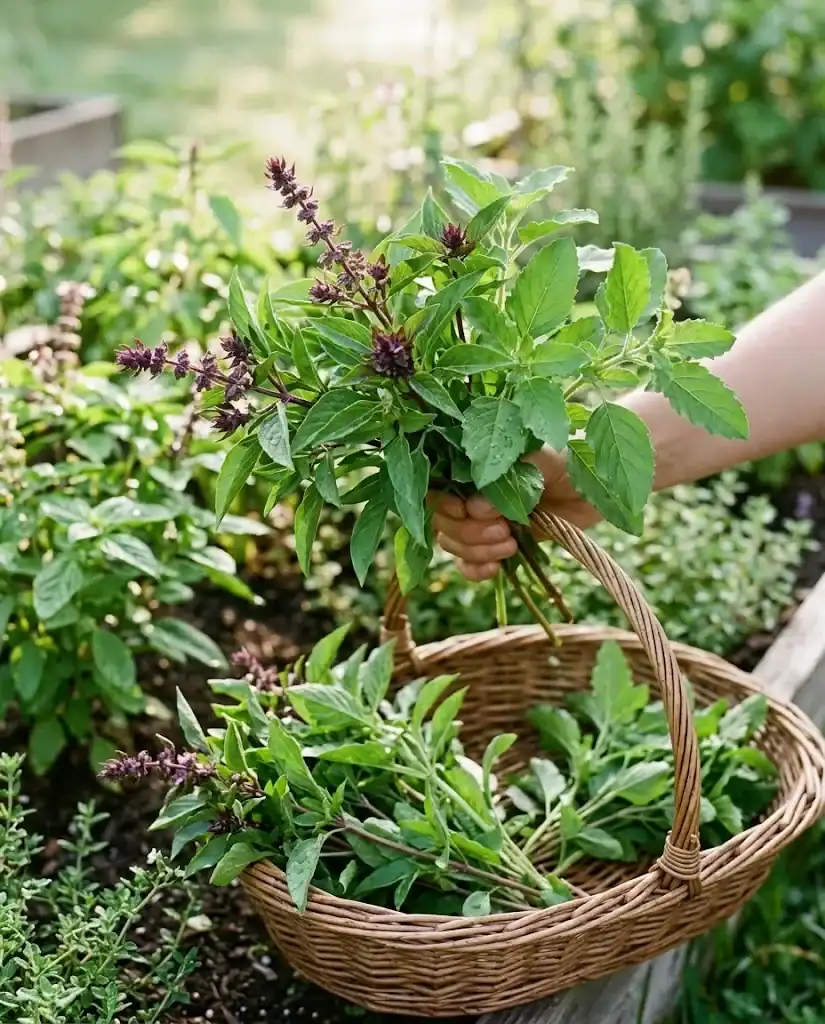
Thai basil, holy basil, and lemon basil all have thinner leaves than Italian basil or Genovese. The volatile oils that give this aromatic herb its anise-and-clove note also oxidize quickly once a leaf is cut, especially in cold, damp air. Temperature alone will not save it; moisture control and gentle handling matter more. Knowing how to harvest Asian basil also shapes your storage ceiling, because bruised or wet leaves will not survive a week no matter how careful you are afterward. When cutting the stems, snip cleanly and only harvest what you will use within a few days, so the rest of the plant keeps producing fresh leaves.
Counter method: keep stems in a jar of water
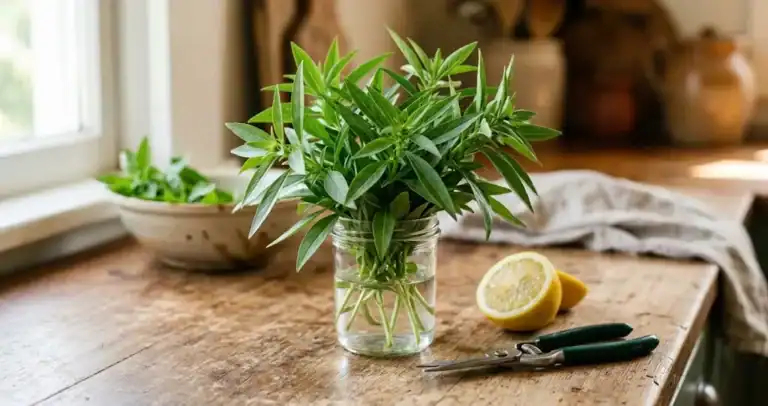
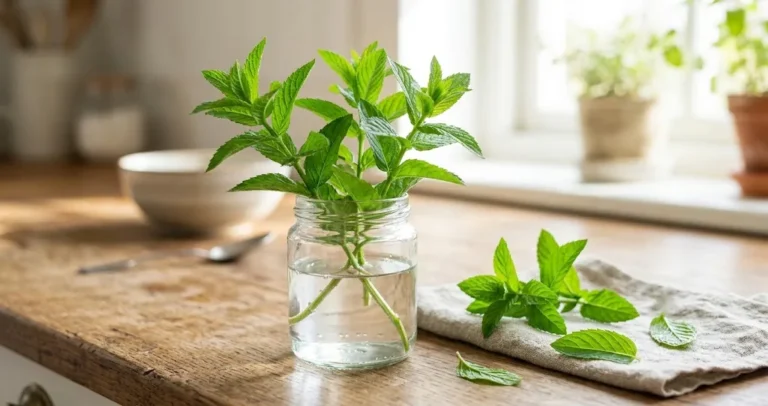
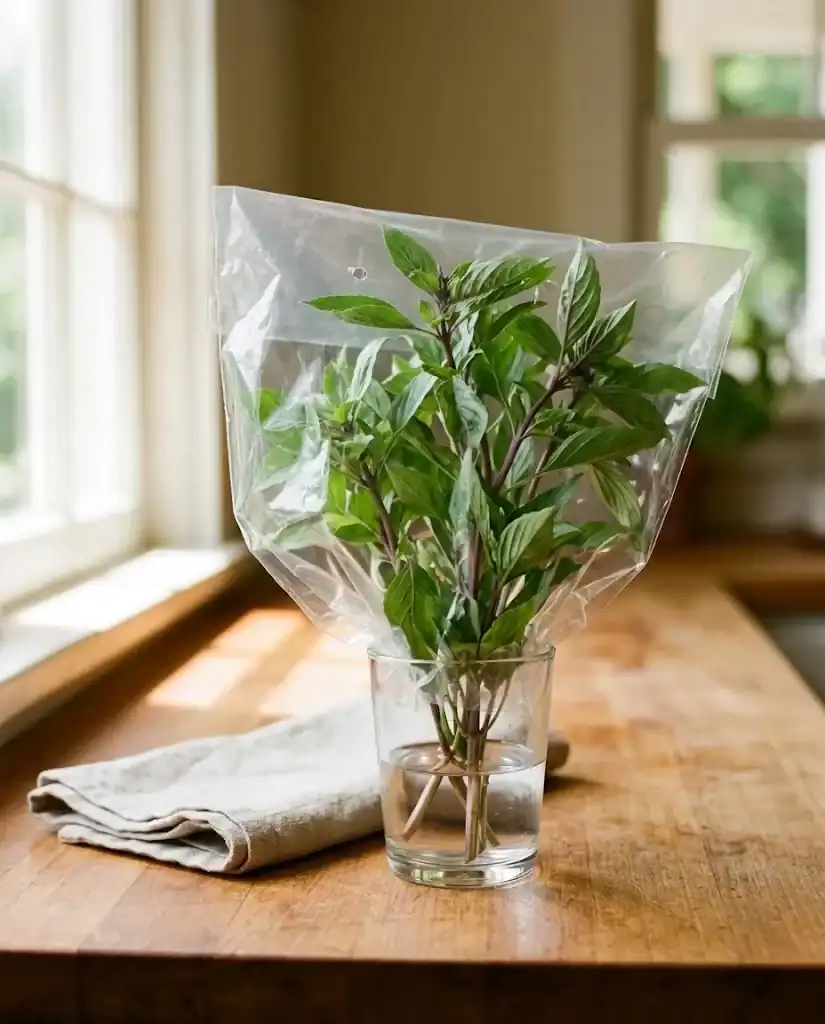
Treat a fresh bunch like flowers. Trim the stem ends at an angle, set them upright in a glass of water with about an inch of water, and tent a loose bag over the top. Change the water every day or two to keep it from going cloudy. Kept out of direct sun at room temperature, the leaves stay perky for 5 to 7 days. This works for Thai, holy, and lemon varieties alike, and the stems will often keep growing roots, which is a bonus if you want to transplant them later. This is the best way to store basil at room temperature if you plan to use it within a few days for garnish or salads, and it stores basil similarly to how you would treat fresh parsley or cilantro.
Fridge method: damp towel and a slightly open bag
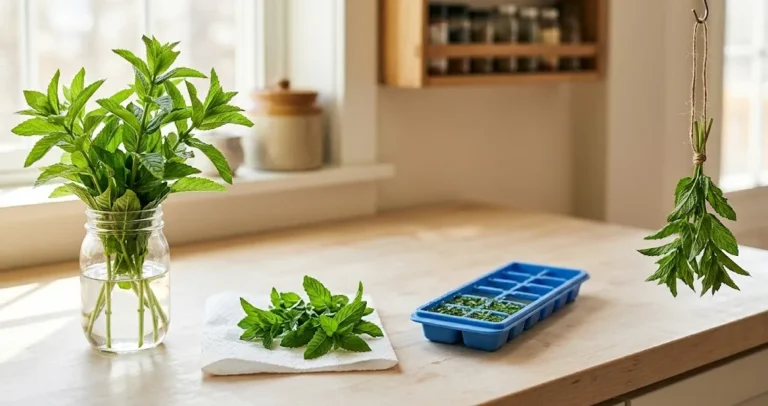
Basil in the fridge benefits from a little air and moisture control. Wrap unwashed leaves loosely in a dry paper towel, slide the bundle into a plastic bag, and leave the bag slightly open. The towel absorbs excess moisture that would otherwise turn the leaves slimy in the fridge. Refrigerate in the crisper drawer for up to a week. Do not seal the bag tightly, because trapped condensation makes the leaves turn brown and dark within a day. This is a reliable way to keep basil in the fridge fresh, and the same method works well for fresh mint or parsley.
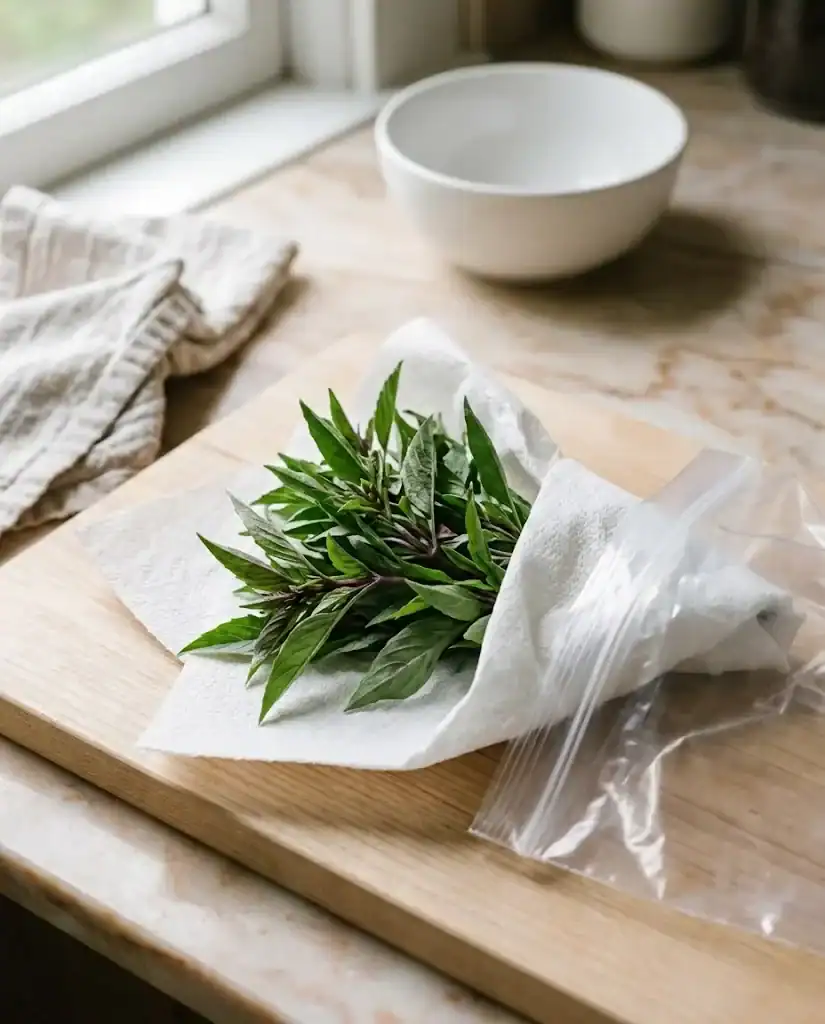
Freezing method: oil cubes or whole-leaf freeze
For cooked dishes, freezing in oil is the easiest long-term option. Pulse clean leaves with a neutral oil and a small pinch of salt, spoon the mixture into an ice cube tray, and place it in the freezer until solid. Pop the green cubes out and store them in a sealed bag with the air pressed out. Each cube is roughly a tablespoon of flavor ready for stir-fries, soups, and curries; you can also drop one into a bowl of pho just before serving. For pho and other clear broths where you want whole Thai basil leaves rather than oil, blanch the leaves for a few seconds, shock them in cold water, freeze in a single layer on a sheet pan, then transfer to a sealed bag so they do not clump. Frozen Thai basil keeps its flavor well for 3 to 6 months, and is the easiest way to keep an abundance of leaves from going to waste when the garden produces more than you can eat fresh.
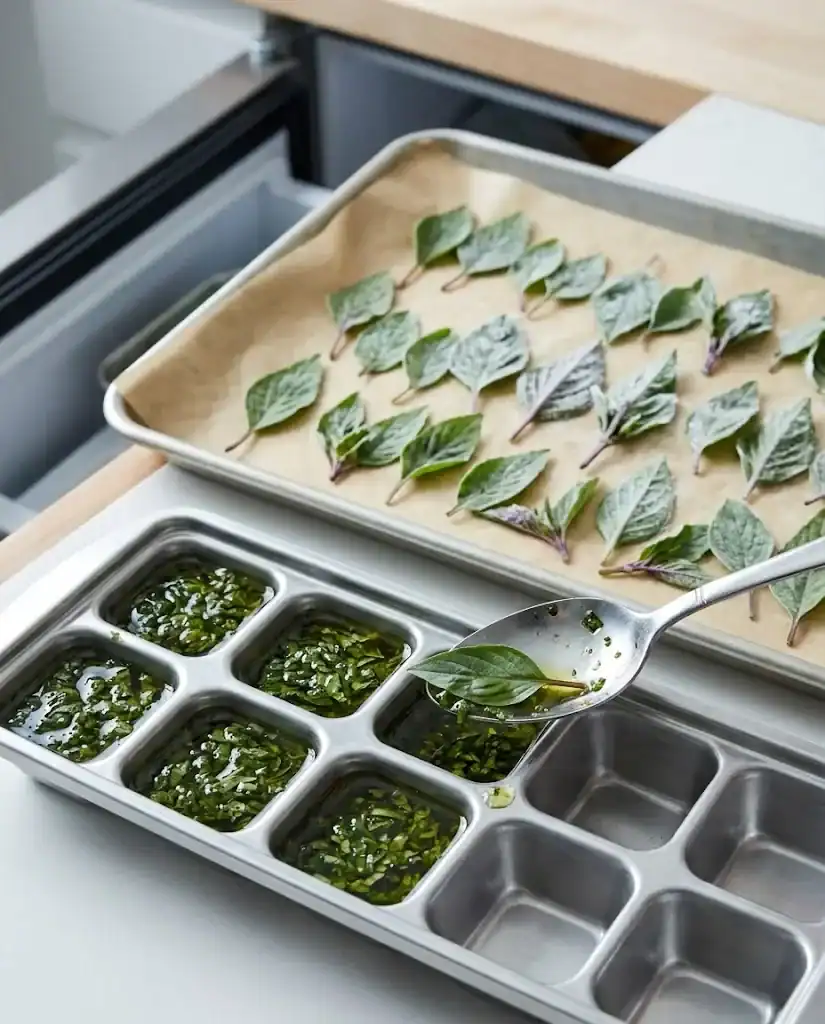
Drying method: hang, dehydrator, or oven
Drying loses some of the bright, aromatic flavor, but dried holy basil is welcome in teas and Thai curry pastes. Hang small bundles upside down in a warm, dry, dark room with good airflow for 1 to 2 weeks. A dehydrator set to 95 degrees Fahrenheit is faster and gives a more even result. Store fully dried leaves in an airtight jar away from light, where they will keep their flavor for 6 to 12 months.
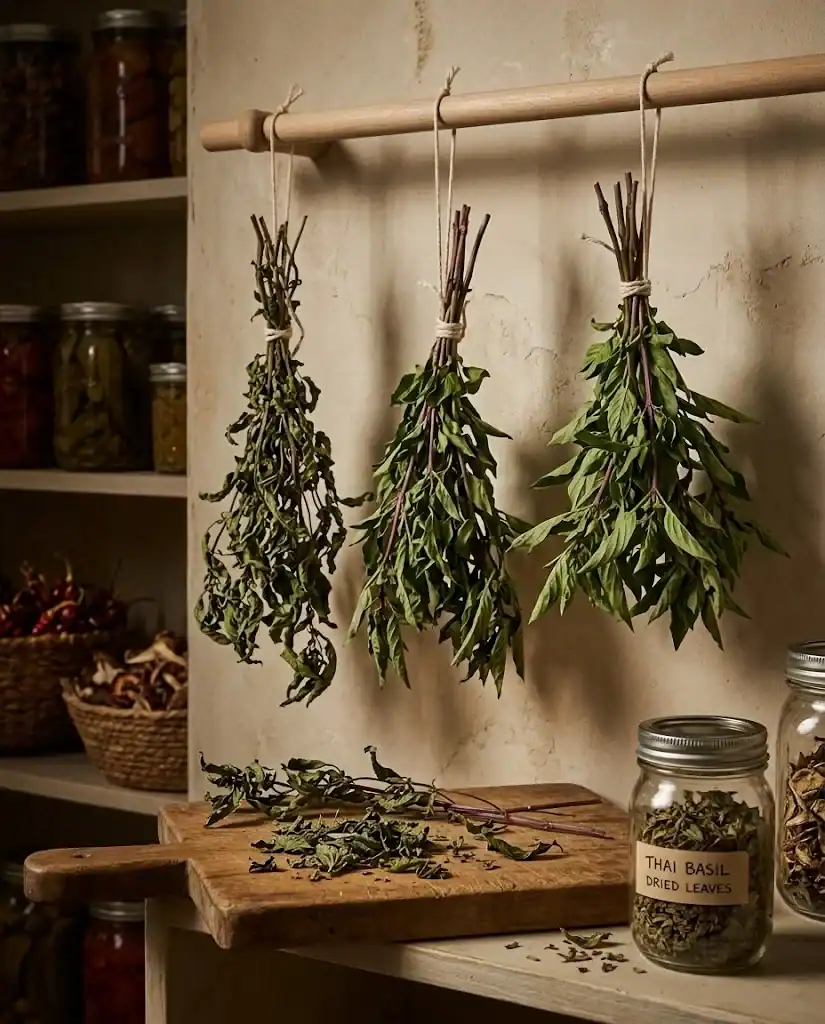
Bringing wilted or droopy leaves back from the brink
If a bunch has wilted, trim the bottom of the stems, drop them into a glass of cold water, and refrigerate for a few hours. Most of the time the leaves perk up again. Discard any that have turned brown, black, or developed a slimy coating, because those are past saving and will throw off the rest of the dish.
Common storage mistakes
Sealing the bag tightly in the fridge is the fastest way to ruin a harvest. Washing leaves before storage is another common error, since extra water on the surface accelerates rot and discoloration; wash and dry only when ready to cook. Holy basil tolerates the fridge for a few days but loses more flavor than Thai does, so use it first. Finally, keep the bunch away from ripening tomatoes, bananas, and other ethylene-producing fruit, which speeds wilting and shortens how long the leaves stay fresh.
Putting stored basil to work
Once the harvest is safely tucked away, you can pull it out for the classics. These Asian basil recipe ideas cover pad kaprao, Thai basil chicken, Vietnamese pho, and a few cold salads where this herb really shines.
A simple framework for next time
Match the method to how soon you will cook the harvest. Use the counter jar for same-day or next-day use. Use the towel and open bag in the fridge for anything you will use within a week. Freeze in oil or whole leaves for the next month or two. Dry and jar for storage up to a year. For a broader look at harvesting and handling fresh herbs beyond basil, the complete guide to harvesting herbs without setting the plant back covers timing, technique, and storage for most kitchen herbs.
Frequently asked questions
Can you freeze Thai basil without blanching?
Yes. Whole leaves frozen on a tray work fine for cooked dishes, but the texture breaks down once thawed, so they are not suitable for garnishes.
How long does Asian basil last in the fridge?
Up to a week when wrapped loosely in a dry towel inside a slightly open bag in the crisper drawer. Thai keeps slightly longer than holy basil.
Is Thai basil the same as holy basil?
No. Thai has a sweet anise flavor and purple stems, and it is the classic herb for pad krapow. Holy has a peppery clove note, green stems, and is the traditional herb for pad kaprao gai. Both store the same way.