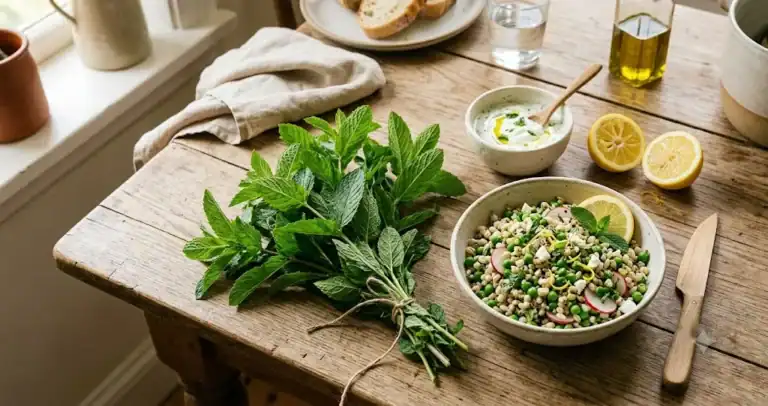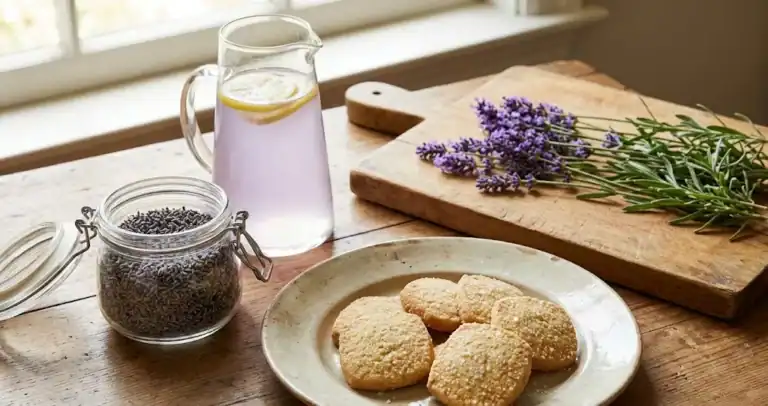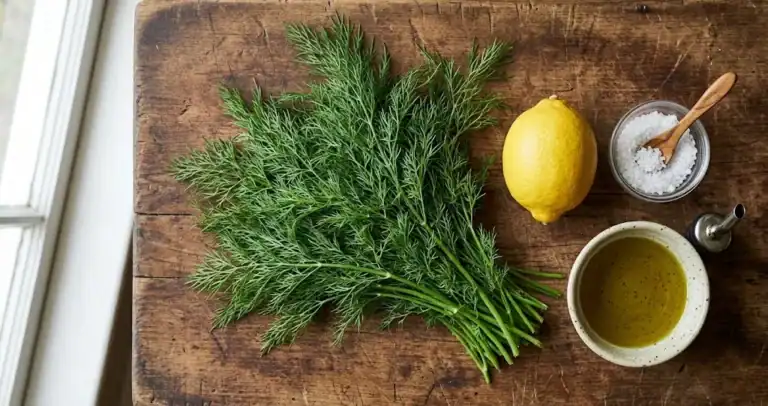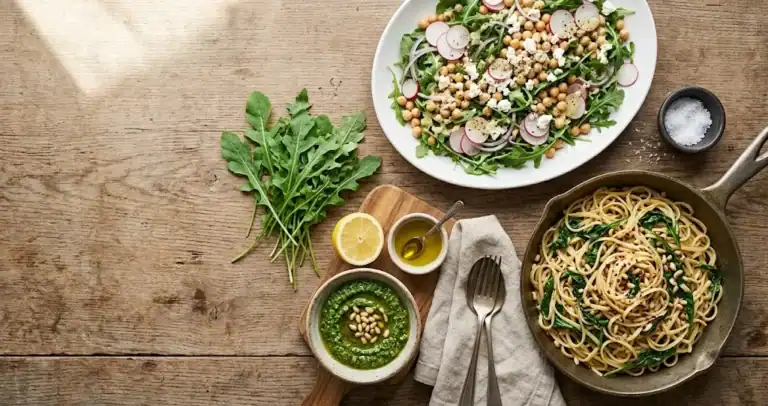
A mint plant does not slow down. One warm week turns a small pot into a thicket, and most home cooks end up wondering what to make with a lot of mint before it bolts or turns woody. These eight recipes turn that surplus into something worth eating: cooling drinks, bright salads, two sauces, a soup, and a no-bake dessert, all built around mint’s clean flavor instead of just decorating the plate.
Each recipe treats fresh mint as the main flavor, not an afterthought. Pick whichever ones match what is already in your kitchen, whether that is cucumbers, peas, chocolate, yogurt, or a bag of limes. For the fuller picture on how mint compares with other kitchen herbs and where each one earns its place, the culinary herbs guide is a useful next stop.
Picking and storing mint before you cook
Buy or cut mint close to when you plan to use it. The leaves bruise easily and lose their bright smell within a few days if they sit loose in the refrigerator. Choose stems with firm, unblemished leaves and a strong scent when you rub one between your fingers. Rinse cut stems under cool water, pat them dry, and pull leaves off the stems only when a recipe calls for chopped or torn mint; whole sprigs keep longer than stripped leaves.
If you end up with more than these recipes call for, do not let it go to waste. For methods that keep cut mint usable for weeks instead of days, see this guide on how to store mint. Chopped leaves also freeze well in an ice cube tray with a little water or olive oil, so the freezer becomes a backup pantry for the recipes below.
How to keep mint’s flavor when you cook
Mint loses flavor fast under heat, so most of these recipes add it raw or stir it in at the very end. Chop it right before serving instead of ahead of time; the leaves darken and turn bitter once bruised and left sitting around. For a clean cut that will not turn to mush in a salad or sauce, stack the leaves, roll them into a tight cylinder, and slice across into thin ribbons.
It pairs naturally with acid such as lime, lemon, and vinegar, with cooling foods such as cucumber and yogurt, and with sugar. It struggles in heavy, long-simmered dishes, which is part of why it shows up mostly in fresh preparations rather than braises or stews. For more ways to bring it into savory cooking beyond this list, see this guide to the ways to cook with mint.
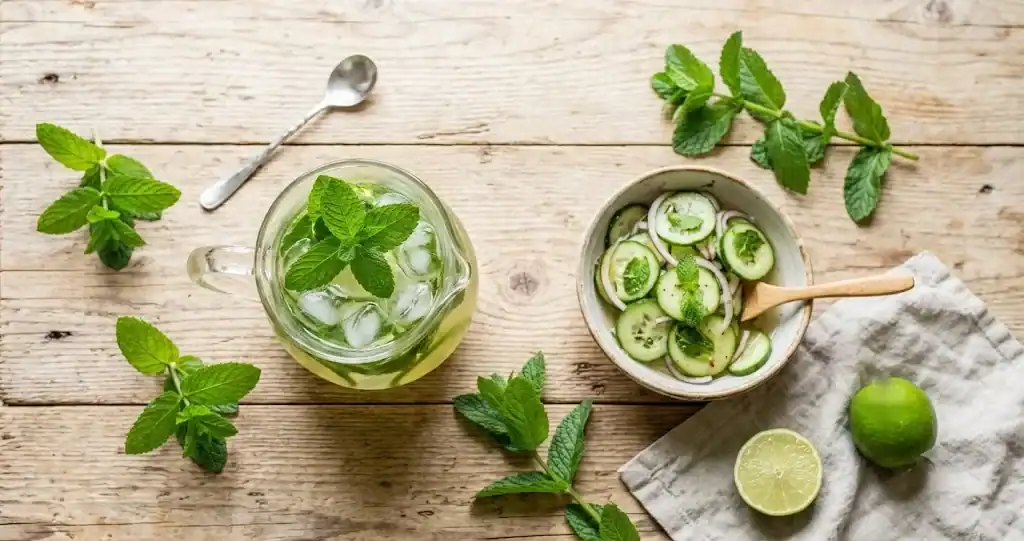
1. Muddled mint limeade
This is the fastest way to use up a big handful of fresh leaves. It doubles as a mojito base if you want to add rum later.

- 1 cup fresh mint leaves, loosely packed
- 3/4 cup fresh lime juice (about 6 limes)
- 1/2 cup simple syrup, or to taste
- 4 cups cold water or sparkling water
- Ice and lime wheels for serving
- Muddle the leaves gently in the bottom of a pitcher with a splash of the simple syrup. Bruise them rather than pulverizing, so the drink stays green instead of pulpy.
- Stir in the lime juice, remaining syrup, and water. Taste and adjust the sweetness or tartness.
- Strain into ice-filled glasses, or leave the leaves in for a stronger flavor that builds as it sits.
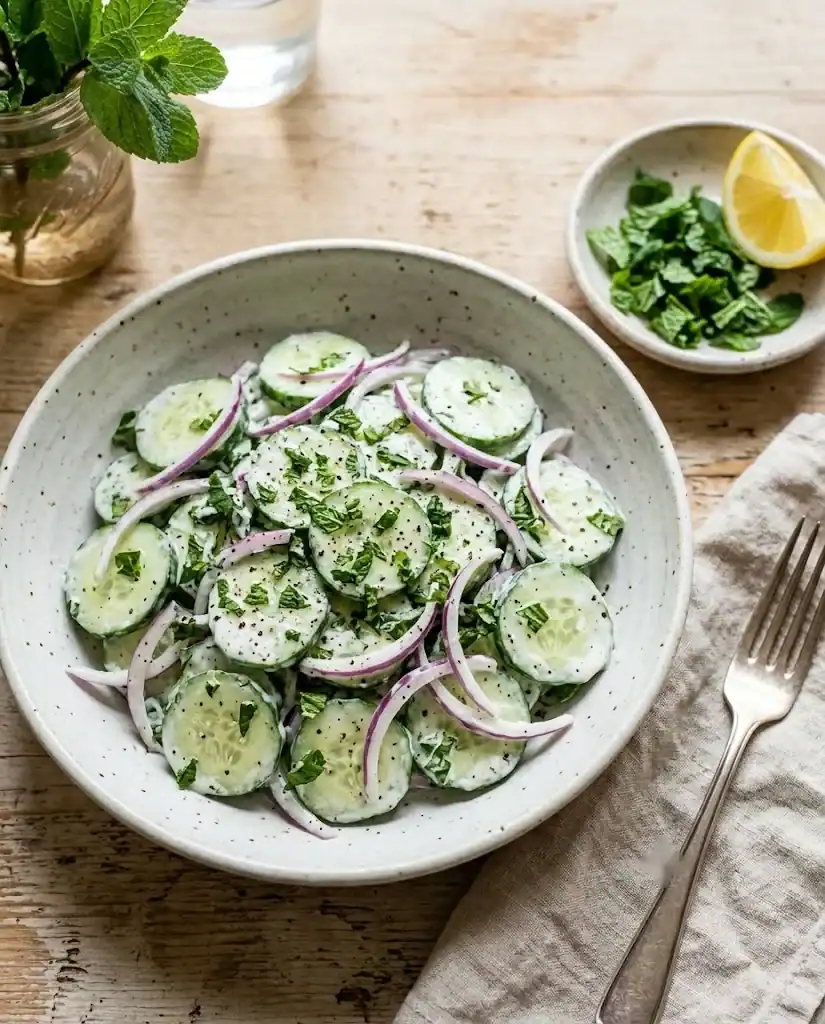
2. Cucumber mint salad with yogurt dressing
A cold, crunchy side that works next to grilled chicken, lamb, or a bowl of rice. It is close kin to raita or Turkish cacik, thinned enough to eat with a fork.
- 2 English cucumbers, thinly sliced
- 1/2 small red onion, thinly sliced
- 1/3 cup plain yogurt
- 2 tablespoons chopped fresh mint
- 1 tablespoon olive oil
- 1 tablespoon lemon juice
- Salt and black pepper to taste
- Salt the sliced cucumbers lightly and let them sit in a colander for 10 minutes to draw out excess water, then pat dry.
- Whisk the yogurt, olive oil, lemon juice, and a pinch of salt together until smooth.
- Toss the cucumbers and red onion with the dressing, then fold in the chopped mint just before serving so it stays bright green.
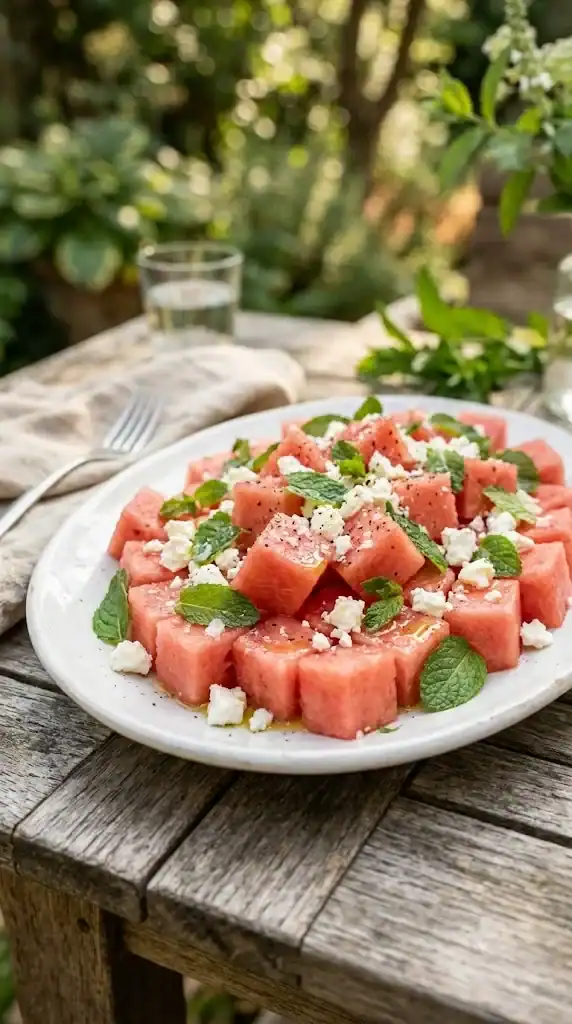
3. Watermelon, feta and mint salad
The classic sweet-salty pairing, built around whole leaves instead of a light sprinkle. This summer salad travels well to a picnic, since it needs no reheating and holds up well in a covered dish.
- 4 cups seedless watermelon, cubed
- 4 ounces feta cheese, crumbled
- 1/4 cup mint leaves, torn
- 1 tablespoon olive oil
- 1 teaspoon lime juice
- Flaky salt to finish
- Arrange the watermelon on a platter and scatter the feta over top.
- Drizzle with olive oil and lime juice.
- Tear the leaves by hand rather than chopping them, scatter them over the salad, and finish with a pinch of flaky salt. Serve within the hour, since the watermelon releases juice as it sits.
4. Fresh mint pesto
A sharper, savory cousin of basil pesto. Spoon it over roasted summer squash, grilled fish, avocado toast, or a bowl of white beans.
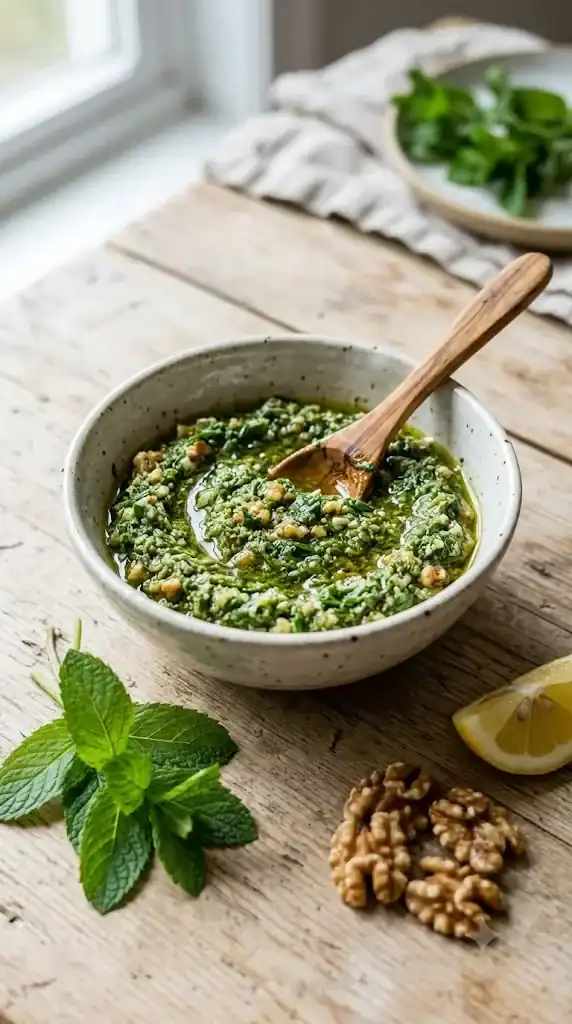
- 2 cups fresh mint leaves, packed
- 1/2 cup fresh parsley leaves
- 1/3 cup toasted walnuts or pistachios
- 1/2 cup grated Parmesan
- 1 garlic clove
- 1/2 cup olive oil
- Salt and lemon juice to taste
- Pulse the leaves, parsley, nuts, Parmesan, and garlic in a food processor or blender until finely chopped.
- With the motor running, stream in the olive oil until the mixture comes together into a loose paste.
- Season with salt and a squeeze of juice. Store in the refrigerator with a thin layer of oil on top to keep it from browning, and use within a week.
5. Pea and mint soup
A fast, bright green soup that works hot or chilled, made mostly from freezer staples.
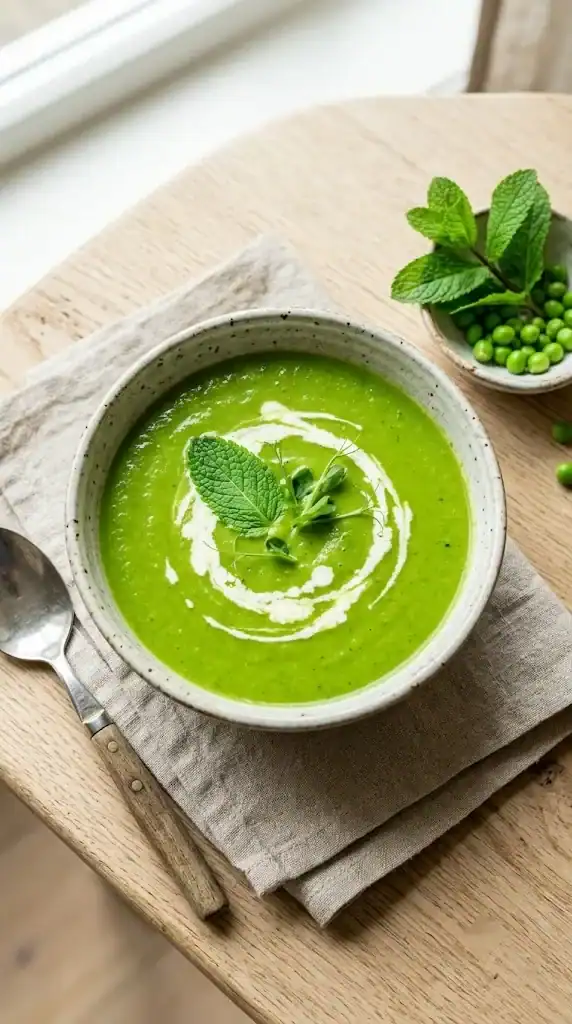
- 1 tablespoon butter
- 1 small onion, chopped
- 4 cups vegetable or chicken broth
- 4 cups frozen peas
- 1/2 cup fresh mint leaves
- 1/4 cup cream or plain yogurt, plus more for serving
- Salt and pepper to taste
- Melt the butter in a pot over medium heat and cook the onion until soft, about 5 minutes.
- Add the broth and bring to a simmer. Stir in the frozen peas and cook for 3 to 4 minutes, just until they turn bright green and tender.
- Remove from the heat and let the soup cool for a few minutes before blending, since hot liquid can force a blender lid off. Add the leaves, fill the blender no more than halfway, and blend until smooth. Stir in the cream, then season with salt and pepper. Serve hot, or chill for a few hours and serve cold with a swirl of yogurt on top.
6. Minted yogurt sauce
A cooling sauce for grilled meat, falafel in pita, or roasted vegetables. It comes together in the time it takes to heat a grill, and it also makes a good dip with cumin stirred in for a Moroccan-leaning plate.
- 1 cup plain Greek yogurt
- 3 tablespoons finely chopped fresh mint
- 1 small garlic clove, grated
- 1 tablespoon lemon juice
- 1 tablespoon olive oil
- Salt to taste
- Stir the yogurt, chopped mint, garlic, lemon juice, and olive oil together in a small bowl.
- Season with salt and let the sauce sit for at least 10 minutes so the garlic and herb flavor the yogurt.
- Store covered in the refrigerator for up to three days; the flavor deepens overnight.
7. No-bake chocolate mint bites
These use mint’s flavor directly, through fresh chopped leaves, instead of relying on flavored extracts or chocolate chips alone.

- 1 cup pitted dates
- 1 cup rolled oats
- 1/4 cup cocoa powder
- 2 tablespoons finely chopped fresh mint
- 2 tablespoons melted coconut oil
- Pinch of salt
- Pulse the dates and oats in a food processor until the mixture starts to clump together.
- Add the cocoa powder, chopped leaves, coconut oil, and salt, then pulse again until evenly combined.
- Roll into small balls and refrigerate for at least 30 minutes before serving. Store in an airtight container in the refrigerator for up to a week.
8. Iced mint tea
A simple way to use a large handful of leaves with almost no effort. Steep it stronger and pour it over ice cream for a quick dessert twist, or blend it into a smoothie with pineapple.
- 1 cup fresh mint leaves and stems
- 4 cups boiling water
- 2 to 3 tablespoons honey or sugar, to taste
- Ice for serving
- Pour the boiling water over the leaves in a heatproof pitcher and let it steep for 10 minutes.
- Strain out the leaves, then stir in honey or sugar while the tea is still warm so it dissolves fully.
- Chill the tea, then serve over ice with a fresh sprig for garnish.
Common questions about cooking with mint
Can dried mint replace fresh mint in a recipe?
Yes, but adjust the amount. Dried mint is more concentrated, so use about a third of the amount a recipe calls for fresh, and add it earlier in cooking since dried herbs need time to rehydrate.
What foods pair well with fresh mint?
Cucumber, watermelon, peas, lamb, chocolate, citrus, and yogurt are the most reliable partners. It also works well alongside other fresh herbs like parsley, basil, and cilantro in salads and sauces.
Can you freeze mint for later use?
Yes. Portion chopped leaves into ice cube trays with a little water or olive oil and freeze until solid, then move the cubes to a bag. Frozen mint turns soft once thawed, so save it for soups, sauces, and smoothies rather than a garnish, where whole fresh leaves still look and taste best.
Put your mint recipes to work
Work through these recipes in rotation instead of saving mint for a single dish. Regular harvesting keeps the plant leafy and productive instead of woody, so the more you cook with it, the more it grows back for next time.