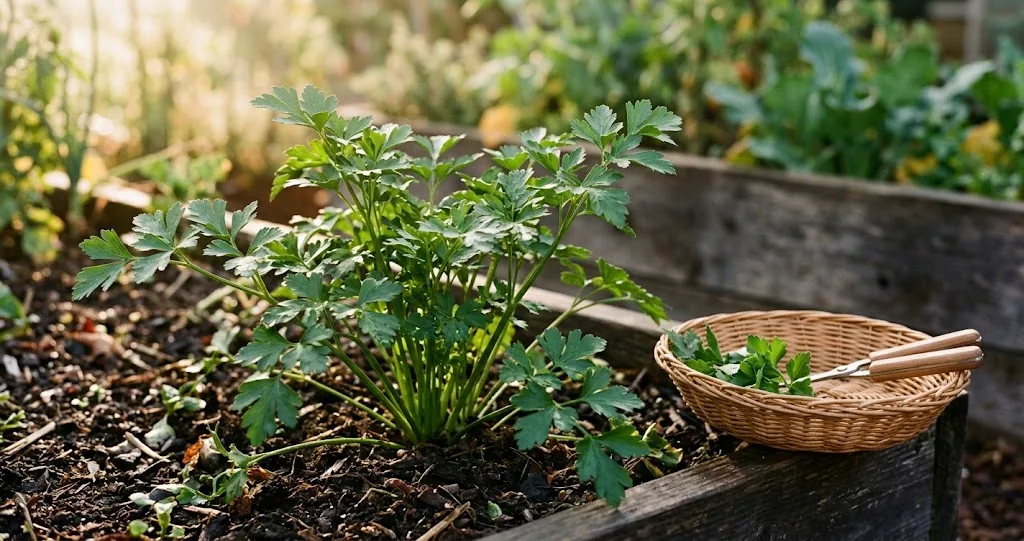
This herb is at its best when it moves from plant to kitchen with little delay. Cut mature outer stems, protect the leaves from heat and bruising, then choose storage based on when and how you plan to use them.
For dinner this week, refrigerate the stems. For an abundance you cannot use soon, freeze the chopped leaves in a freezer bag or ice-cube trays. Drying is useful for pantry storage, but it trades away much of parsley’s fresh flavor.
For a broader look at timing, tools, and techniques across the garden, see the wider guide to harvesting herbs well.
When it is ready to pick
Begin once the plant has several full outer stems and a sturdy center. Harvest in the morning after dew has dried, when the leaves are cool and firm. Avoid taking more than about one-third of the plant at one time, especially from a young plant that still needs to build roots and foliage.
Pick before the plant sends up a flower stalk if you want the mildest, freshest flavor. It is still edible after flowering, but the leaves can become tougher and more bitter. Regular small harvests often delay flowering and keep the plant producing tender new growth.
How to pick parsley so it regrows
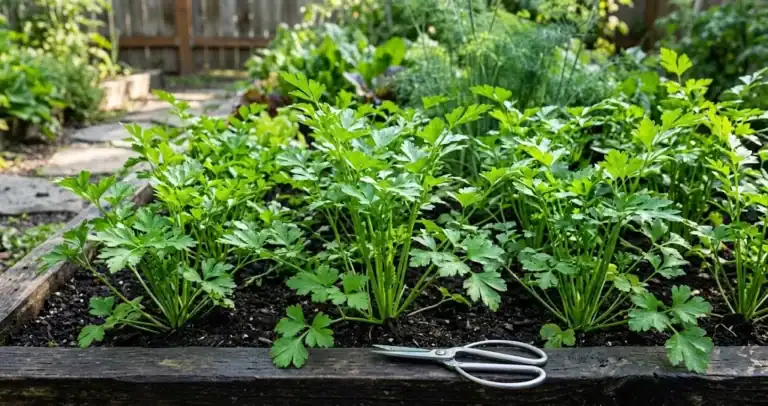
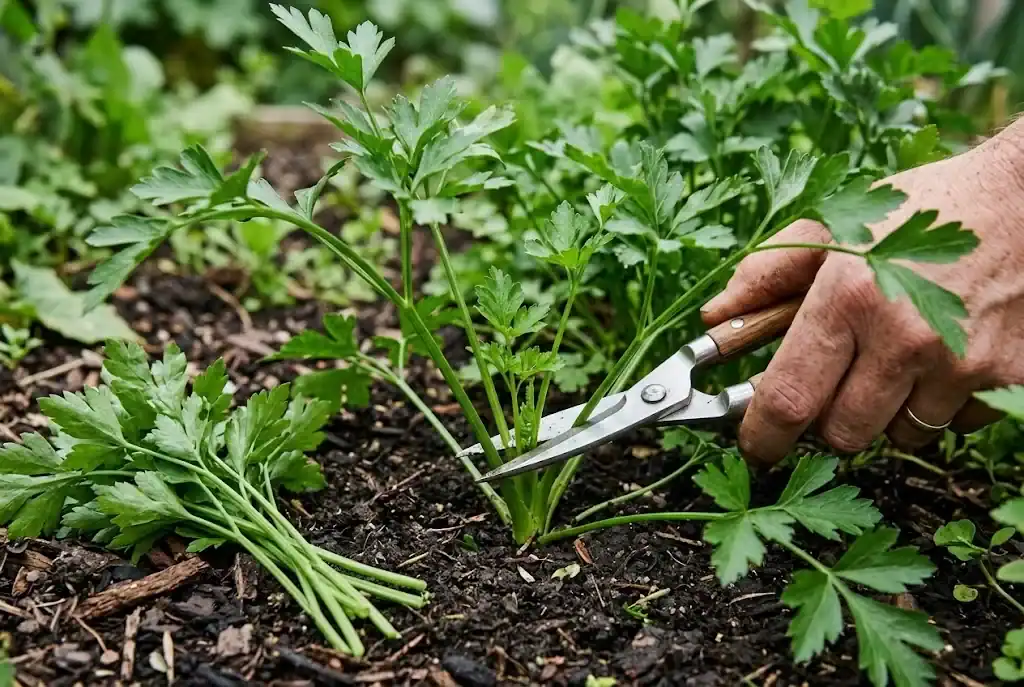
Use clean scissors or snips and cut whole outer stems close to the base. Take the largest stems from around the outside and leave the tight cluster of small leaves at the center alone. That growing point makes the next round of leaves.
Do not shear the whole top of the plant as though it were lawn grass. It leaves short stubs, removes young growth, and makes it harder to choose clean stems for storage. For a closer look at the cut, this guide explains how to pick parsley while keeping the plant productive.
Gather the stems loosely rather than squeezing them into a tight bundle. Bruised parsley leaves darken quickly, and damaged stems do not keep as well. If soil splashes onto the cut stems, shake it off gently and save a full wash for just before cooking.
Prepare parsley for storage
Sort the stems as soon as you come inside. Remove yellow, torn, or damp leaves, then trim a small slice from dry stem ends. Keep the remaining leaves dry until you choose a storage method. Extra surface moisture makes the leaves wilt sooner.
If you need to wash it right away, rinse it under cool water and dry it thoroughly in a salad spinner or between clean kitchen towels. Do not seal visibly wet leaves in a container. Both curly and Italian parsley keep best when their leaves are dry and have a little airflow.
Use parsley leaves and stems
Do not discard every stem automatically. Tender parsley stems have good flavor and can be chopped with the leaves for pesto, tabbouleh, or a sauce. Save the thicker, fibrous stems for stock or soup, then remove them before serving.
Sorting the stems this way also makes a generous crop easier to handle. Keep attractive whole leaves for fresh dishes, chop tender stems with leaves for the freezer, and set aside tough stems for the next pot of soup.
Store fresh parsley in the refrigerator
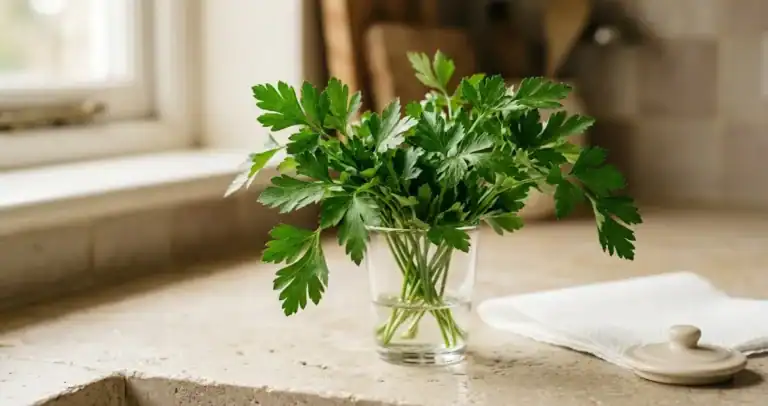
For parsley you plan to use within a week, stand the stems in a glass or jar with a small amount of water. Loosely cover the leaves with a reusable produce bag and refrigerate the jar. Check the water every couple of days and replace it if it turns cloudy.
For a smaller amount, wrap dry parsley loosely in a barely damp paper towel and place it in a container or partly open bag in the refrigerator. The goal is gentle humidity around the leaves, not a wet, airtight bundle. Use the leaves while they are crisp and aromatic.
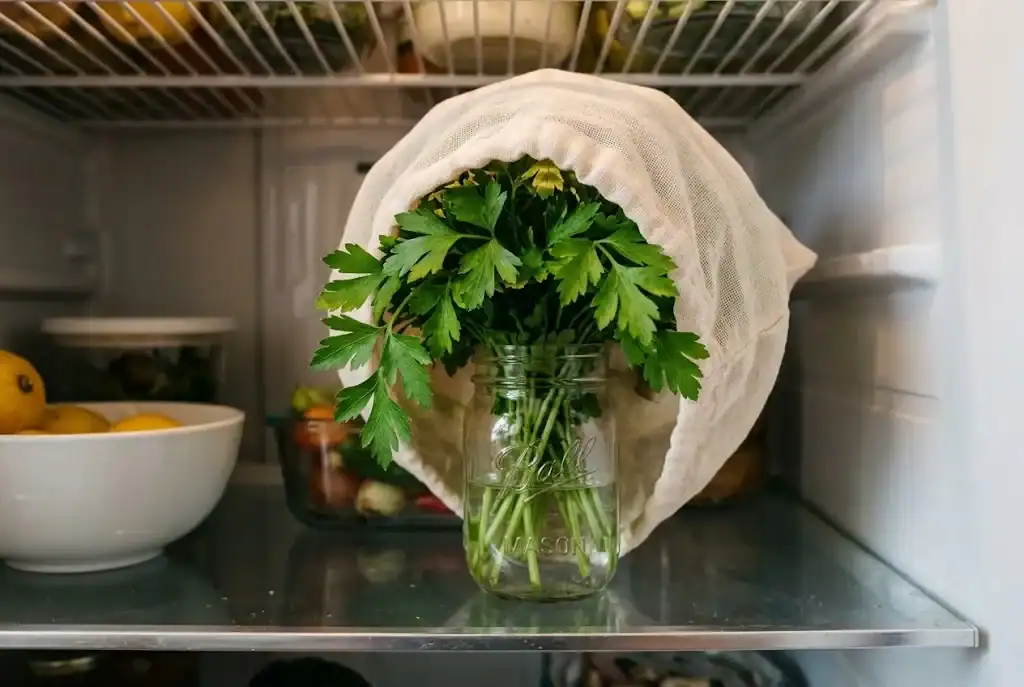
Discard any parsley that develops mold, a sour smell, or a slippery texture. With the jar method, trim soft stem ends before returning the remaining parsley to fresh water.
Freeze parsley for longer storage
Freezing is the best long-term storage choice when you want parsley’s color and flavor for soups, sauces, beans, and cooked dishes. Frozen parsley will not have the texture of a fresh finishing herb, so save your best crisp leaves for salads and finishing dishes.
Wash and dry the parsley well, then chop the leaves and tender stems. For loose portions, freeze them in a thin layer on a lined tray before transferring them to a labeled freezer bag. Press out excess air and use the parsley within about six months for the best flavor.
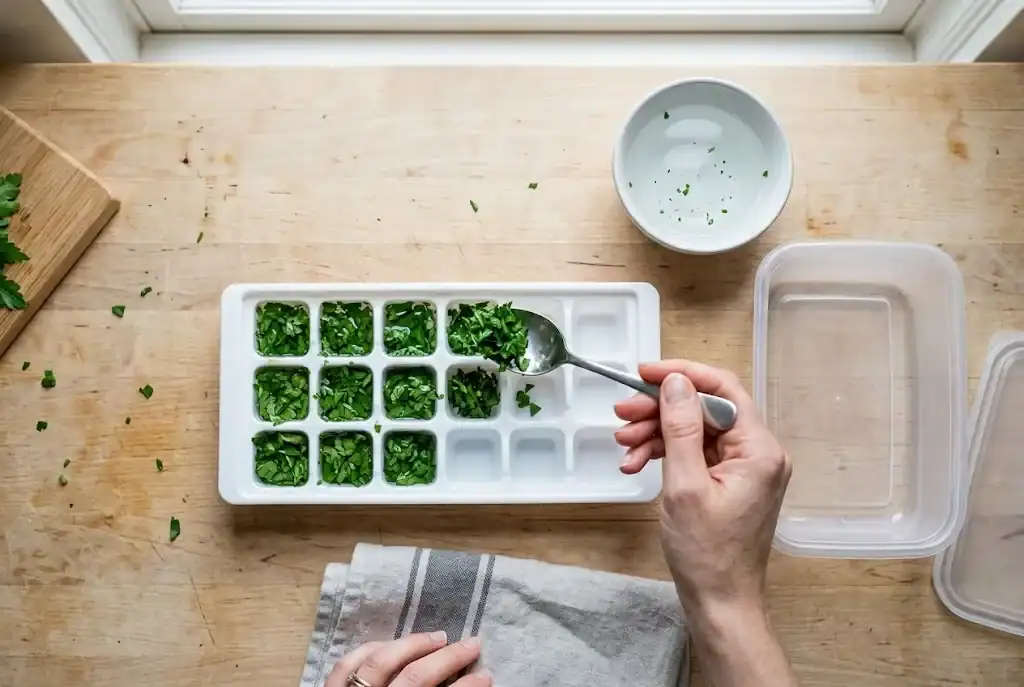
For measured portions, pack the chopped leaves into ice-cube trays with a little water or olive oil. Freeze until solid, move the cubes to a labeled bag, and drop a cube straight into a hot pan or pot. Oil cubes are especially handy for a quick saute or a pan sauce.
Dry parsley for the pantry
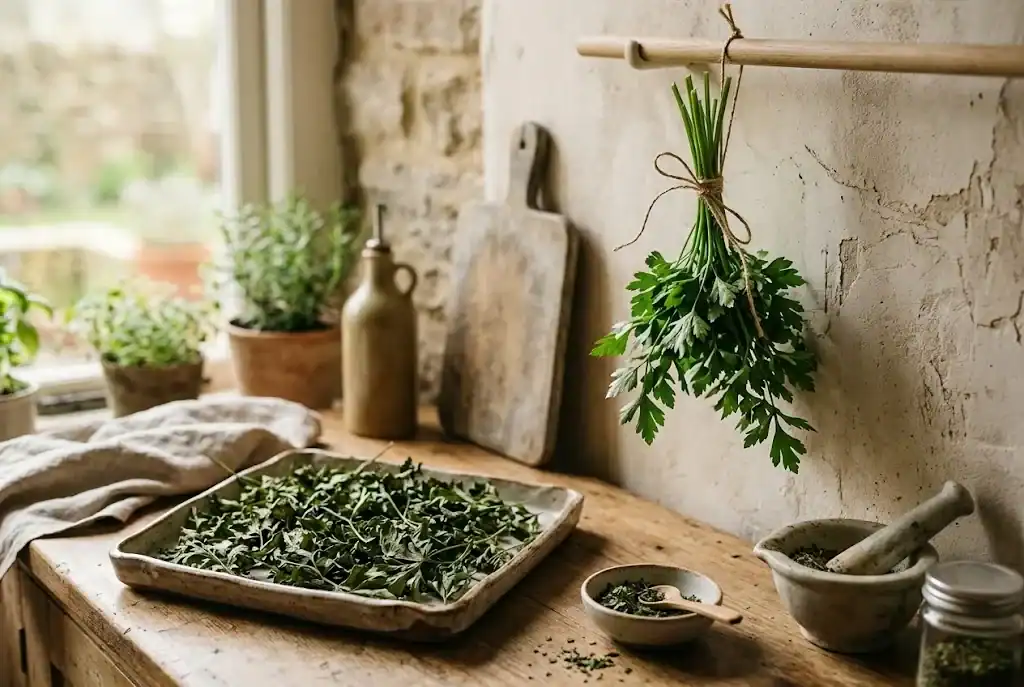
Dried parsley works in long-cooked dishes, dressings, and seasoning blends, although it loses much of the lively flavor of fresh parsley. Dry only sound, clean leaves. To dehydrate it, spread the leaves in a single layer in a dehydrator, use a very low oven, or air-dry small stems in a shaded, well-ventilated spot.
When the leaves crumble easily, strip them from the stems and store them in an airtight jar away from heat and light. Label the jar with the date and aim to use it within a year. If a dried batch smells musty or looks damp, discard it rather than returning it to the pantry.
Make an abundance of parsley easy to use
When the garden gives you more parsley than one recipe needs, divide it before storing. Keep the nicest stems fresh for the next few meals, freeze chopped portions for cooking, and dry only the surplus you are happy to use as a background seasoning.
Use a generous handful where parsley is a main ingredient rather than a garnish. Make tabbouleh or parsley pesto, stir it into soup or stew near the end of cooking, or mix chopped parsley with butter and garlic for garlic bread. These choices use a large harvest quickly while fresh flavor is at its peak.
It is more than a garnish. Stir it into grain salads, fold it through buttered potatoes, or scatter it over warm beans just before serving. Once you have the storage routine down, explore practical ways to cook with parsley so each small harvest has a clear destination.
Frequently asked questions
Is it better to store parsley fresh, frozen, or dried?
Store parsley fresh when you will use it within about a week and want its crisp texture. Freeze it for the best long-term option for cooked dishes. Dry it when shelf space and pantry convenience matter more than fresh flavor.
Can parsley regrow after you harvest it?
Yes. Cut mature outer stems near the base and leave the small center leaves in place. The plant can keep producing as long as it has healthy new growth and you do not remove too much at once.
Can I freeze whole parsley leaves?
You can, but chopped leaves are easier to portion and use from frozen. Dry them thoroughly first, then freeze them flat in a freezer bag or portion them in ice-cube trays for cooked recipes.
Picking a little at a time and choosing the storage method that suits your plans keeps parsley from becoming a forgotten drawer vegetable. Keep one fresh supply in the refrigerator, freeze the surplus, and let the plant keep growing for the next meal.