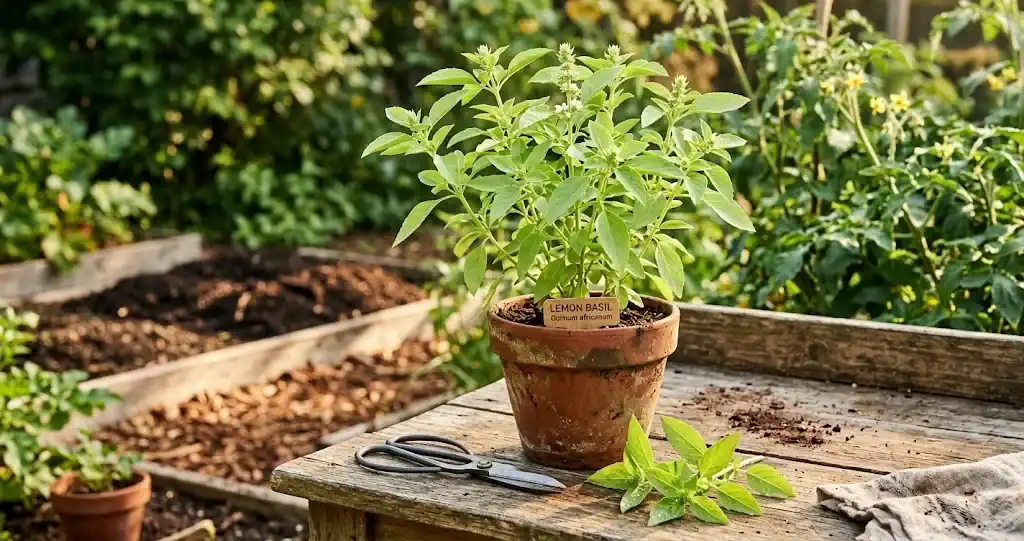
Lemon basil pairs the pungent sweetness of culinary basil with the zesty aroma of crushed citrus peels. Botanically classified as Ocimum × africanum (a natural hybrid of sweet basil Ocimum basilicum and American basil documented by the Royal Botanic Gardens Kew), this fast-growing herb produces tender, bright green leaves scented with natural citral. That essential oil gives the foliage its crisp lemon scent and taste, making it a favorite for home cooks and gardeners looking to elevate summer dishes.
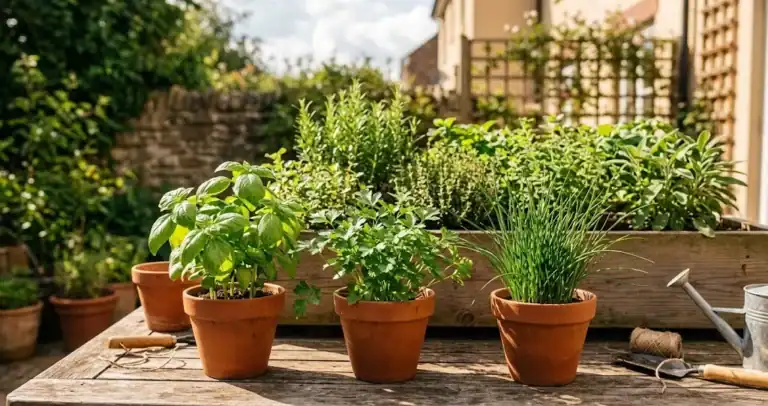
While sweet basil leans savory and warm, lemon basil provides an invigorating essence of lemon that brightens poultry marinades, stir-fries, tea blends, and herbal vinegars. It is easy to grow in backyard beds or patio pots once warm weather arrives. For any home gardener designing a productive kitchen garden, planning an herb garden properly creates the sunny foundation needed for annual herbs to thrive all season.
Understanding Lemon Basil: Growth Habit, Scent, and Flavor
Lemon basil grows as a branching annual herb, reaching twelve to twenty-four inches tall and twelve to eighteen inches wide. The plant produces slightly smaller, narrower leaves than traditional Italian large leaf basil, accented by small white flower spikes in midsummer. The leaves and stems carry concentrated volatile oils that deliver a brisk lemon scent whenever brushed or crushed.
In culinary traditions across Southeast Asia and the Mediterranean, cooks value lemon basil varieties for their clean, citrusy bite. It works wonderfully in light soups, grilled seafood, and herb butter, or blended into a citrus pesto with pine nuts and olive oil. Because heat quickly dissipates its delicate aroma, lemon basil is best used fresh or stirred into cooked dishes right before serving to protect its best flavor.
Starting Lemon Basil Seeds Indoors vs. Sowing in the Garden
You can establish lemon basil plants from garden seeds, purchased nursery starts, or stem cuttings. Growing lemon basil from seed gives you access to specialized cultivars and provides abundant seedlings for the entire growing season.
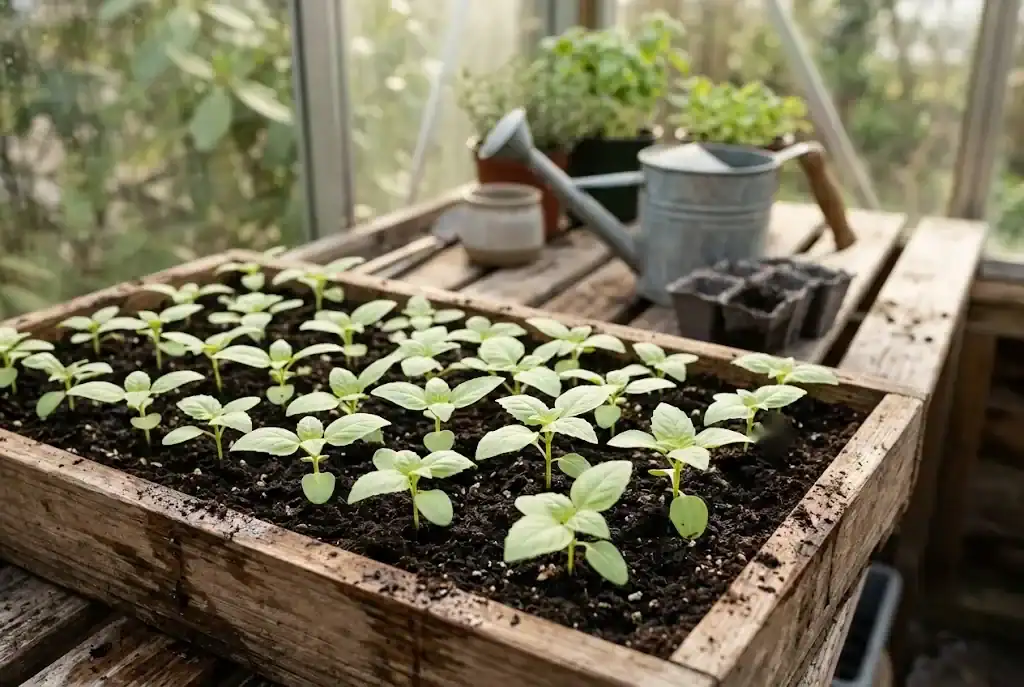
Starting seeds indoors four to six weeks before your last frost date gives plants a head start. Use clean seed-starting trays filled with fine, pre-moistened potting mix. Sow seeds about one-quarter inch deep, pressing them lightly into the mix to ensure good seed-to-soil contact. Maintain soil temperatures around 70 to 75 degrees Fahrenheit; consistent warmth ensures quick germination, usually within five to ten days.
As soon as sprouts emerge, place seedlings under grow lights for fourteen to sixteen hours daily, keeping the light fixtures two to three inches above the foliage. Water gently from the bottom so you do not disturb fragile root systems. Once each seedling develops its first set of true leaves, thin them to one sturdy plant per cell.
If you prefer direct outdoor planting, wait until two to three weeks after the last expected frost when garden soil has warmed to at least 65 degrees Fahrenheit. Basil does not like cold, damp ground. Sow seeds thinly in shallow furrows, cover lightly with aged leaf mold, and keep the soil evenly moist until the seeds sprout.
Sunlight, Soil, and Pot Requirements for Healthy Plants
Like other warm-season culinary herbs, basil thrives in full sun. Choose a planting site that receives six to eight hours of unfiltered sunlight each day. Exposure to full sun encourages stocky stems, dense leaf clusters, and higher oil concentration than shady locations.
Basil needs loose, fertile, well-draining soil with a pH between 6.0 and 7.0. Heavy clay soils that stay saturated cause root problems and stunt growth. Before you transplant them outdoors, work two to three inches of finished compost into the bed to improve drainage and provide mild, slow-release nutrition.
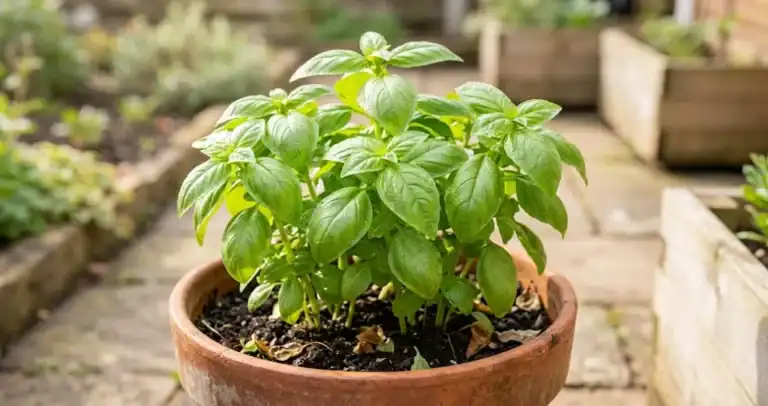
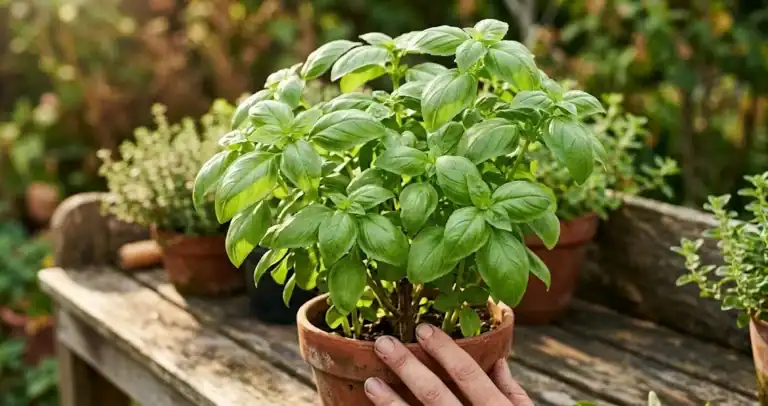
Lemon basil also makes an outstanding container plant on sunny patios, balconies, or decks. Select a pot at least ten to twelve inches deep with drainage holes. Fill the pot with lightweight potting mix amended with perlite and organic matter. A light layer of straw or shredded bark mulch across garden beds helps retain moisture and keeps surface soil temperatures stable during intense summer heat.
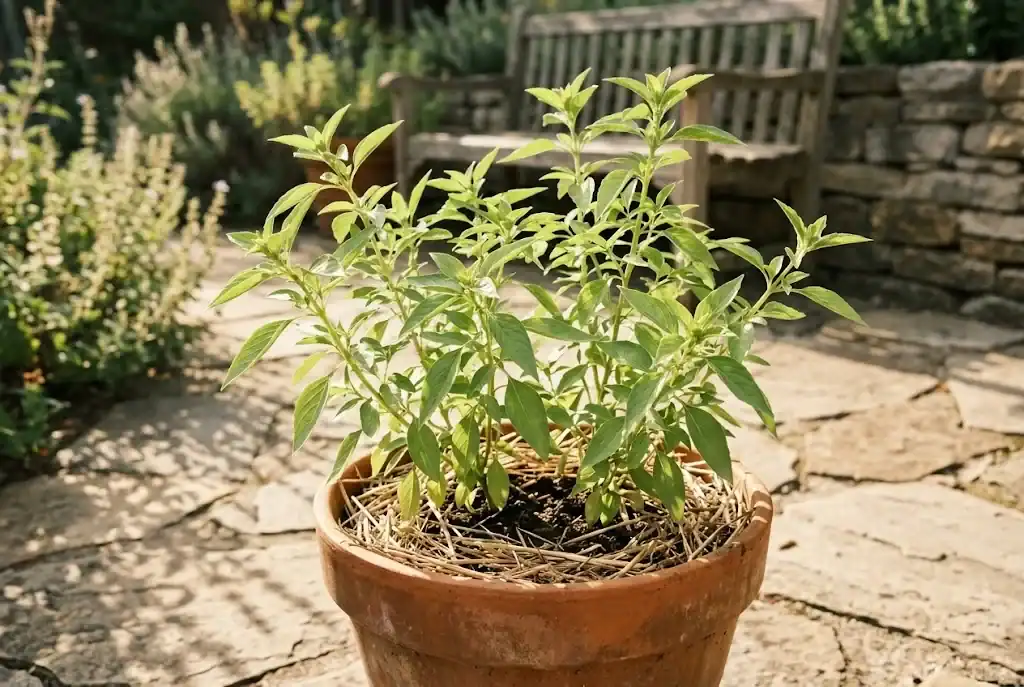
Watering, Feeding, and Pinching for Bushy Growth
Proper hydration keeps foliage succulent, but overwatering invites disease. Water your crops when the top inch of soil feels dry. Aim a gentle stream of water at the base of each stem rather than soaking foliage from above, which helps prevent fungal leaf spots.
Container plants dry out faster than in-ground beds during hot summer afternoons. Check container soil daily in July and August. If growth slows or foliage pales, apply a diluted organic liquid fertilizer or fish emulsion once every three to four weeks. Avoid excessive synthetic plant food, which produces lush green leaves with diluted flavor.
Pinching is essential to keep plants producing vigorous stems. When your young basil plant reaches six to eight inches tall, use clean shears or your fingers to pinch off the top center growing tip just above a set of leaves. This prompts the plant to produce two new lateral branches at that node, doubling leaf yields.
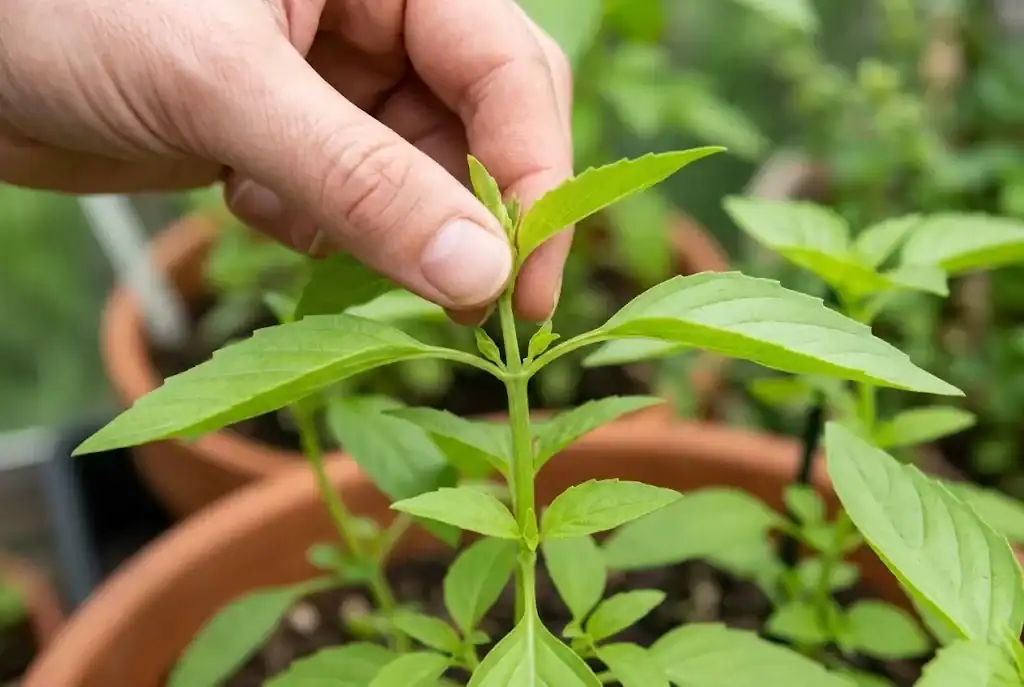
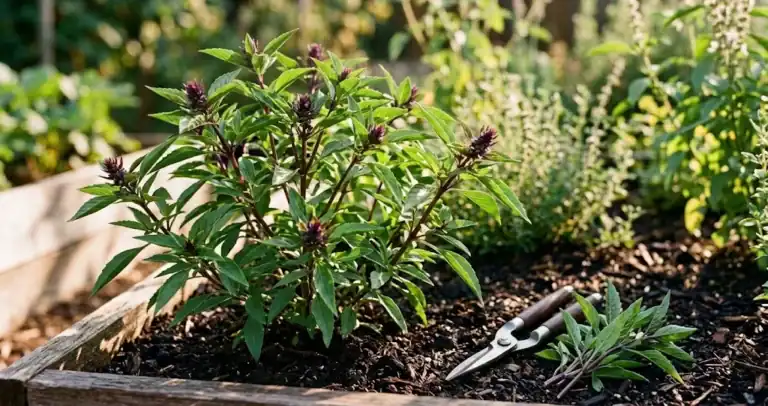
As summer advances, pinch off flowers as soon as bud spikes form. Allowing the herb to set seed signals the end of vegetative growth, causing leaves to turn tough, small, and bitter.
Companion Planting and Managing Common Garden Pests
Practicing companion planting in your summer garden offers practical benefits. Planting lemon basil alongside tomato plants, bell peppers, and eggplant supports healthy garden biodiversity. Its pungent citrus fragrance can help repel nuisance insects such as thrips, hornworms, and whiteflies.
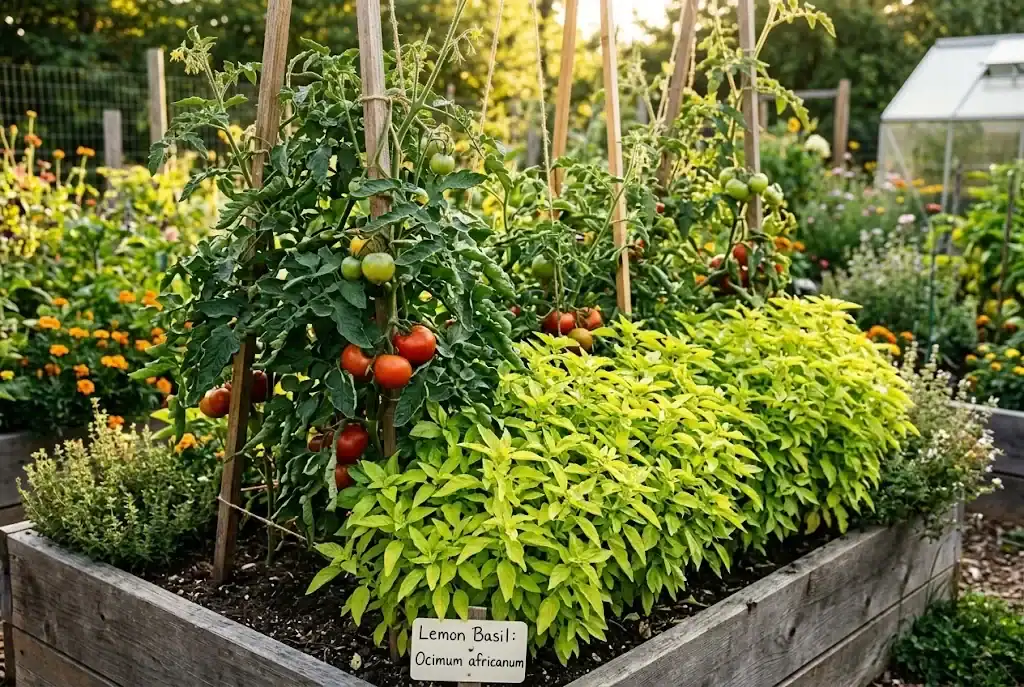
Slugs, aphids, and spider mites occasionally feed on tender leaf undersides, so inspect foliage weekly for any pest activity. Wash small colonies away with a firm spray of water or apply horticultural soap in the early morning. Maintain good air circulation between plants by spacing them ten to twelve inches apart, which prevents powdery mildew and damp fungal conditions.
Harvesting Leaves and Transitioning to Storage
You can harvest basil leaves as needed once plants establish multiple branches and reach eight to ten inches tall. Cut stems just above a pair of leaves to encourage continuous bushy regrowth throughout the season. For step-by-step guidance on optimal cutting timing and stem selection, follow our detailed walkthrough on how to harvest lemon basil without damaging plant crowns.
In the kitchen, treat fresh cuttings gently. Rinse leaves in cool water only immediately before using them to preserve surface essential oils. Pat them dry with a clean cloth, and tear or chop them roughly to release their citrus aroma over grilled meats, noodle bowls, and seasonal fruit salads.
Frequent harvesting keeps plants productive until the first autumn freeze. When frost threatens at the end of the season, take a final large cutting. To keep your harvest fresh for culinary use or preserve it through drying and freezing, see our guide on how to store lemon basil safely.
Frequently Asked Questions About Lemon Basil Care
Can I grow lemon basil indoors on a windowsill? Yes, you can grow basil indoors if you have a bright south-facing window that receives at least six hours of direct sunlight. In darker winter months, supplement natural daylight with adjustable grow lights placed close to the plant canopy.
How is lemon basil different from sweet basil? Sweet basil has broader, glossy green leaves with a classic sweet, clove-like anise flavor. Lemon basil has slightly lighter, narrower leaves with a sharp citrus scent powered by high citral content.
Is lemon basil an annual or a perennial? Lemon basil is grown as a frost-tender annual in almost all climates. It thrives in summer heat and dies back when exposed to freezing temperatures.
Why are my lemon basil leaves turning yellow? Yellowing leaves usually indicate overwatering, poorly drained soil, or low nitrogen. Allow the soil surface to dry slightly between waterings and ensure pots drain freely.