A leggy, sun-starved basil plant on a kitchen counter is usually where a home herb garden starts, and it is also where a lot of beginners give up. Growing herbs at home is far more forgiving than that first failed attempt suggests. Many herbs tolerate a beginner’s mistakes better than a vegetable garden ever will, and once you match a few easy plants to the right light, soil, and water, most of them practically take care of themselves.
This guide covers what actually matters when you grow herbs at home for the first time: which herb to grow first, whether to use containers or a garden bed, how much sun and water herbs need, and how to keep the whole thing productive well past the first month.
Why growing herbs at home pays off fast
Fresh herbs are expensive and wilt within days of a grocery trip, while a single healthy plant can supply cuttings for months. Basil, mint, and parsley all regrow after cutting, so one small purchase or seed packet keeps paying you back through an entire season. The appeal of learning to grow your own herbs is simple: better flavor and lower cost than anything from a store shelf, since homegrown herbs are cut minutes before you use them instead of days before you buy them.
There is a practical side too. Herb growing is some of the most forgiving gardening a beginner can try, since most herbs tolerate a missed watering or an imperfect container better than vegetables do. Herbs generally grow well in the same potting mix sold for vegetables, so no special soil is required to get started, and that makes an herb garden a realistic first project if you have never grown anything before.
Start with the easiest herbs to grow
Not every herb suits a first attempt. Some, like French tarragon, need specific conditions and division to thrive. There are many types of herbs worth growing eventually, but for your first season, the best herbs to grow are the ones that forgive uneven watering and ordinary potting mix. Easy first herbs include basil, mint, chives, and parsley, all of which are easy to grow with only basic care, and any garden center or nursery will carry all four as small starter plants.
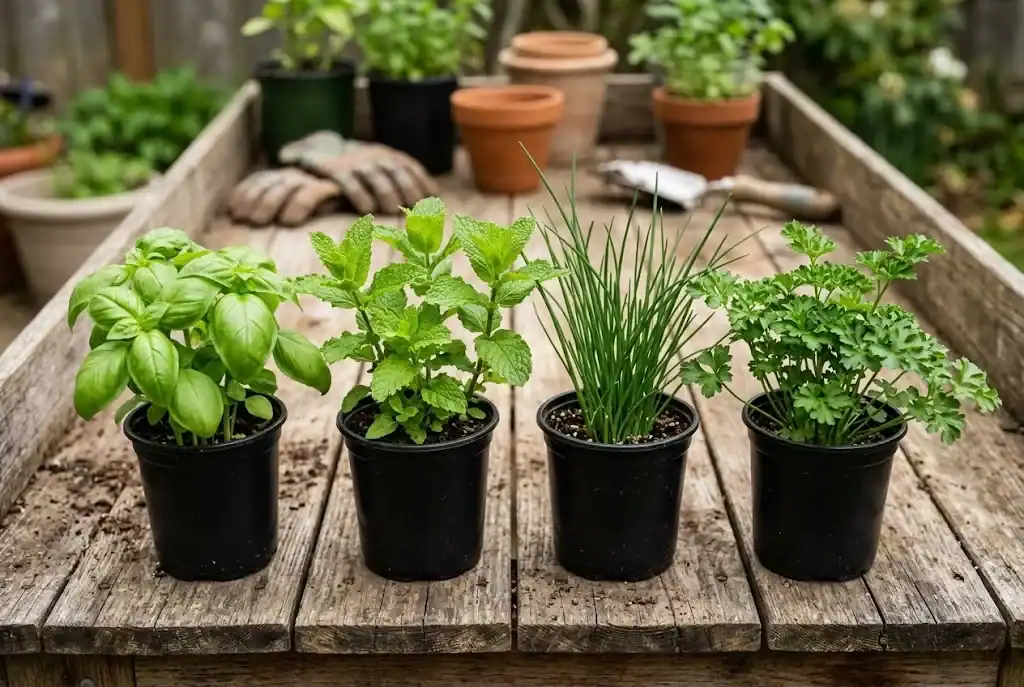
- Basil: an annual herb, fast growing and productive, but sensitive to cold. Pinch the flower buds to keep leaves coming, and once you have more than you can eat fresh, it is the classic base for homemade pesto.
- Mint: nearly impossible to kill, and aggressive enough that it should stay in its own container rather than a shared bed. If you grow mint, keep it contained no matter how tempting a shared border looks.
- Chives: a hardy perennial herb that comes back every spring with almost no care. A single chive plant divides easily if you want a second clump for free.
- Parsley: slow to start from seed but steady once established, and it tolerates a bit of shade better than most herbs on this list.
- Thyme: a low, woody perennial that actually prefers to dry out between waterings. Thyme and sage tolerate a light frost that would set back most tender annuals overnight.
- Oregano: spreads readily, handles poor soil, and rewards a sunny spot with strong flavor.
- Rosemary: a shrubby perennial in warm climates, though it needs to come indoors before frost in colder ones.
- Sage: drought tolerant once established and rarely bothered by pests.
Rosemary, thyme, sage, and chives return year after year in the right climate, while cilantro, dill, and other soft-stemmed herbs are annual and get replanted each season. Cilantro and dill are worth growing too, but both bolt quickly in heat, so treat them as fast, repeat-sown crops rather than long-lived plants. All of the edible herbs above are safe to snip and eat fresh as soon as the plant is established, and once you find a few favorite herbs, adding new ones each year gets easier.
Growing herbs in containers or a garden bed
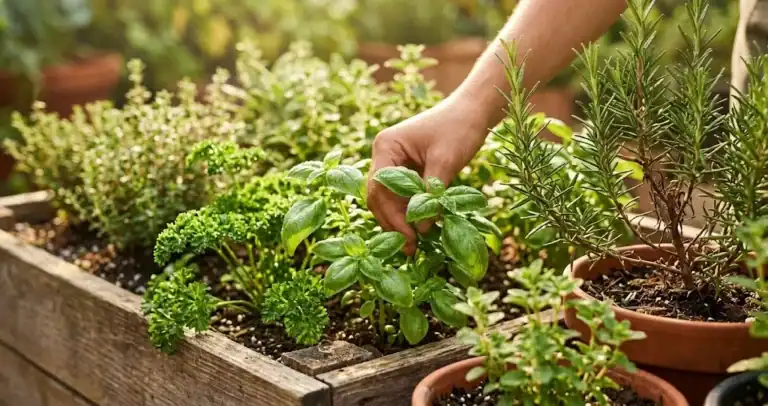
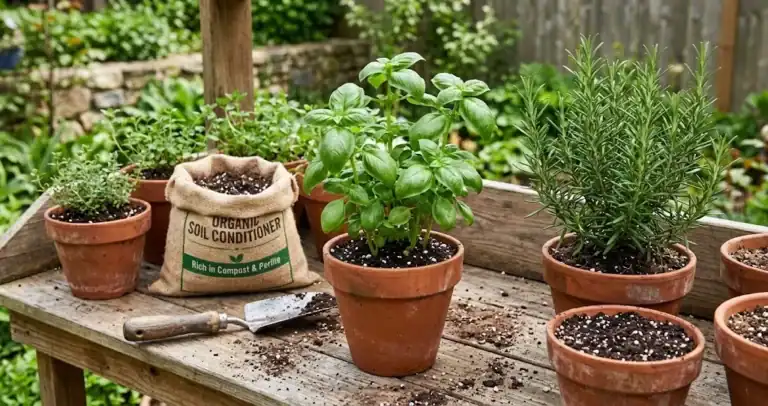
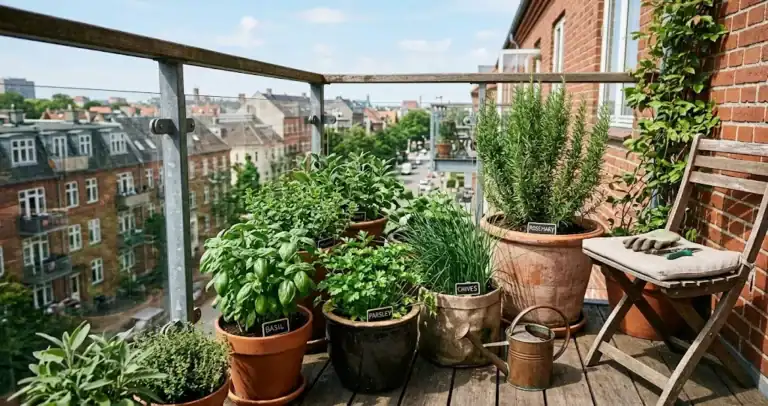
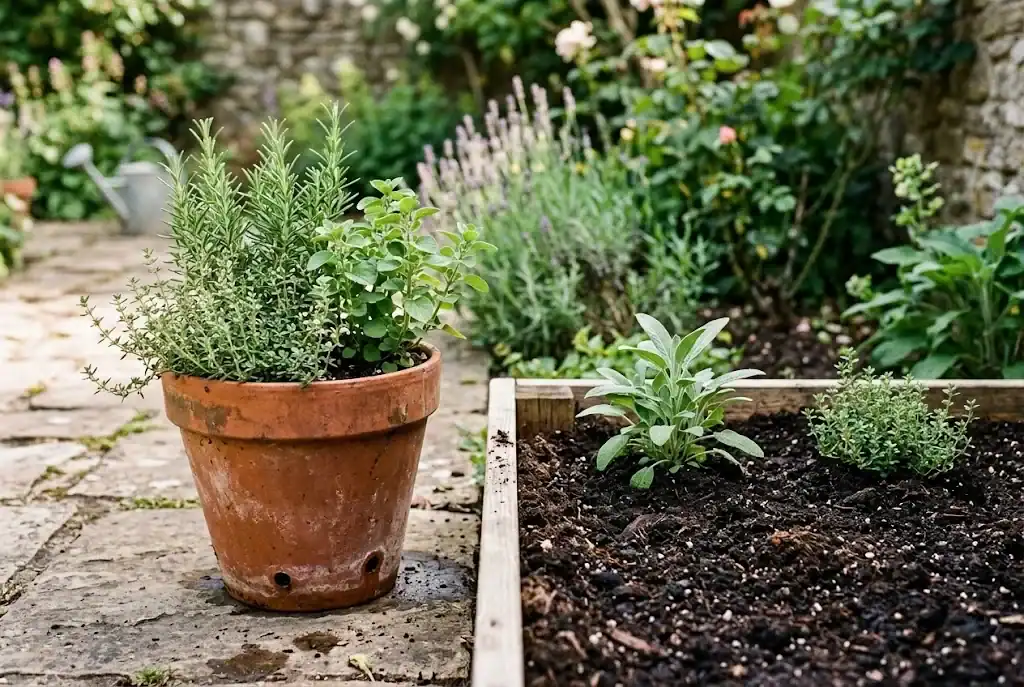
A container garden is the simplest way to start growing herbs at home, especially if you are working with a patio, balcony, or a single sunny windowsill. Growing herbs in containers gives you control over soil and drainage that an in-ground bed cannot always offer, which is why it is the easiest way to grow any tender plant that needs to come indoors before frost. Pick a container with drainage holes, since roots sitting in wet soil is one of the fastest ways to lose a plant. A twelve inch container comfortably holds two or three herbs together that share similar water needs, such as rosemary, thyme, and oregano, or a pair of moisture loving leafy herbs on their own.
An in-ground herb garden works well if you already have a sunny bed, but the soil quality matters as much as the sunlight does. Heavy clay holds too much water for herbs that prefer drier soil, while a raised garden bed or compost-amended soil suits thirstier, leafier herbs. Working a few inches of compost into heavy ground before planting improves drainage more than anything you can do after the fact. If you are not sure your existing bed can support herbs without extra work, a closer look at how much the soil actually matters will save you from planting straight into ground that was never going to work.
Give herbs the light and water they need
Most culinary herbs need at least six hours of direct sun to stay compact and flavorful. Rosemary, oregano, sage, and basil all get leggy and lose flavor without it. Mint, parsley, and chives tolerate partial shade, which makes them a better fit for a north facing window or a bed that only gets morning sun. Match containers to the light a spot actually gets rather than what looks nice on a sill, and a few dollars spent on grow lights will keep a sun loving plant going through a dim winter indoors, which is exactly what makes an indoor herb garden feel right at home even without a bright window.
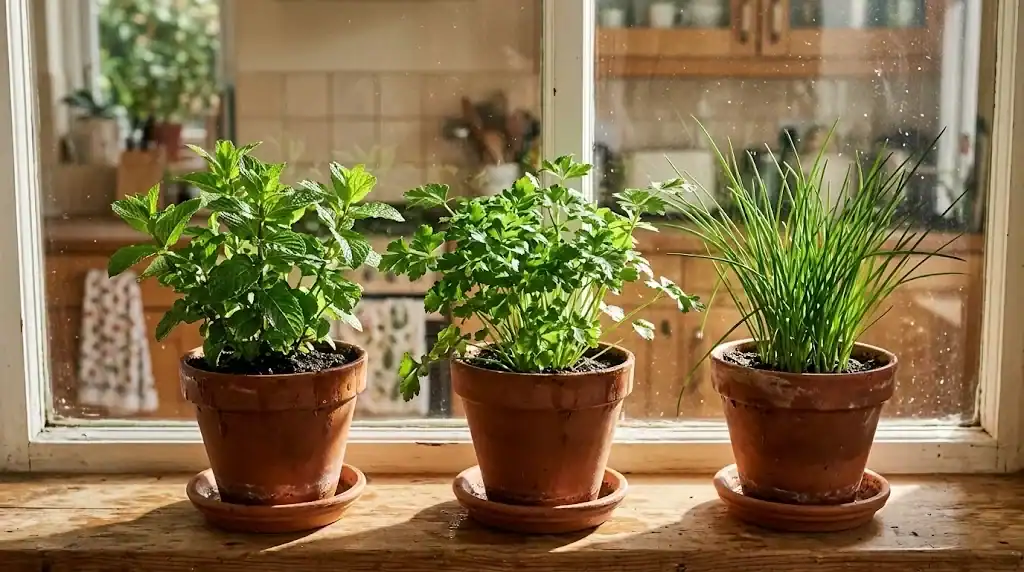
Water is where most beginners overcorrect. Check the top inch of soil before watering rather than watering on a fixed schedule. Mediterranean herbs actually prefer to dry out slightly between waterings, while tender leafy herbs wilt fast if the soil goes completely dry. A container dries out faster than a garden bed, so pots often need water every day or two in hot weather. Herbs grown in containers generally need more frequent attention than the same species planted directly in the ground.
Decide whether to sow seed or buy a starter plant
Basil, cilantro, and dill grow fairly quickly from seed, so starting a herb garden this way makes sense, and plants from seed are far cheaper if you want several herbs. Slower growers like rosemary, thyme, and oregano are usually easier to buy as an established herb plant from a nursery, since seed can take weeks to germinate and longer still to reach a usable size. If you are new to seed starting, begin with a fast germinating annual herb rather than a slow perennial, and plant those seeds directly in their final container once nights stay reliably warm.
If you do sow seed, follow the depth on the packet, keep the soil consistently moist until germination, and thin seedlings once they have their first true leaves so the strongest ones are not competing for light and root space. Let a few plants form seed heads at the end of the growing season if you want to save seed for next year rather than buying it again.
Herbs that grow well together
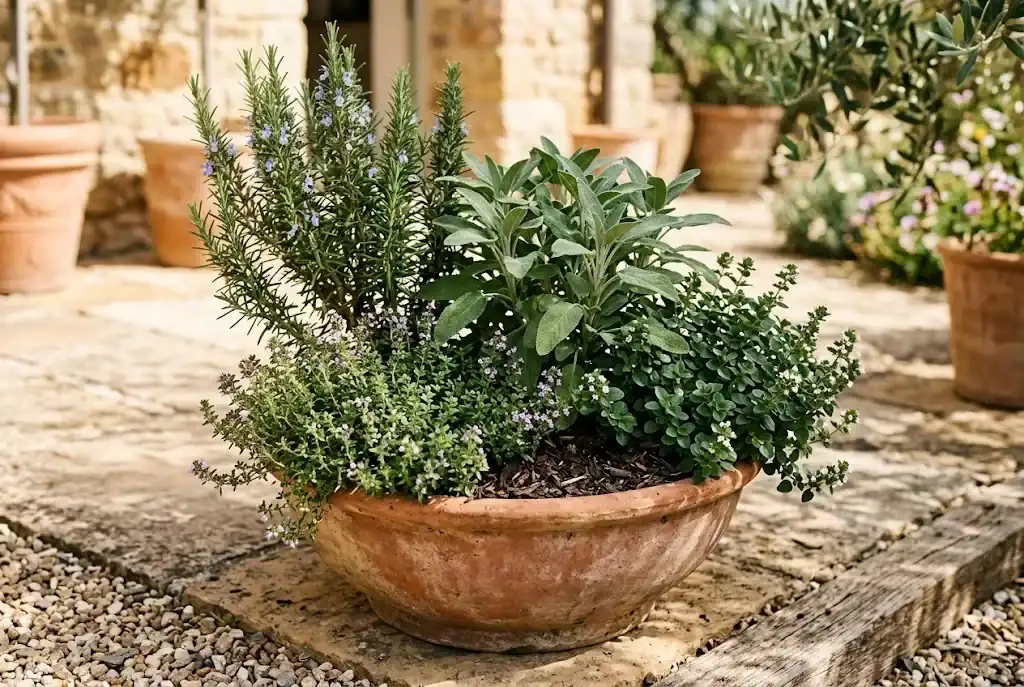
Grouping herbs with similar sun and water needs in one container is basic companion planting: keep thirsty, moisture loving plants away from drought tolerant ones so neither ends up over or underwatered. Rosemary, thyme, oregano, and sage all prefer full sun and drier soil, so they make a reliable Mediterranean pot, since many culinary herbs in this family originated on dry, rocky hillsides and never lost the preference. Basil and parsley both want consistent moisture and rich soil, so they pair well together in a separate container rather than crowding a mixed bed of herbs in your garden that need opposite conditions. If you are planning a garden from the ground up rather than one container at a time, a full walkthrough on starting an herb garden from scratch covers the layout decisions that come before any single herb goes in the ground.
Mint is the one herb that should never share a container with anything else. Its roots spread aggressively enough to crowd out slower growing neighbors within a season. Decide what you actually want to grow before buying containers, since a single sprawling mint plant can take over space meant for three or four other favorite herbs.
Watch for the problems that actually stop beginners
Yellowing leaves on an otherwise healthy looking herb plant usually mean overwatering rather than a nutrient problem, since soggy roots cannot take up what the plant needs. Leggy, stretched stems on basil or mint point to too little light, not too little water. Aphids and spider mites show up most often on stressed plants, so a strong, well watered but not waterlogged herb is your best defense before you need to treat anything.
If a perennial herb struggles through its first winter outdoors, check that the soil actually drains, since wet roots in cold weather kill far more plants than the cold itself. Cilantro is a cool-season annual that tolerates light frost, while tender herbs die back when frost arrives. When in doubt about a struggling plant, herbs are best judged by their roots rather than their leaves, since roots show root rot long before the top growth does.
How to harvest herbs and keep them productive
Snip stems just above a leaf node rather than pulling whole leaves, since that encourages the plant to branch out and produce more growth instead of just getting taller. Knowing when to harvest herbs matters as much as growing them well in the first place. Harvest basil and mint regularly, ideally before they flower, because flowering shifts the plant’s energy away from leaf production and toward seed. Woody, aromatic herbs like rosemary and thyme tolerate a harder cut, taking up to a third of the plant at once without setting it back.
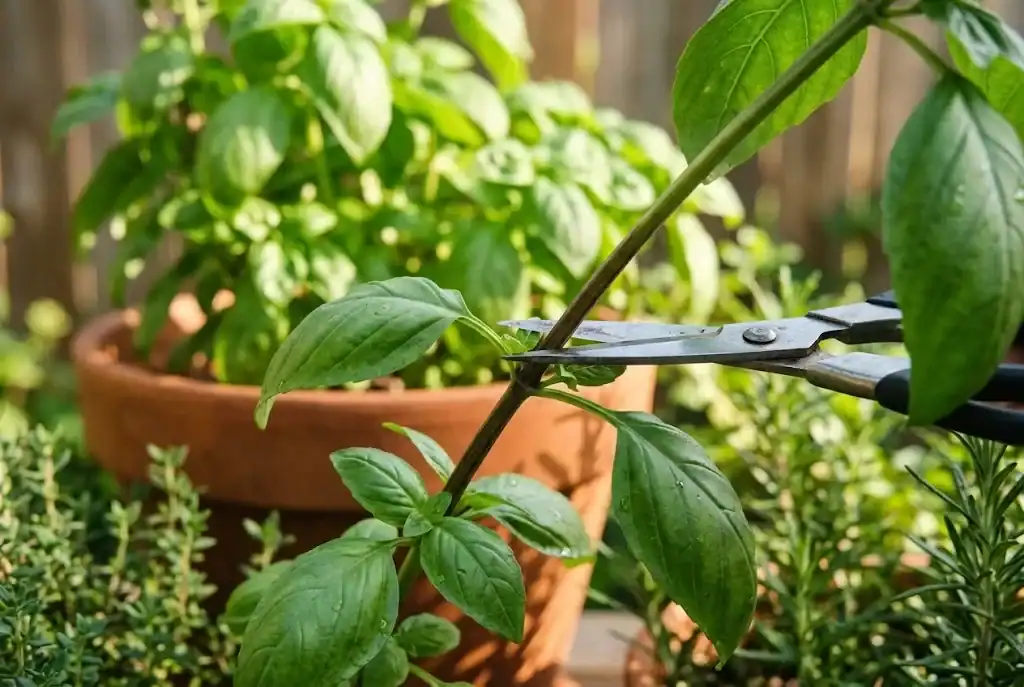
Morning harvest, after dew dries but before the day heats up, gives you the best flavor and the highest concentration of the oils that make fresh herbs worth growing in the first place. Wash and prepare herbs just before you use them, since chopped leaves lose aroma fast once they are cut. Once you have more than you can use fresh, preserving herbs is worth the extra ten minutes: preserving fresh herbs by freezing chopped basil or parsley in oil keeps more flavor than air drying does, while hanging bundles to dry herbs like thyme, oregano, and sage works well because their lower moisture content resists mold and sets them aside for future use through winter. Ongoing care matters more than the planting itself once your plants are established, and keeping the bed in good shape through the rest of the season is what actually determines whether your herbs keep producing into fall.
Frequently asked questions
What is the best way for a beginner to start growing herbs at home? Start small with two or three easy to grow herbs in containers with good drainage, matched to how much sun your space actually gets, rather than planting a large bed all at once.
What are the easiest herbs to grow for beginners? Basil, mint, chives, and parsley are consistently the most popular herbs for first-time growers because they tolerate uneven care and recover quickly from mistakes.
Can I grow herbs indoors without much sunlight? Yes, though your options narrow. Mint, parsley, and chives tolerate lower light better than sun loving herbs like basil and rosemary, and supplemental grow lights close the gap for any indoor herb garden that gets less than four hours of direct sun.
How often should I water herbs in pots? Check the soil rather than the calendar. Water when the top inch feels dry, which in hot weather can mean daily for a small container and every few days for a larger one.
Growing herbs at home rewards attention more than effort. Pick two or three easy herbs, give them the light and drainage they need, and harvest often enough to keep them producing all season. If you love to grow things and want a project that starts paying off within weeks, a first herb garden is about as low a risk as gardening gets.