This perennial herb is most useful when you can walk outside, snip a few fragrant leaves, and leave the plant looking as though nothing happened. The key is to pick from healthy new growth, take modest amounts at a time, and avoid cutting into the old framework. Done that way, picking is a gentle form of pruning that keeps the plant tidy and productive.
For the best flavor, pick fresh leaves in the morning after the dew has dried. Use clean snips, cut a sprig just above a pair of leaves, and never strip a whole stem bare. If you are learning the broader rhythm of gathering herbs, this guide to harvesting herbs with good technique helps put sage in context.
Know which sage you are picking
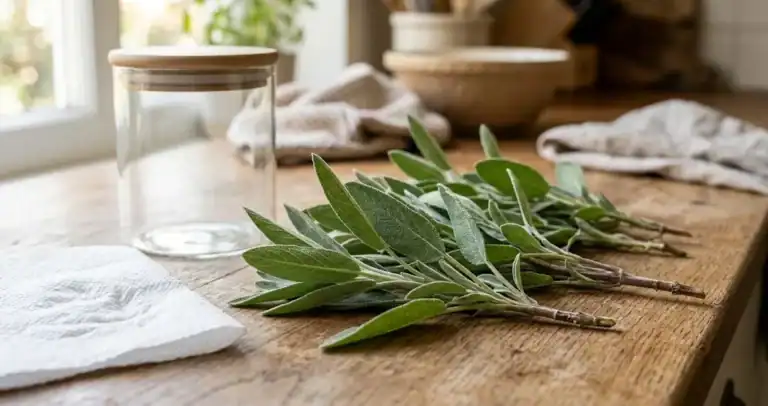
This article is about culinary or common garden sage, Salvia officinalis, the perennial herb with soft gray-green, slightly pebbled leaves and a savory, earthy aroma. Ornamental salvias can be beautiful garden plants, but they are not automatically interchangeable in the kitchen. Buy edible culinary sage from a reliable nursery or use a plant you can identify with confidence.
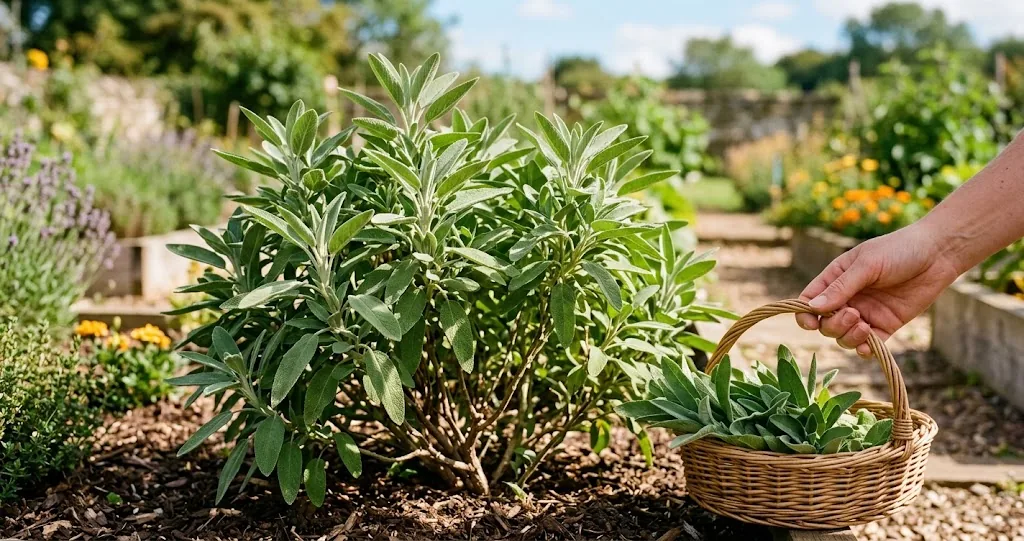
The plant becomes shrubbier as it matures. New shoots are softer and leafier; older stems are brown, firm, and part of the shrub’s permanent structure. That difference matters more than the exact length of any trim.
Common garden sage is an evergreen perennial that is easy to grow in full sun and well-draining soil. In cold climates, plant sage after the last frost. Once established, it can thrive for years with modest picking and light shaping. If you want to learn how to grow sage from the start, give it sun, drainage, and room for air to move around the plant.
When to harvest sage
You can pick a few sage leaves whenever the plant is actively growing, but timing makes a noticeable difference. Wait until a young plant is established and has several leafy stems before taking a real harvest. In its first year, keep picking light so roots and branches can develop.
For fresh cooking, pick as needed through the growing season. For a larger batch to dry, cut in the morning after dew has evaporated, before the sun warms and wilts the leaves. Extension guidance for drying herbs also favors harvesting just before flowers open, when flavor is often at its best. Oregon State University Extension’s drying guide gives the same practical advice for sturdy herbs such as sage.
A blooming plant is not ruined, and its flowers are attractive to pollinators. Leaves may simply taste less focused once the plant directs energy into flowering. If your goal is a tidy kitchen garden, trim spent flower stems and pick leafy shoots instead. Stop making hard pruning cuts late in the season in cold-winter areas, so tender new growth is less likely to be damaged by frost.
What you need
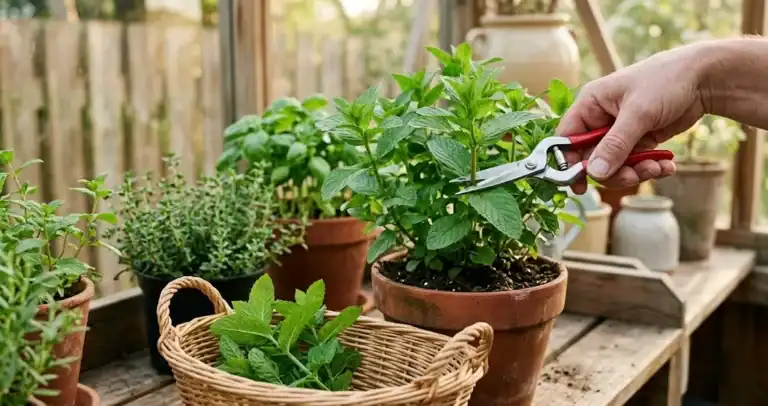
- Clean, sharp herb snips or bypass pruners for larger sprigs
- A small basket, bowl, or breathable bag
- A clean towel if you plan to wash and dry leaves right away
Sharp tools make a clean cut instead of crushing the plant stem. Wash tools before moving between plants, especially if a plant shows signs of pest damage or disease.
How to harvest sage step by step
- Choose healthy stems. Look for vigorous, leafy new growth with no mildew, pest damage, or yellowing leaves. Leave flower buds and stems alone if you want the plant to bloom for bees.
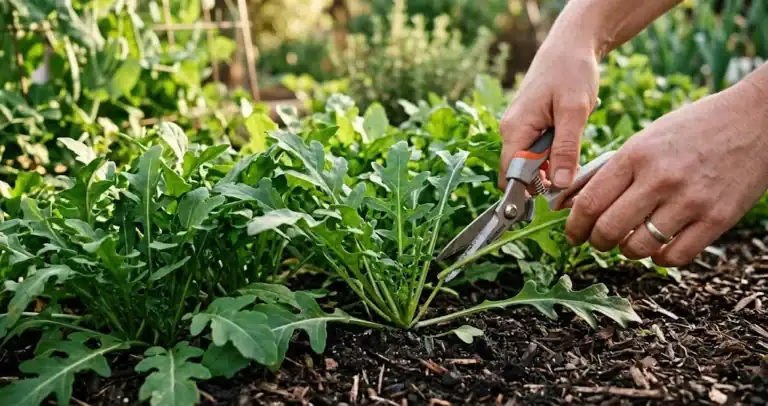
- Follow the stem down. Find a leafy section rather than the bare old base. Make your cut just above a pair of leaves or a branching point. New shoots can grow from the nodes below the cut.
- Take a little from several stems. A few sprigs from around the plant keeps its shape balanced. Avoid taking more than about one-third of the leafy growth in a single session.
- Leave the old crown intact. Do not cut sage down to old, leafless wood. A severely old plant may not reliably push new shoots from that area.
- Handle the harvest gently. Keep fresh leaves out of direct sun. Bruised leaves lose their good looks and their pungent aroma quickly.
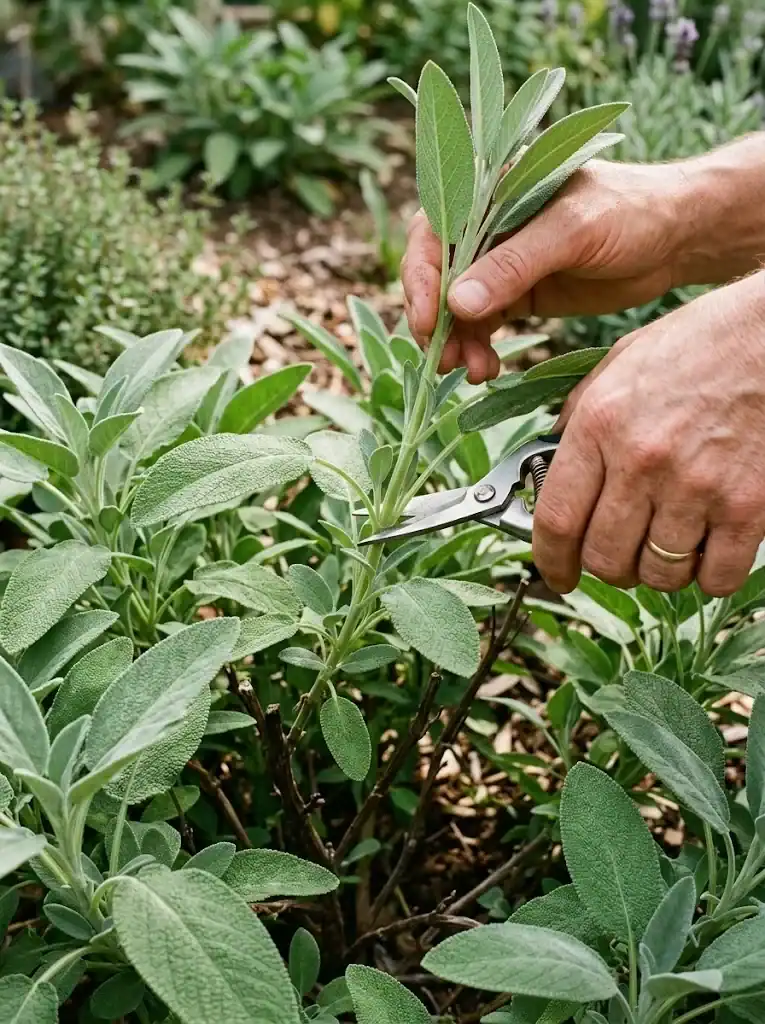
That approach also explains how to prune sage. A light trim through the growing season encourages branching, while an occasional shaping cut removes lanky tips. Do not turn every harvest into a severe pruning job.
How much sage can you take?
A mature, healthy sage plant can handle regular small pickings. The useful rule is restraint: take a few whole sprigs for dinner, or distribute a larger picking around the plant, but leave plenty of green leaves to fuel new growth. If the plant is stressed by drought, recent transplanting, heat, or pests, postpone a larger picking until it recovers.
When the plant gets leggy, trimming the longest green shoots can make it bushier. Work gradually, especially on an older plant with lots of woody stems. If you want new plants, take soft green starts in the active season rather than trying to root an older piece.
Use fresh sage right away
Fresh leaves are intensely savory, so a little goes a long way. Rinse only what you need under cool water, then dry it thoroughly. Whole leaves can be crisped in butter or olive oil; chopped leaves work well in bean dishes, squash, pasta, roasted vegetables, and poultry seasoning. For ideas after the harvest, browse these sage recipe ideas.
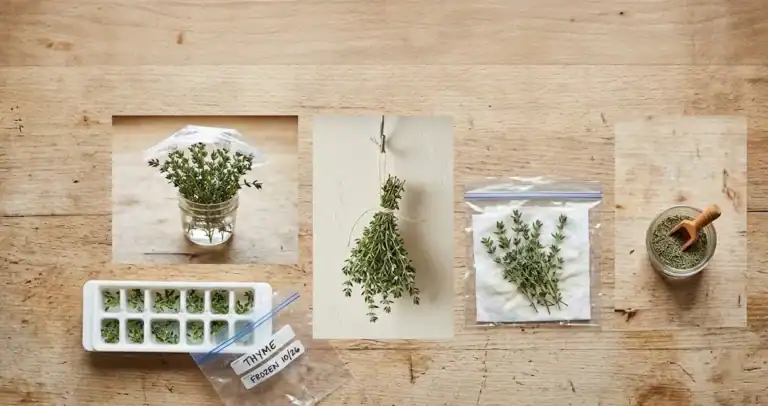
Store fresh sage loosely wrapped in a barely damp paper towel in a container or bag in the refrigerator. Check it every few days and remove any soft leaves. For a bigger batch, drying or freezing lets you hold onto the flavor longer.
Dry sage for later
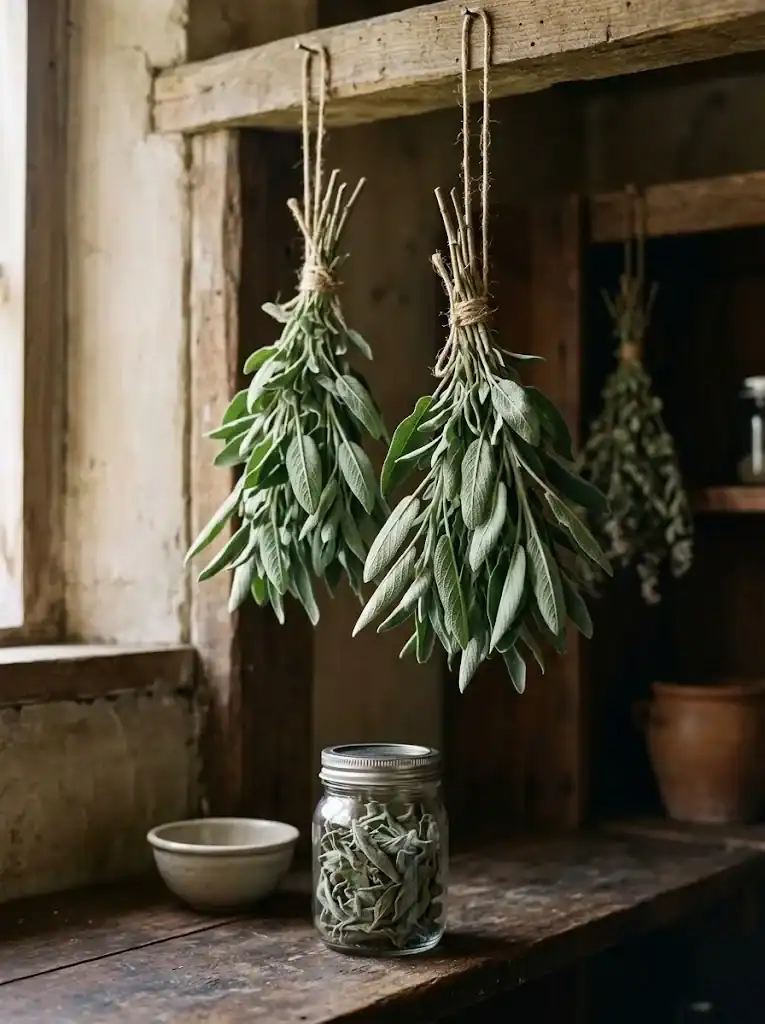
This is a hardy herb that air dries well. Gather small bundles rather than one thick bundle, tie the stems, and hang them in a dry place with good air circulation away from direct sun. You can also spread whole leaves in a single layer on a rack or tray. A food dehydrator is useful in humid climates or when you want a faster, more predictable result.
Leaves are dry when they crumble easily and stems snap rather than bend. Strip the leaves from the stems and store them whole in an airtight container in a cool, dark cupboard. Wait to grind them into seasoning until you use them, because whole leaves hold their aroma better. Penn State Extension also recommends storing dried herbs whole when possible and using less dried herb than fresh because the flavor is concentrated. See its herb-drying guidance.
Freeze sage when you want a fresher flavor
Freezing is a good choice for fresh leaves you plan to use in cooked dishes. Pat washed leaves completely dry, freeze them in a single layer until firm, then transfer them to an airtight freezer container. You can also chop leaves and freeze them in small portions with water or oil for soups, sauces, and roasting pans. Frozen leaves will be softer after thawing, but the flavor remains useful.
For a more detailed next step, learn how to store sage after harvesting without wasting a good crop.
Common picking mistakes
- Cutting into leafless old wood: take green, leafy shoots instead.
- Taking too much from a small plant: let young sage establish before relying on it for a large batch.
- Harvesting wet foliage: wait until the dew has dried, especially when you plan to dry leaves.
- Making one crowded drying bundle: small bundles allow air to move and help prevent mold.
- Storing dried leaves near heat or sunlight: a cool, dark, dry place protects color and taste.
Frequently asked questions
Can I pick leaves after it flowers?
Yes. The leaves remain usable after bloom, though their flavor can be less intense. Cut a few leafy green sprigs and leave enough foliage for the plant to recover. If you are drying leaves for the strongest flavor, pick before flowering when possible.
Will sage grow back after I cut it?
A healthy plant usually responds well to light picking from green growth. Make cuts above leaves or nodes and avoid removing the old framework. A plant that is very old, winter-damaged, or stressed may recover more slowly.
Should I wash leaves before drying them?
If the leaves are dusty or have insects, rinse them in cool water and shake off excess water. Let them dry thoroughly before bundling or placing them in a dehydrator. Wet leaves held in a dense bundle are more likely to mold.
Can I use the flowers?
Flowers from an edible variety are usable and have a mild herbal flavor. Use a few as a garnish or scatter them over a salad. Keep flower use separate from the question of harvesting leaves: flowering stems are also valuable to pollinators, so leave some when you can.
What part of the plant do you use?
Use the leaves and the tender tips of young sprigs. The older stems are usually too tough for cooking. The leaves carry the savory flavor from the plant’s natural essential oils, so chop or fry them shortly before serving for the best aroma.
The simple rule for a lasting crop
Pick from fresh green shoots, make clean cuts above leaves, and leave the old base and most of the plant behind. That small bit of care gives you fresh leaves now, dried leaves for later, and a plant that can keep producing year after year.