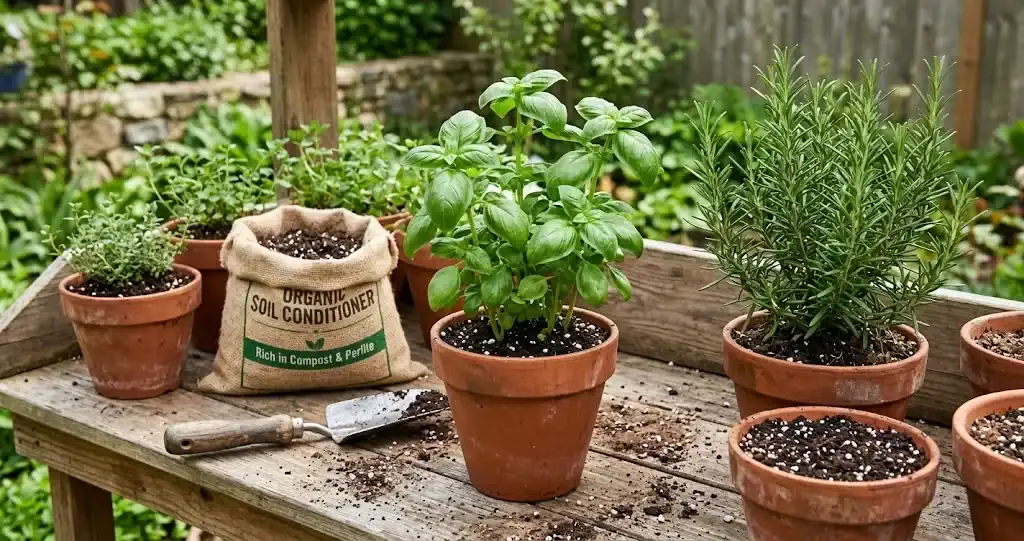
Alongside inadequate light and watering errors, poor soil is one of the most common causes of herb failure. Dense, compacted ground suffocates roots, while cheap bagged mixes often hold too much water and turn sour. Choosing the best soil for growing herbs gives your plants the loose texture, steady aeration, and reliable moisture flow they need to thrive season after season.
Whether you tend a sunny windowsill collection, build an outdoor container herb garden on a patio, or cultivate expansive raised beds, matching the soil conditions to your plants makes all the difference. In this guide, you will learn what makes an ideal herb soil, how to select the best potting soil for herbs in pots, how to blend your own organic potting soil mix, and how to prepare native ground for long-term plant health.
Why Soil Structure and Aeration Matter for Culinary Herbs
Most culinary herbs, especially Mediterranean favorites like rosemary, thyme, sage, and oregano, originated along rocky, sun-baked hillsides with lean ground. In these native environments, rainfall drains away quickly, leaving roots surrounded by pockets of oxygen rather than stagnant water. Understanding this natural habitat explains how soil, sunlight, and watering work together to support healthy herb growth.
When soil compacts into dense, waterlogged earth, it drives out essential air. Without adequate aeration, roots cannot absorb minerals or respire, which quickly triggers fatal root rot. A healthy root system requires porous soil where water flows freely through the profile while retaining just enough moisture to keep root hairs hydrated. If you are planning an herb garden properly across different beds, establishing good soil porosity is always the first foundational step.
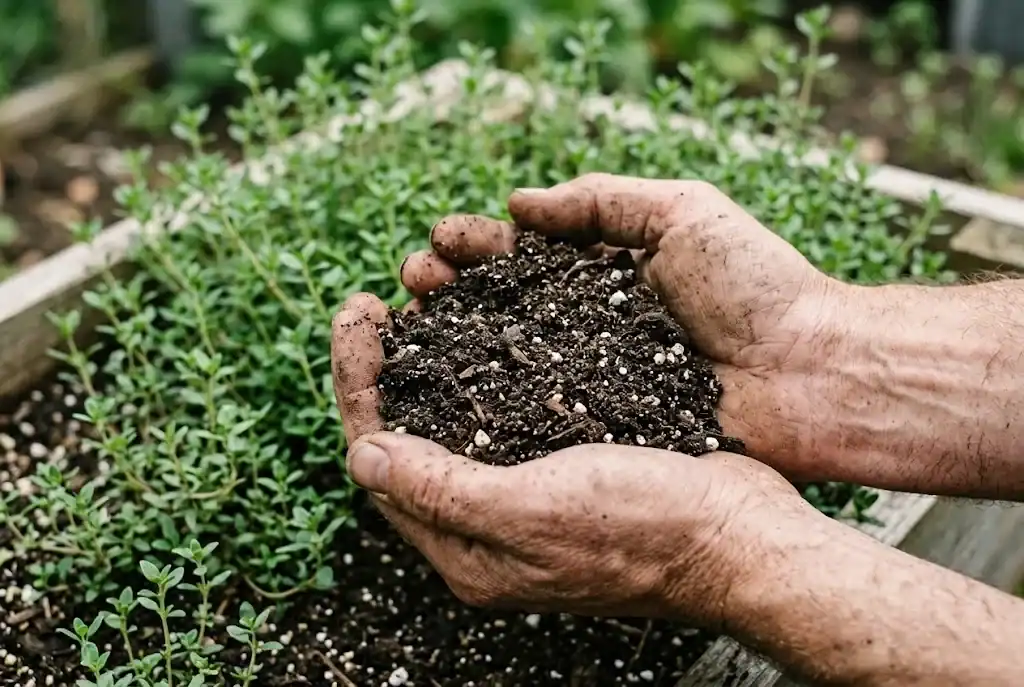
Different types of herbs have slightly different moisture preferences, but almost none tolerate waterlogged ground. Robust perennial herbs prefer gritty, slightly sandy soil, whereas leafy herbs such as basil and parsley appreciate a slightly richer, moist soil that still sheds excess water rapidly after heavy rains.
Best Potting Soil for Herbs in Containers
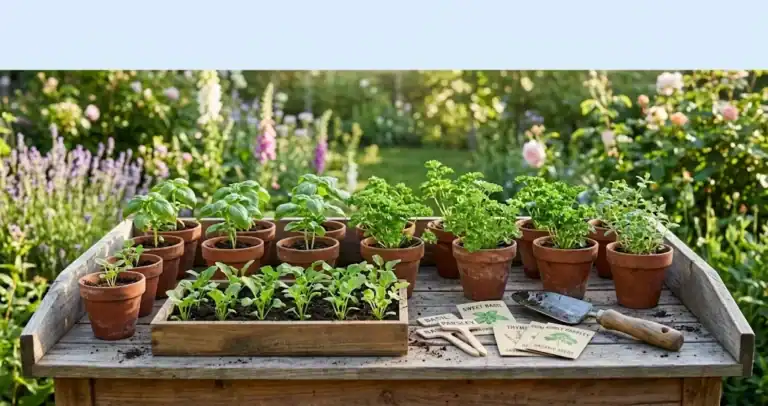
Raising herbs in containers requires a specialized growing medium. Never dig native backyard loam from your yard to fill a pot or flowerpot. Unamended native ground compacts tightly inside container walls, hardens like concrete as it dries, and often introduces weeds, fungal spores, or soil-borne pests. Instead, container plantings demand a lightweight, porous potting mix designed specifically for container culture.
When shopping for commercial bagged blends, look for a high-grade organic potting soil mix formulated for vegetables and edible herbs. The best potting soil for herbs should feel light, fluffy, and spongy in your hands, never heavy or sticky. High-quality indoor potting mixes typically combine sphagnum peat moss or shredded coconut coir with perlite or coarse horticultural sand to maintain steady porosity.
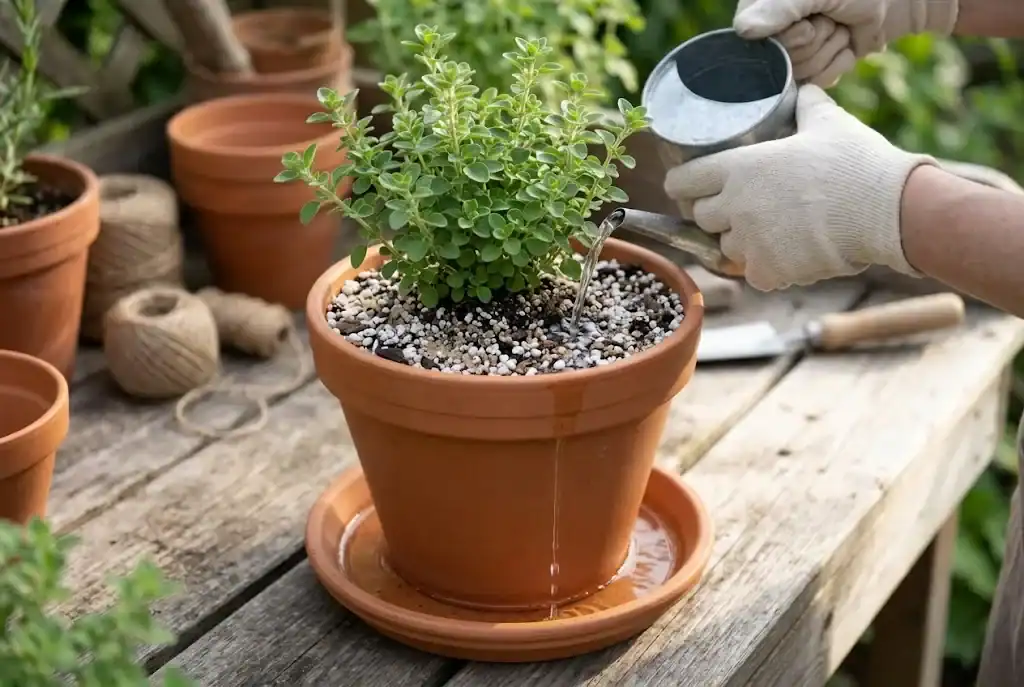
Container design also plays an essential role alongside your soil mix. Always ensure every pot has unobstructed drainage holes at the base. A premium potting mix cannot protect plants if excess water accumulates in the bottom of a sealed container. When setting up pots, avoid adding gravel or stones at the base, which creates a perched water table; instead, fill the container completely with uniform herb potting soil, allowing excess water to drain freely into a catchment saucer.
Creating a Custom Herb Soil Mix at Home
Blending your own custom herb soil mix gives you complete control over soil ingredients, texture, and fertility. Making homemade mix is economical and allows you to tailor moisture retention for both indoor herb plants and outdoor herb planters. A dependable DIY herb soil formula balances moisture retention, gravelly porosity, and gentle organic nutrition.
Here is a reliable standard formula for growing culinary herbs in pots and planters:
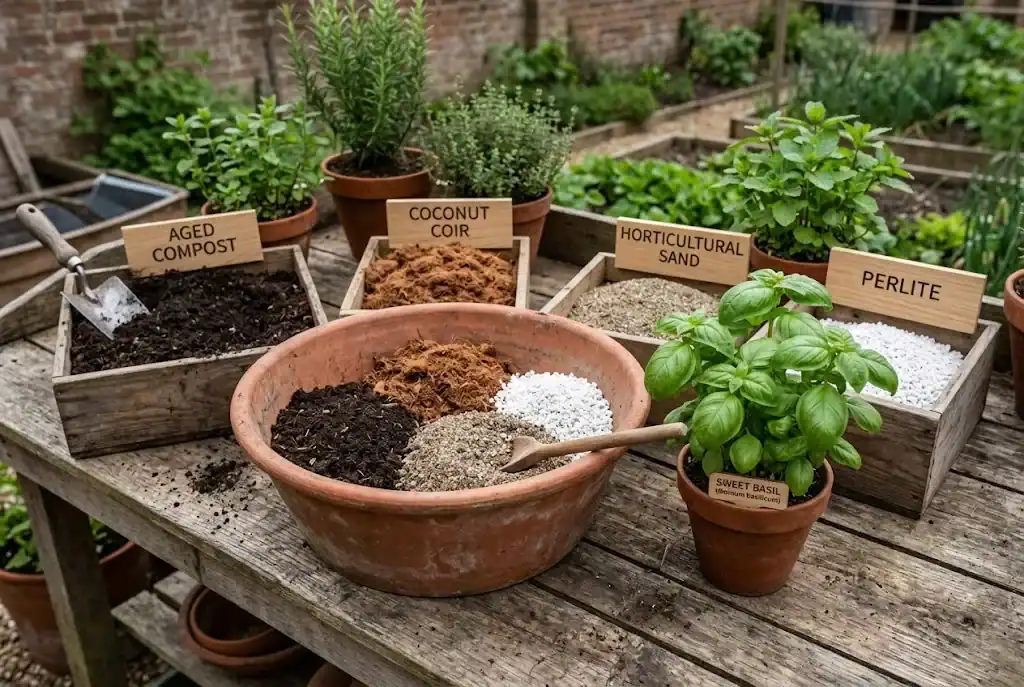
- Two parts sphagnum peat moss or washed coconut coir to help retain moisture without packing down. Peat-free coconut coir offers a sustainable alternative with a naturally balanced starting reaction.
- Two parts high-quality organic compost or aged leaf mold to supply gentle, slow-release nutrients and beneficial soil biology.
- One part coarse horticultural sand or pumice to keep the blend loose and prevent compaction.
- One part horticultural perlite to maximize root zone aeration.
Combine these soil ingredients thoroughly in a wheelbarrow or large mixing tub. Moisten the blend lightly with warm water before filling your planters so the organic material absorbs moisture evenly. If you are also growing culinary herbs from seeds in seedling flats, sift this mix through a fine wire screen to provide a smooth, gentle bed for delicate young sprouts.
Preparing Garden Soil for In-Ground Beds and Raised Beds
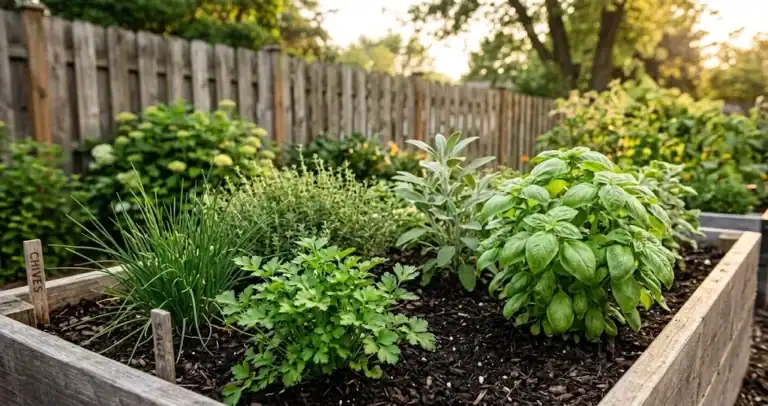
If you plant directly into backyard plots or a raised bed, your native ground will likely require careful soil amendments. Heavy clay soil holds excessive moisture during spring rains and bakes into hard clods during summer heat. Conversely, overly sandy earth loses moisture and dissolved nutrients before plant roots can capture them.
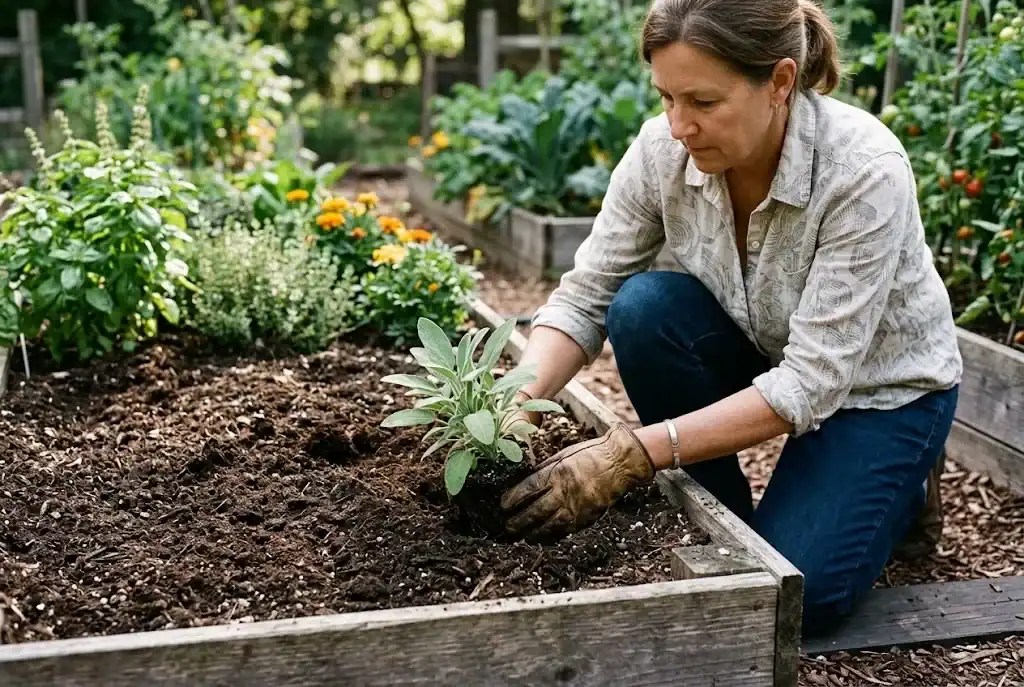
To improve native garden soil for in-ground beds, incorporate generous amounts of organic matter each spring or autumn. Spread a two to three inch layer of well-rotted leaf mold, aged manure, or composted mulch across the bed and work it into the top six to eight inches of ground. Organic matter loosens dense clay particles to promote aeration and increases the water-holding capacity of loose sand. In regions with persistent heavy clay, constructing a raised bed filled with a custom loam mix offers the most reliable way to achieve ideal soil conditions.
When selecting seed varieties for your garden beds, knowing what to look for in quality herb seeds helps you match vigorous cultivars to your specific outdoor soil environment.
Managing Soil pH and Essential Nutrients for Culinary Herbs
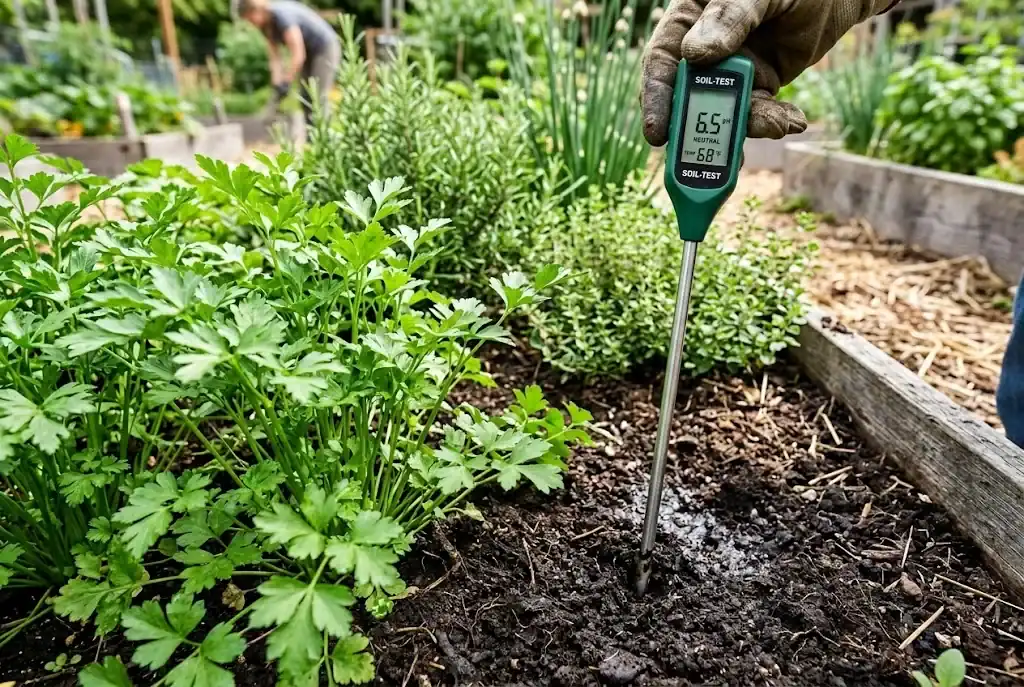
Soil chemistry directly influences how readily plants absorb minerals. Most culinary herbs thrive in slightly acidic to neutral soil with a soil pH between 6.0 and 7.0. A simple home soil test kit or digital pH meter helps you monitor your garden beds before planting. If your ground tests too acidic, finely ground dolomitic limestone raises the pH and supplies calcium; if you encounter overly alkaline soil, elemental sulfur or acidic organic amendments will lower the pH to the ideal 6.0 to 7.0 range.
Herbs generally require far less fertilizer than heavy-feeding vegetable crops like tomatoes or corn. Over-fertilizing herbs with high-nitrogen chemical fertilizer produces rapid, watery vegetative growth that dilutes the concentrated essential oils responsible for culinary flavor and aroma. According to Colorado State University Extension, growing herbs in well-drained soil with modest fertility and full sun helps concentrate the essential oils that give herbs their distinct aroma and flavor.
Feed container herbs sparingly during the active growing season with a diluted organic fish emulsion, seaweed liquid, or a light top-dressing of organic humus. In-ground herbs rarely need supplemental feeding beyond an annual spring application of organic mulch.
Soil Requirements for Popular Fresh Herbs
While all culinary herbs need good porosity, specific plants exhibit distinct preferences for moisture and soil texture:
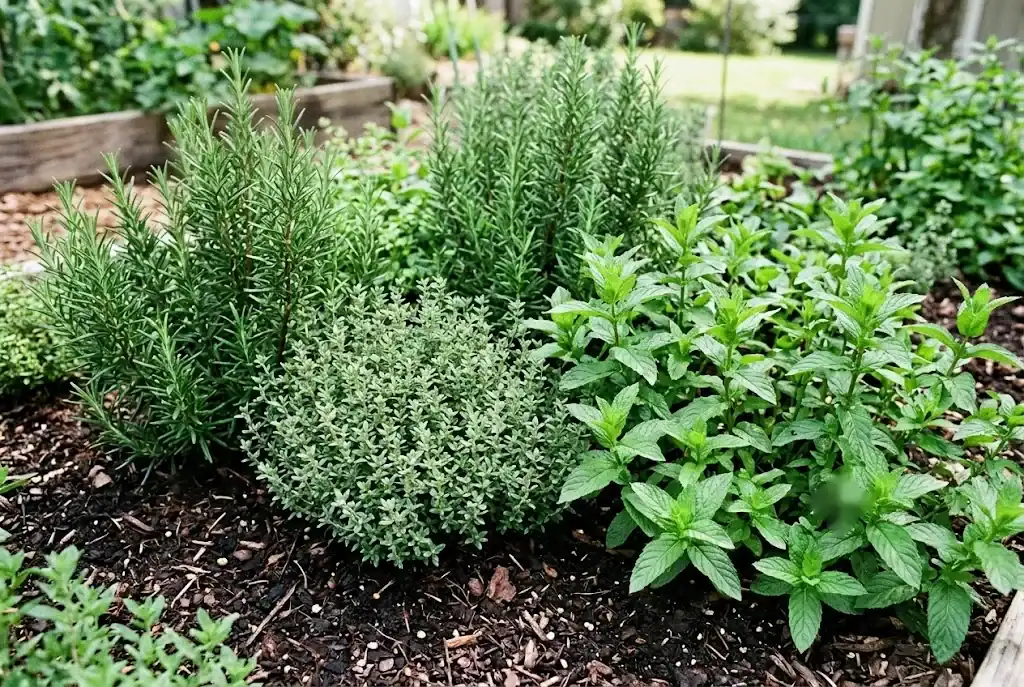
- Rosemary (Salvia rosmarinus): Demands very lean, sandy, fast-percolating plant soil. Rosemary tolerates poor soil and dry spells but declines rapidly in wet, heavy ground.
- Garden Thyme (Thymus vulgaris): Thrives in gritty, well-aerated ground with modest organic matter. Thyme prefers its soil on the drier side between waterings.
- Culinary Sage (Salvia officinalis): Needs light, porous loam that sheds water quickly. Established sage plants develop deep roots that withstand summer drought.
- Greek Oregano (Origanum vulgare): Performs best in rocky or sandy, moderate-fertility soil. Rich, soggy ground softens the herb’s intense peppery flavor.
- Sweet Basil (Ocimum basilicum): Appreciates nutrient-rich, moist soil amended with organic matter, provided excess water moves away freely.
- Flat-Leaf Parsley (Petroselinum crispum): Prefers deep, fertile, moisture-retentive soil rich in organic material for lush leaf production.
- Spearmint and Peppermint (Mentha spp.): Prefer rich, consistently moist but well-drained soil with plenty of organic matter. Mint tolerates damp conditions better than Mediterranean herbs, though it still needs open aeration to prevent root disease.
Troubleshooting Common Herb Soil Problems and Root Rot
Recognizing the early warning signs of unhealthy soil allows you to correct problems before plants suffer permanent damage. The most frequent issue in indoor herb gardening and patio container care is overwatering combined with compacted, soggy potting mix. If you notice yellowing lower leaves, foul-smelling earth, or stunted shoot growth, inspect the root zone immediately. Healthy roots appear firm and creamy white, whereas dark brown, mushy, or stringy roots indicate advanced root rot.
To rescue a waterlogged potted herb, remove the plant from its container, trim away decayed roots with sterilized shears, and repot into fresh, aerated herb soil mix. Ensure the new pot has functional drainage holes and reduce watering frequency, allowing the top inch of soil to dry out between applications.
Surface problems like green algae and white mineral crusts have distinct causes and solutions. Green algae indicates persistent surface dampness from overwatering; allow the top layer of soil to dry out between waterings and scrape off any green growth. White crusts are mineral deposits from hard tap water or fertilizer salts; flush the container thoroughly with plain water until it drains freely from the bottom holes, or refresh the top layer of potting mix. For indoor pots, running a small fan improves air circulation, helping the soil surface dry evenly and preventing fungal issues.
Next Steps for a Thriving Herb Garden
Building the right soil foundation is the single most rewarding investment you can make for your kitchen herb plantings. By selecting lightweight, porous potting mix for containers and enriching garden beds with generous organic matter, you create the ideal environment for vigorous root development, resilient plants, and aromatic, harvest-ready fresh herbs throughout the season.