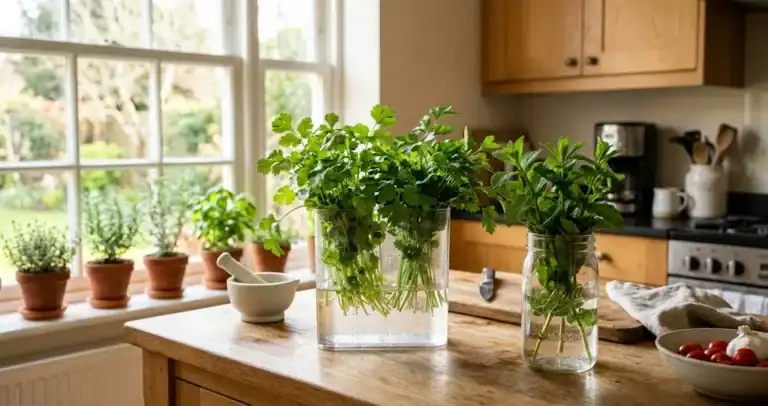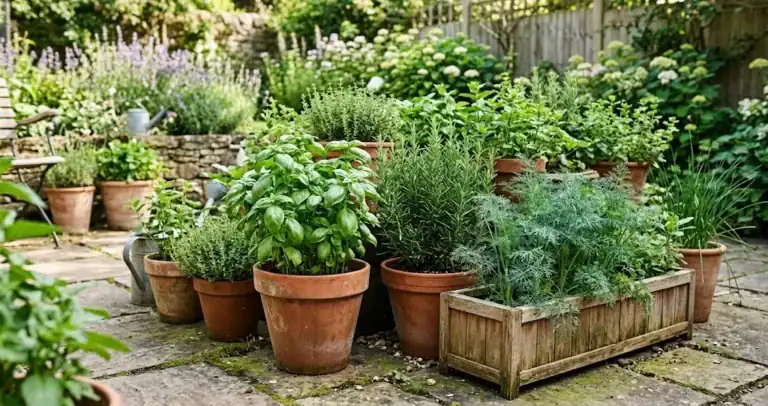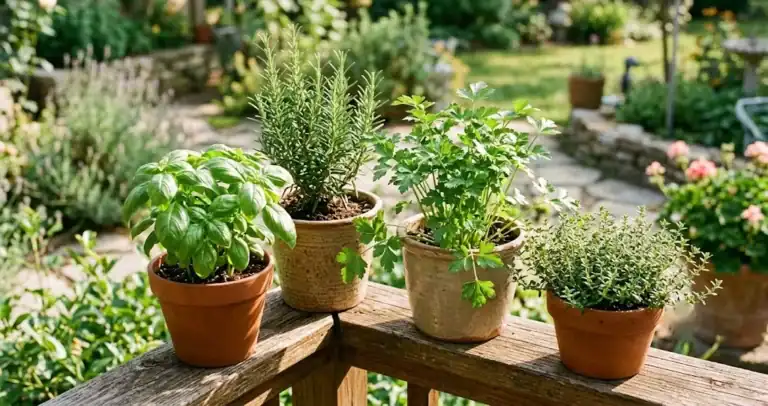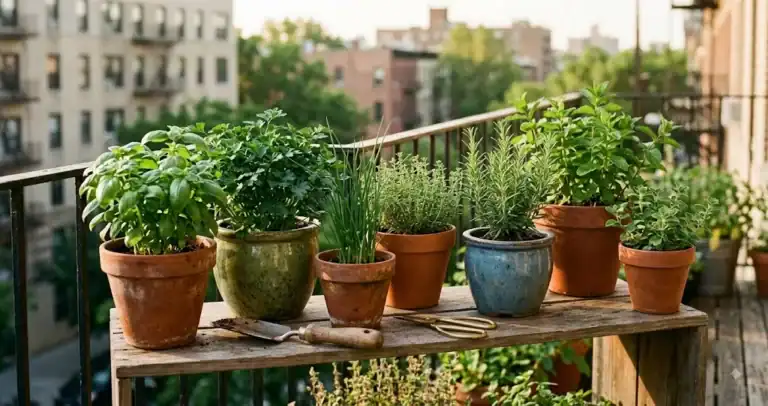
A pot can put fresh leaves beside the grill, mint by the back door, or basil within reach of the kitchen. That convenience is the real appeal of growing herbs in pots: you can garden in a small space, move plants when the light changes, and give each herb the soil and moisture level it prefers.
Success comes down to a few basics. Choose a container with drainage holes, use a light container mix, match plants with similar needs, and check moisture more often than you would in an in-ground bed. You can grow herbs in containers on a patio, balcony, doorstep, or sunny indoor shelf and gather useful harvests for months.
If you are planning more than a few containers, Herbatorium’s guide to building an herb garden from the ground up can help you fit the pots into a broader growing plan.
Why a container herb garden works so well
Containers turn awkward spaces into productive ones. You can grow herbs where there is no open soil, place fragrant plants close to where you cook, and raise the work surface for easier tending. A pot also lets you move a tender perennial inside before cold weather or shift a plant out of harsh afternoon sun.
Separate pots make it easier to manage herbs with different habits. Mint can spread without invading the rest of the garden. Rosemary can have a drier mix than basil. A struggling plant can be isolated and checked without disturbing its neighbors. This control is one reason potted herbs work for both new and experienced gardeners.
Containers are not automatically easier in every respect. Their smaller volume dries faster, roots have less room, and nutrients wash out with repeated watering. The tradeoff is worthwhile when you enjoy the wider benefits of keeping an herb garden at home but need a compact, flexible setup.
Choose the best herbs for your container garden
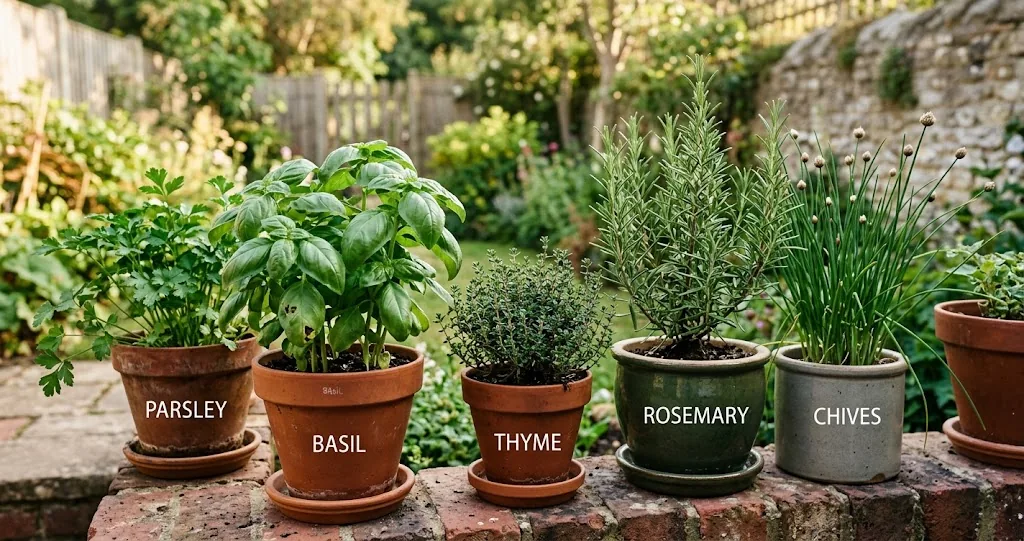
Many herbs grow well in containers. Basil, parsley, chives, thyme, oregano, sage, rosemary, cilantro, dill, lavender, and mint are all practical choices. Start with the flavors you actually use, then check each plant’s mature size, light needs, and preferred moisture before deciding whether it should grow alone. This keeps an herb container garden useful instead of crowded.
Good choices for beginners
- Chive: Compact, forgiving, and easy to trim for repeat harvests.
- Parsley: Productive in a deeper pot and tolerant of a little less sun than many Mediterranean herbs.
- Thyme: Small, aromatic, and comfortable in fast-draining mix.
- Oregano: Vigorous enough to fill a container and useful in frequent small harvests.
- Basil: Fast-growing in warm weather when it receives steady moisture and plenty of light.
- Mint: Adaptable and productive, but best kept in its own pot because its runners spread quickly.
Herbs that can share one container
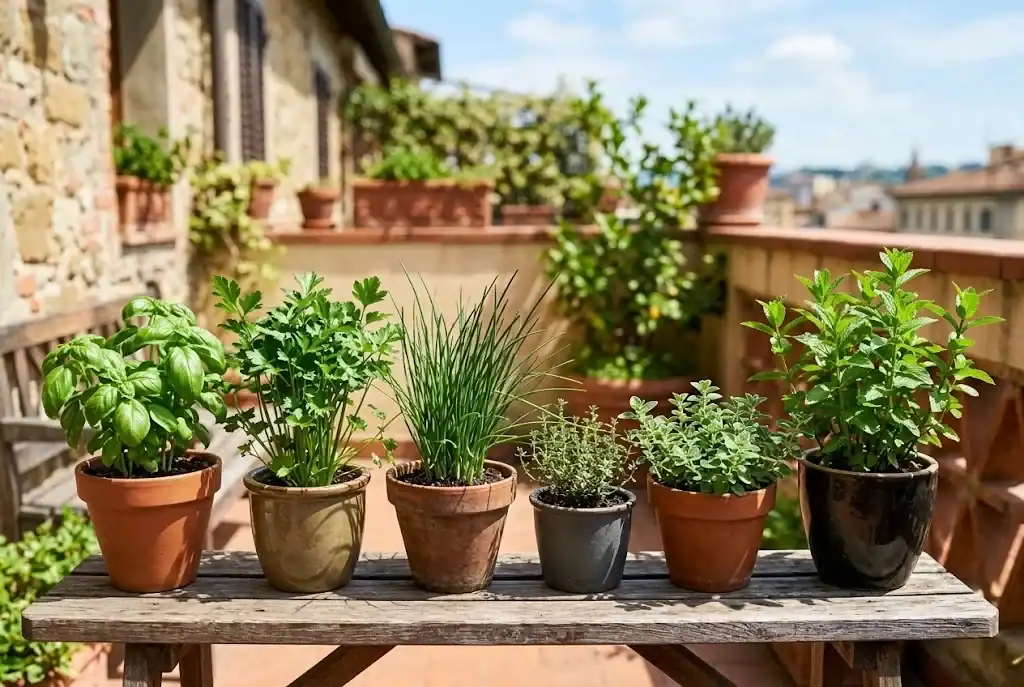
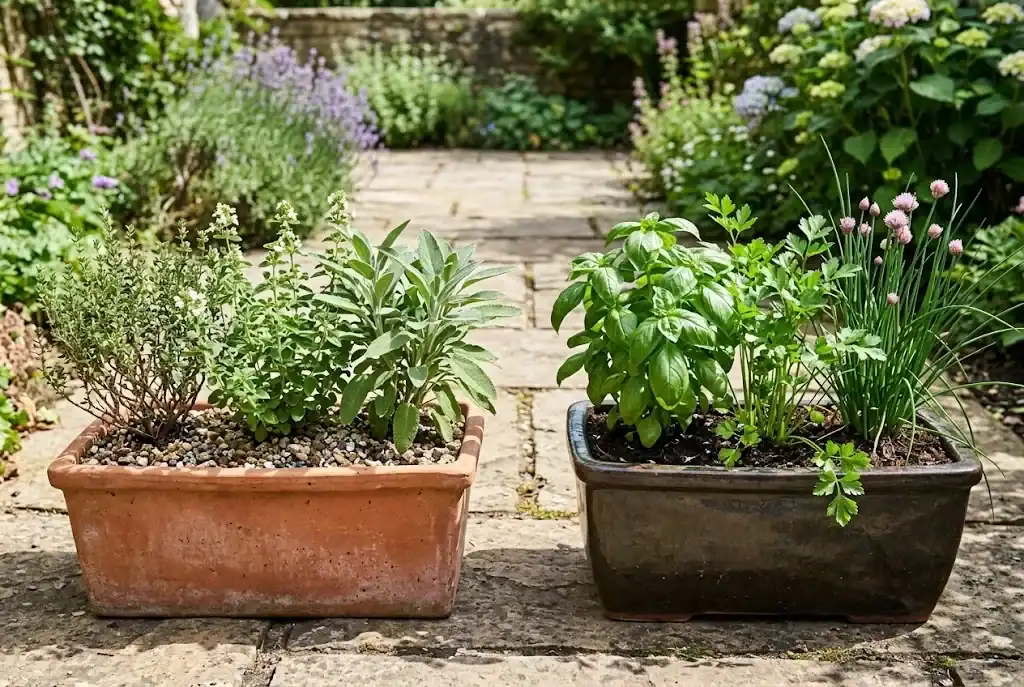
Plant herbs together only when their care needs match. Perennial herbs from Mediterranean climates prefer bright light, sharp drainage, and time to dry out between waterings. Annual herbs like basil and cilantro generally need steadier moisture during the growing season. Parsley and chives also appreciate a more evenly moist growing medium. Give larger herbs like rosemary their own roomy container so they do not shade or crowd smaller plants.
The answer to whether you can put herbs together in one pot is therefore yes, with limits. Do not combine mint with slower plants, and avoid mixing a thirsty basil plant with a dry-loving herb that resents wet roots. If you need help with material, depth, or drainage, see this guide to selecting the right pots for your herbs.
Plant herbs in pots in five steps
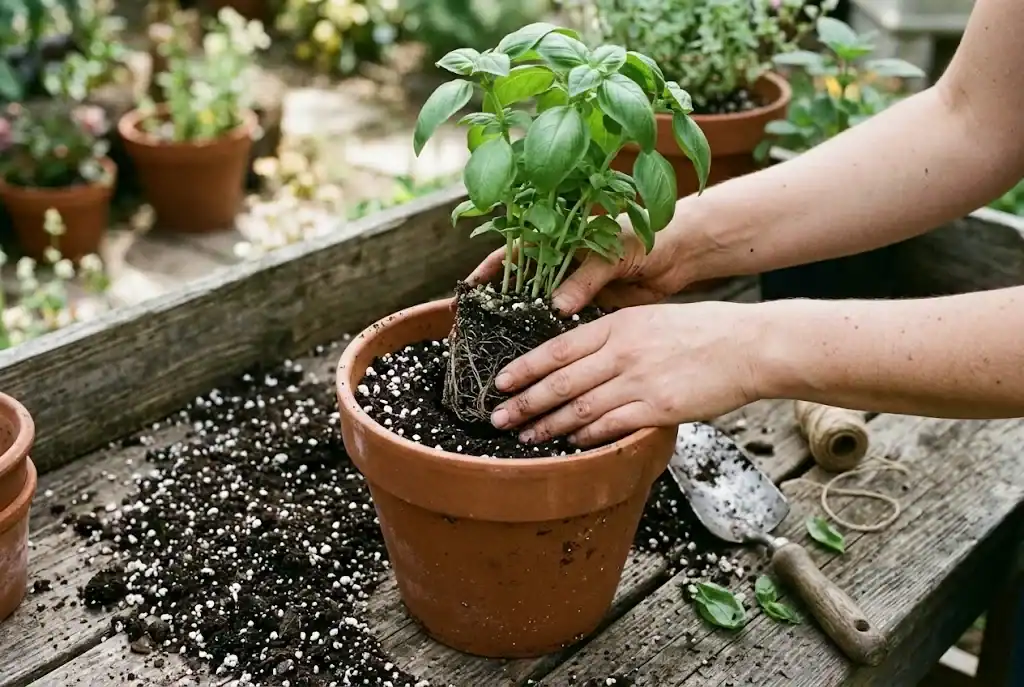
- Pick a pot with an open drain. Nearly any food-safe container can work if excess moisture can escape. A 6-inch diameter is a practical minimum for one small herb, but vigorous plants need more room as they grow.
- Fill it with fresh potting mix. Use a loose, well-drained product made for containers. Do not fill the base with rocks, and do not use dense garden soil by itself. Both choices reduce the root space that should hold air and usable moisture.
- Set the plant at its previous depth. Tease apart circling roots gently, position the crown level with the mix, and leave a little space below the rim so liquid does not spill over.
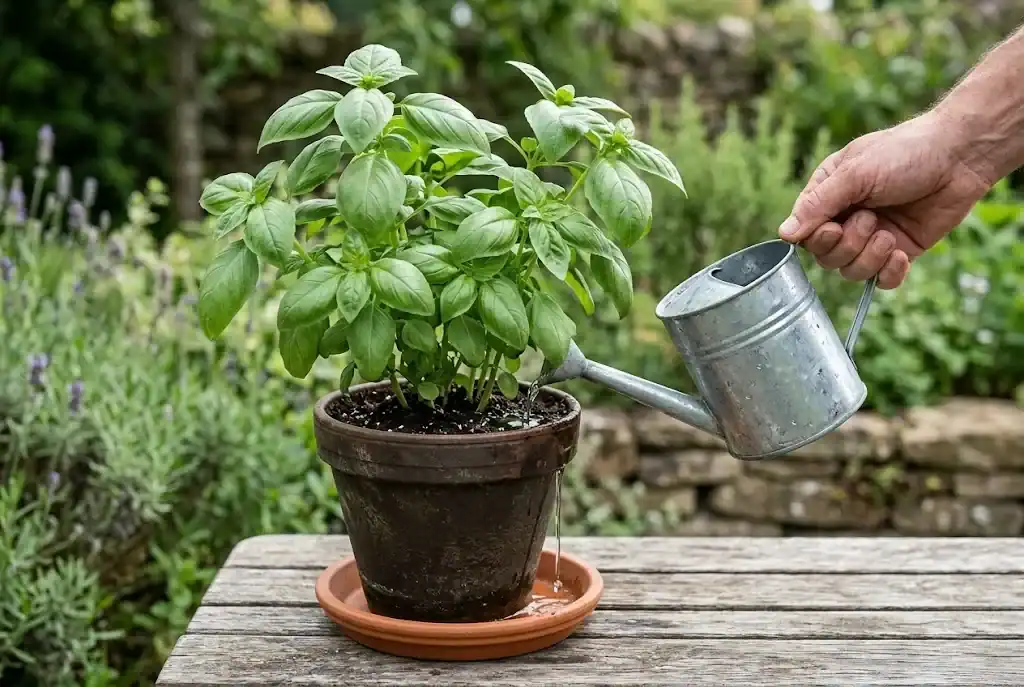
- Water thoroughly. Wet the whole root zone until water runs from the base. Empty the saucer so the roots do not remain in standing water.
- Place it according to the label. Most culinary herbs need a sunny spot, but the plant tag or seed packet should decide the final location.
Give potted herbs the right sun and moisture
Most herbs produce their strongest, most compact growth with at least six hours of direct sun. Basil, rosemary, thyme, oregano, sage, and other Mediterranean plants are good candidates for the brightest outdoor location. Parsley, chives, cilantro, and mint can often manage with some afternoon shade, especially in hot climates.
Indoor light is usually weaker than it looks. Use the sunniest south- or west-facing window available and rotate the pots so growth stays even. If stems stretch, leaves become pale, or plants lean hard toward the glass, add a grow light rather than feeding more fertilizer. Container herbs grown indoors may need 12 to 16 hours under a lamp when winter days are short.
Check moisture with a finger instead of watering on a fixed calendar. When the top inch feels dry, water slowly until the excess drains. Small pots, porous clay, wind, and summer heat can make daily checks necessary. Cooler weather and large glazed containers slow moisture loss.
Let thyme, oregano, sage, and established rosemary dry somewhat between waterings. Keep basil, cilantro, chives, mint, and other leafy annuals more consistently moist, but never waterlog them. Wilting in wet mix, yellow lower leaves, and a sour smell can point to poor drainage or damaged roots rather than thirst.
Feed, harvest, and repot without overdoing it
Fresh container mix may already contain fertilizer, so read the bag before adding more. Once that supply is used, apply a balanced liquid fertilizer lightly and at the label rate for container plants. Too much nitrogen can make herbs soft and lanky, and it may dilute the concentrated aroma you want from culinary leaves.
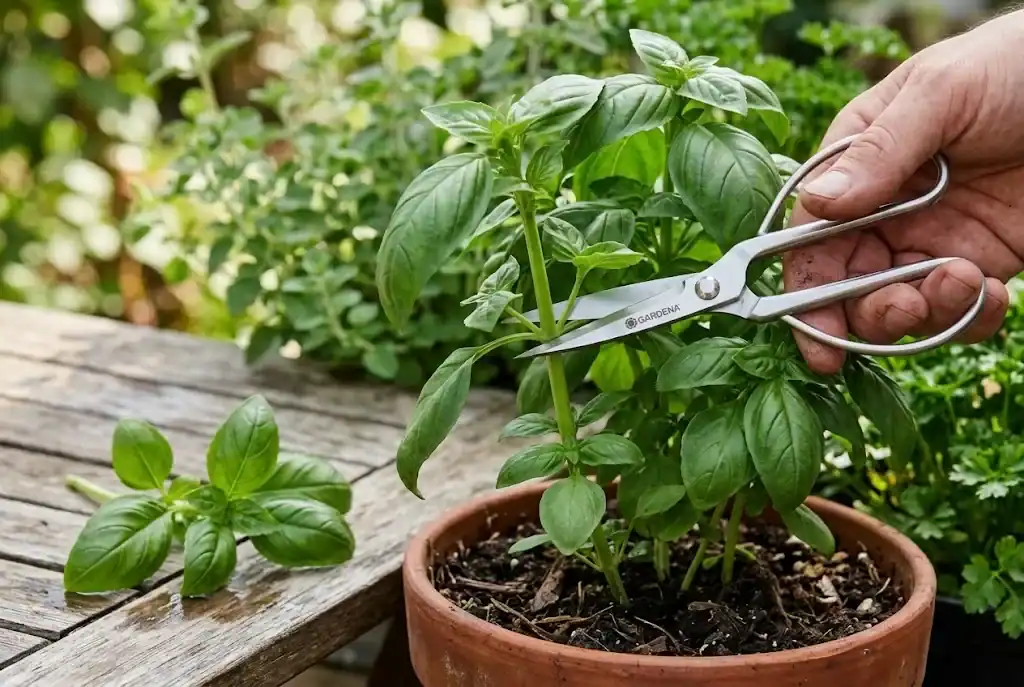
Harvest often enough to encourage new growth. Snip stems just above a pair of leaves or a branching point, using clean scissors. Pinch flower buds from basil if leaf production is the goal. With perennial herbs, take no more than about one-third of the plant at a time so enough foliage remains for recovery.
Roots circling the drainage openings, irrigation running straight through, or growth that stalls despite good care can signal that the plant needs a larger pot. Move it up one container size, loosen congested roots gently, and replace tired mix. Dividing chives or mint is often better than placing an oversized clump in an ever-larger planter.
Protect container herbs when the season changes
Roots in a pot experience colder temperatures than roots in the ground. Before hard frost, decide whether each plant is an annual to replace, a hardy perennial to protect, or a tender herb to bring indoors. Local winter lows and the plant’s hardiness matter more than its label as a perennial.
Inspect leaves and stems for aphids, whiteflies, mites, and other hitchhikers before moving a plant inside. Acclimate it over several days, place it in strong light, and reduce watering as growth slows. Tender herbs can be overwintered indoors with enough light, while many perennial herbs benefit from returning outdoors for the growing season.
Common mistakes with herbs in containers
- Using a pot without drainage: Decorative outer pots are fine as covers, but the planted inner pot must drain and should not sit in overflow.
- Choosing a container that is too small: Roots crowd quickly, and the mix swings from wet to dry faster.
- Combining herbs with opposite needs: Group plants by light, water, and mature size, not by appearance alone.
- Watering every plant on the same schedule: Test each pot because material, weather, and root mass change how fast it dries.
- Feeding instead of fixing the light: Fertilizer cannot correct a dim windowsill.
- Waiting too long to harvest: Regular pinching keeps many leafy herbs compact and delays flowering.
Frequently asked questions
What is the best soil for growing herbs in pots?
For a new gardener, a lightweight commercial growing medium is the simplest choice. A soilless blend with ingredients such as coir or peat, composted bark, perlite, or vermiculite gives roots a better balance of air and moisture than ordinary garden soil.
Do herbs in pots need full sun?
Most culinary herbs prefer six or more hours of direct light. Parsley, chives, cilantro, and mint can tolerate some shade. In very hot regions, even sun-loving herbs may appreciate protection from the strongest late-afternoon heat.
How often should I water a potted herb garden?
Water when the surface layer has dried to the level that suits the herb, not according to a fixed weekly rule. Check frequently, soak the mix completely, and let surplus water escape. A small outdoor container may need water daily in hot wind, while a large indoor pot may stay moist for several days.
Can herbs grow indoors year-round?
Yes, if they receive enough light, suitable temperatures, drainage, and air movement. Tender annual herbs can be restarted from seed, while some perennials are best moved outdoors when weather allows. A grow light is often the difference between compact plants and weak, stretched growth.
Begin with two or three favorite herbs rather than a crowded collection. Give each one the right container, watch how quickly its mix dries, and harvest a little at a time. That small routine is enough to turn a sunny corner into a dependable source of fresh, homegrown herbs.