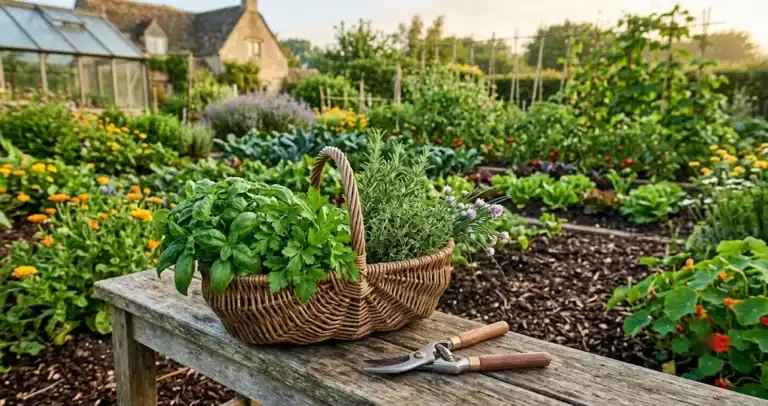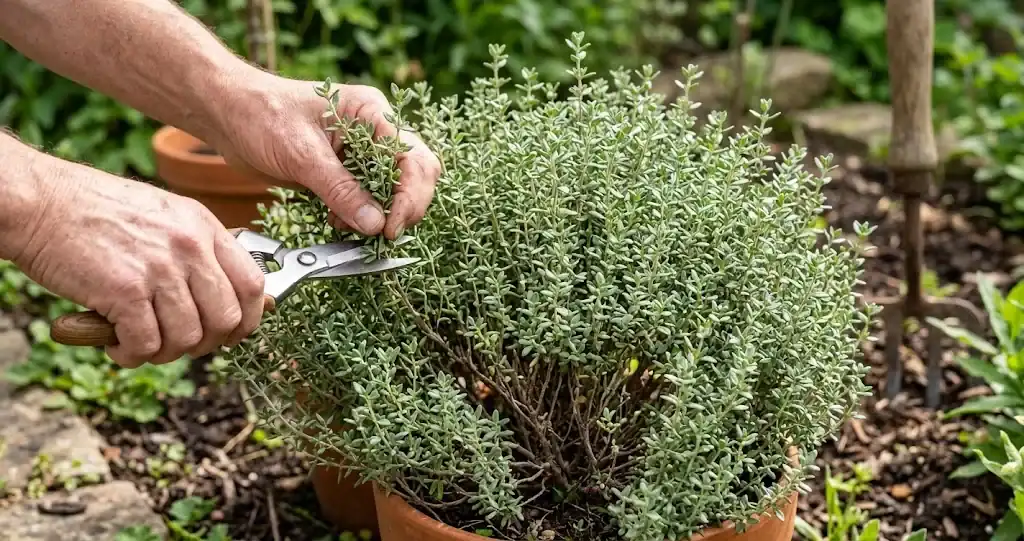
Thyme rewards a confident cut. Snip a few stems above a healthy leaf pair in the morning; a cut above healthy green growth can encourage branching while the plant is actively growing. Cut it back too hard, take too much at once, or wait past the flowering peak until the leaves have lost their strongest flavor, and the same plant can stall for the rest of the season.
Thyme is a perennial herb in the mint family, and a single established plant comes back every year for several seasons in most climates. That long life is one reason good harvesting matters. A careful cut this year is what keeps the same plant productive next year, and the year after. If you have ever wondered how to harvest thyme without slowing it down, the answer is mostly about timing, technique, and restraint. This guide walks through when to pick, how much to take, how to keep the plant productive, and what to do with your harvest once you have cut it. For a broader look at harvesting across many common kitchen herbs, see our complete guide to harvesting herbs.
When is the best time to harvest thyme?
The best time to harvest thyme is late morning on a dry day, after the dew has lifted but before the afternoon heat. Oils concentrate in the leaves once the plant is fully awake, so cuts taken in this window smell and taste stronger than cuts taken at dawn or dusk.
The best season depends on what you want from the plant. For maximum flavor, harvest just before the flowers open. Cut then, the plant has not yet spent its energy on bloom and the leaves hold their aromatic oils at peak. For a steady supply through summer, harvest in light passes every three to four weeks rather than one heavy cut. A light, regular harvest keeps new growth coming and stops the plant from becoming leggy.
For gardeners in cold climates, plan your last major cut about four weeks before your first expected frost. That window gives the plant time to recover before it goes dormant. A final small snip for the kitchen on the day before frost is fine; do not then take more.
Which types of thyme can you harvest the same way?
The harvesting approach in this guide applies to the upright culinary forms. Common thyme and lemon thyme are both upright growers that respond well to the cut-and-branch technique. Lemon thyme carries a brighter, citrus note, so it can be worth harvesting just before bloom the same way as common thyme if you are using it for finishing dishes where that flavor matters. Creeping thyme is a low, mat-forming plant that is usually grown as a ground cover or for pathways rather than as a kitchen herb; if you do want to harvest from it, take short tips rather than full stems.
Different forms can take different shapes in the garden. Common thyme and lemon thyme both grow as small upright shrubs, while creeping thyme stays low to the ground and is most often used as a ground cover rather than as a culinary harvest. If you do harvest from creeping thyme, take short tips rather than full stems; the upright culinary forms are the ones that benefit most from the cut-and-branch technique.
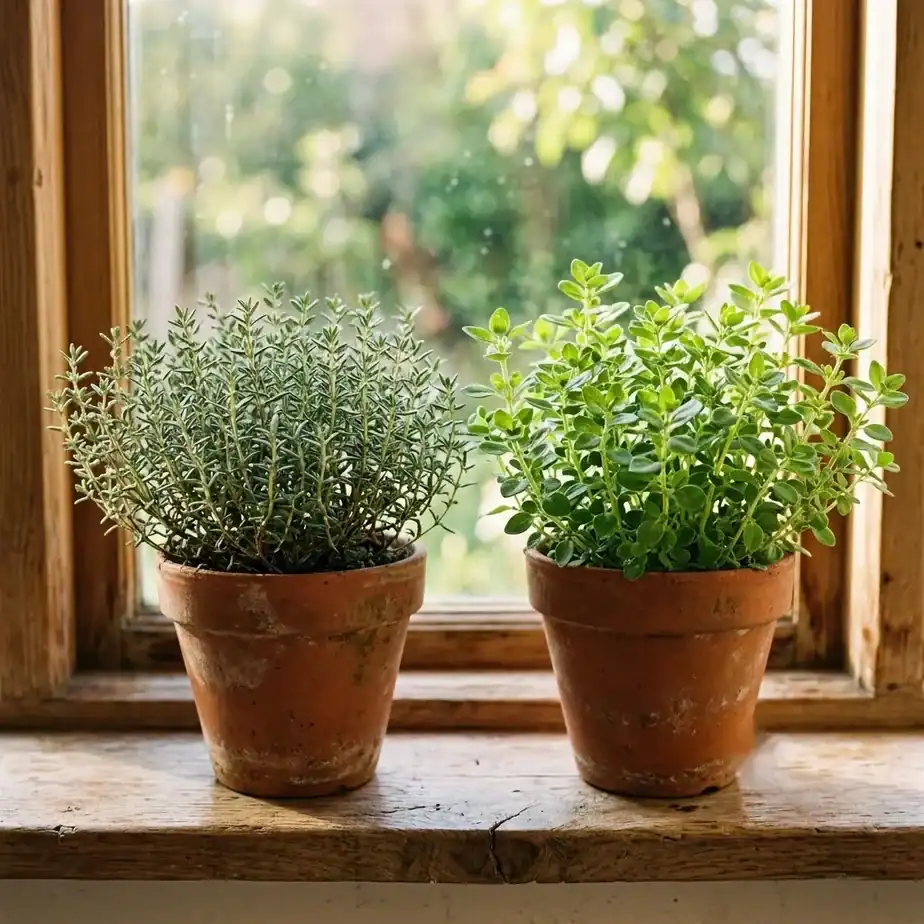
If you are growing thyme in a kitchen garden or in a small herb bed alongside oregano, rosemary, or sage, you can grow and harvest all of them with the same light-touch approach: take small cuts every few weeks, leave at least two thirds of the plant standing, and let each one come back to fill out and grow before you take more.
How much thyme can you harvest at once?
A safe rule is to take no more than one third of the plant at any one time. The one-third limit is a conservative harvesting guideline that leaves enough green growth for the plant to recover and push out fresh leaves. The plant needs at least two thirds of its green leaves left standing to feed itself through the next growth cycle, and it continues to grow from there once it has recovered. For a mature, bushy thyme plant, that usually means two or three handful-sized bundles of cut sprigs.
Take even less from a young plant in its first year. A thyme plant needs at least one full growing season to develop the strong base that supports regrowth. If you only planted this spring, pinch a few stem tips here and there rather than cutting full sprigs, and let the young herb put its energy into establishing roots. Once the plant has finished its first growing season, you can move to regular harvesting the following spring.
How to harvest thyme so it keeps growing
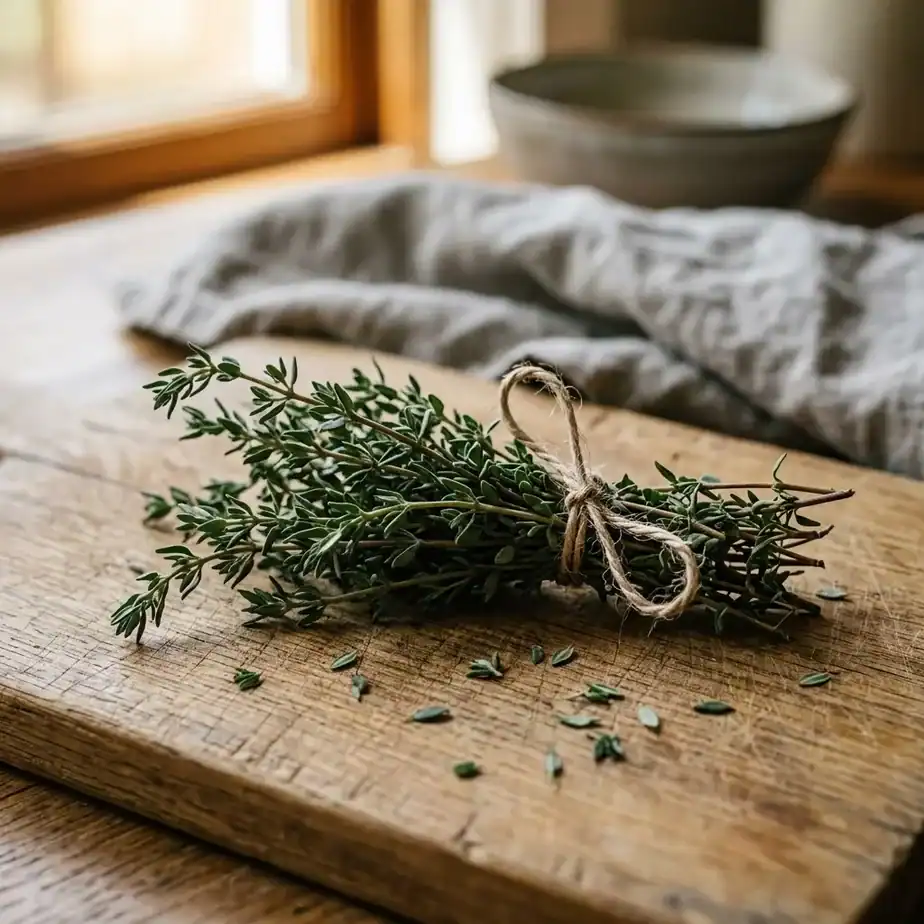
The single most useful technique for keeping thyme productive is to cut just above a leaf node, the spot where two leaves or two side shoots meet the main stem. The plant responds by sending out two new shoots from that spot, so the cut point becomes a branching point, and the plant continues to grow from there rather than stopping at the cut.
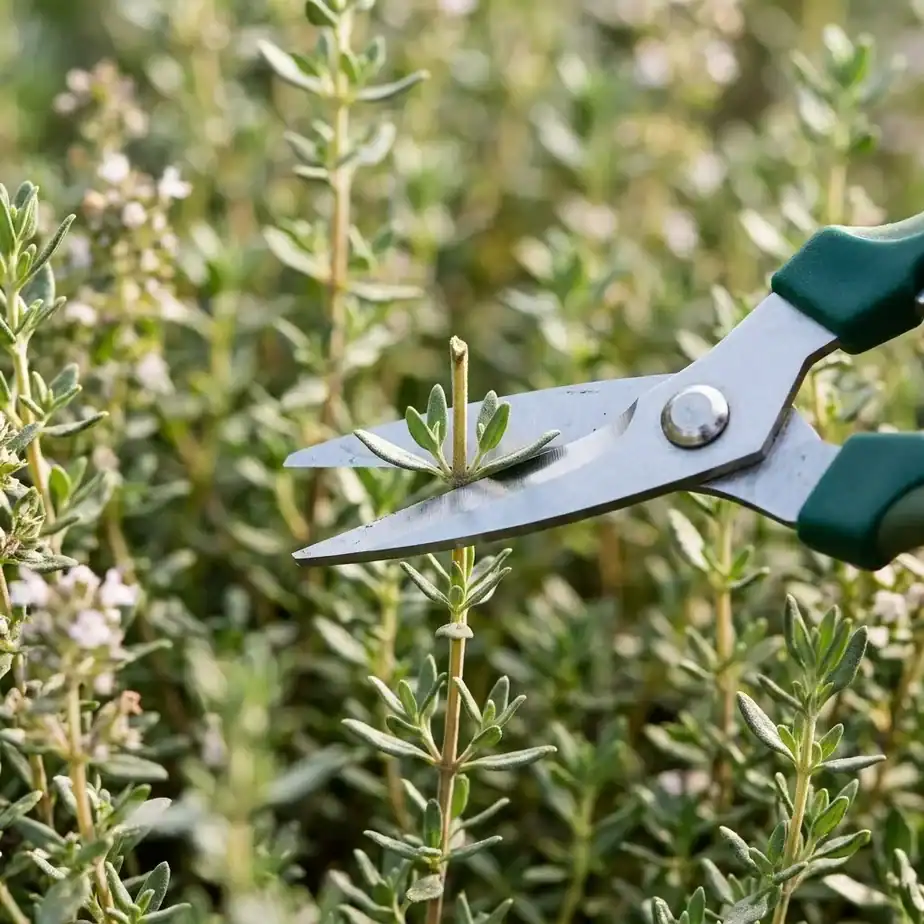
Use clean, sharp garden shears or kitchen scissors. Dull blades crush the stem rather than cutting it, leaving ragged ends that dry out, brown, and invite disease. Cut the stem about a third of the way down from the tip, choosing a point where you can see healthy leaf pairs below the cut. Avoid cutting into the brown, leafless lower part of the plant. Those bare woody stems cannot regrow from old wood the way a young green stem can.
For a healthy bush, work from the outside in. Take the longest outer stems first, then move inward. This opens up the center of the plant to light and air, which discourages mildew and keeps the inner stems from going bare. Aim to leave at least two thirds of the plant standing so it has enough green leaves left to feed itself and regrow.
If you are wondering how often to repeat this, the answer is whenever the plant has put on enough new growth to look full again. For most garden thymes in active season, that is every three to four weeks. A small bundle of fresh sprigs of thyme is plenty for most weeknight cooking, so a light, regular cut tends to be ready to use before the plant has had time to grow woody again. The plant will grow back to its full potential before you cut it again, and each round of light harvesting keeps the same plant productive for years.
Harvesting versus pruning thyme
Harvesting and pruning overlap, but they are not the same job. Harvesting is taking fresh stems to use in the kitchen. Pruning is shaping the plant for long-term thyme plant care, removing dead or woody material, and preventing the plant from becoming straggly.
A light harvest can serve as a light prune. Taking the longest stems from a healthy plant, cutting above a healthy leaf pair, and leaving the center open is good harvesting and good pruning at once.
When you prune thyme, the goal is to encourage new growth from the base of the plant. Cut just above a leaf pair, take no more than one third of the plant at once, and remove any stems that are crowding the center. The plant will respond by sending out fresh side shoots, and within a few weeks it will fill out and grow back to its full shape.
Reserve heavier pruning for early spring, just as new growth begins. Cut the plant back by about one third, removing any dead or old stems down to where green growth is starting. Avoid cutting into the bare lower base. Thyme does not reliably regrow from old wood, so a hard prune that takes the plant down to bare stems can kill it.
Can you harvest thyme with flowers or in winter?
Yes, with some adjustments. Thyme flowers are edible, mild, and pretty sprinkled over a salad or a finished dish, and harvesting just before or just as the flowers open does not harm the plant. The flavor of the leaves does shift slightly as the plant puts energy into bloom; some cooks find leaves from a flowering plant a touch less concentrated than leaves cut earlier.

Winter harvesting is more cautious. In mild climates where thyme stays green through winter, light snipping for the kitchen is fine, but the plant grows very slowly and will not recover from heavy cuts. In cold climates, thyme is dormant in winter and cutting it then damages the stems rather than encouraging new growth. Wait until spring when you see fresh green tips before you resume regular harvesting.
What to do with your fresh thyme
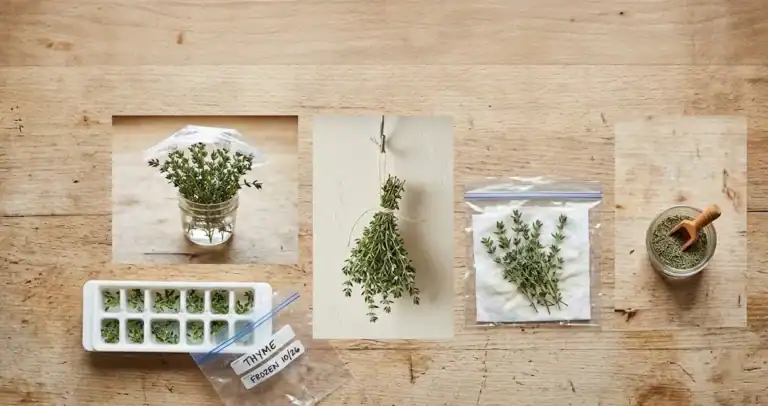
Fresh thyme keeps its flavor best when used within a few days. Store unwashed stems in a loose-fitting bag in the refrigerator, or stand them in a small jar of water on the counter as you would a bouquet. If you have cut more than you can use in a week, drying or freezing preserves the harvest well.
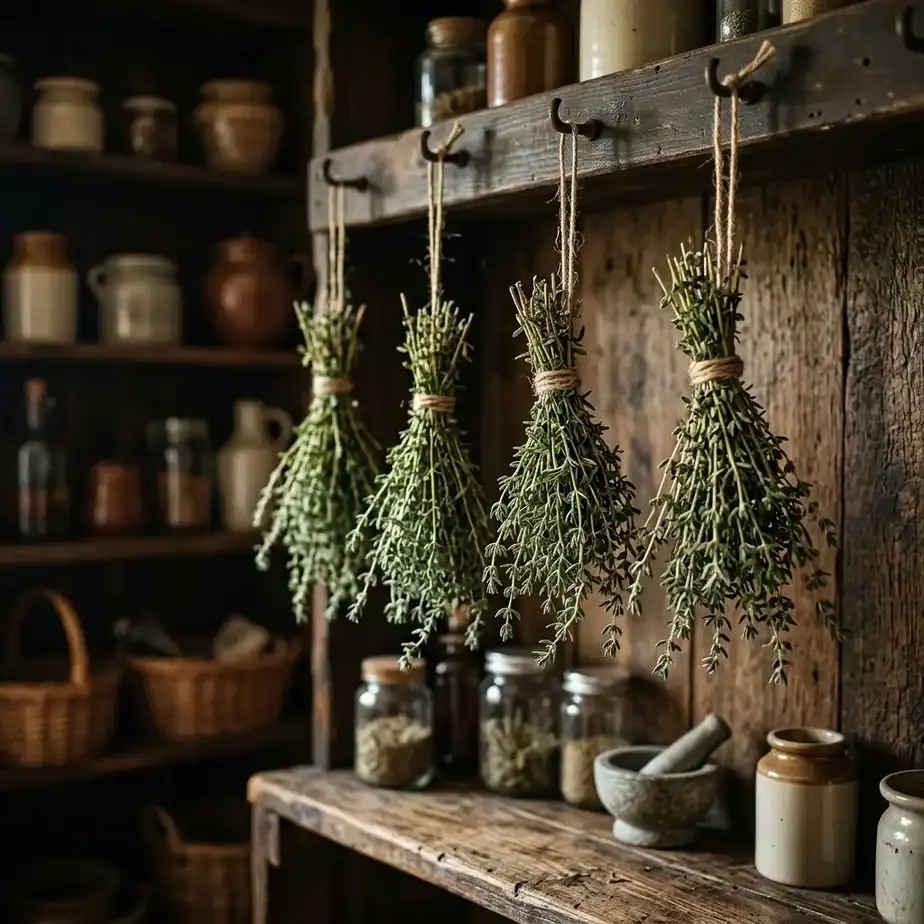
To dry thyme, bundle small handfuls of stems with kitchen twine and hang them upside down in a dark, dry, well-ventilated spot for one to two weeks. Once the leaves crumble easily off the stem, run your fingers down the stem to remove the leaves and store them in an airtight jar away from direct light. Fresh thyme leaves can also be stripped from the stems and dried on a screen in the same conditions.
Freezing works too. Strip the leaves off the stem, pack them into an ice cube tray with a little water or olive oil, and freeze. The cubes drop directly into soups and stews through the winter. For a fuller guide to drying and freezing thyme, see our guide on how to store thyme.
Once you have a jar of dried thyme or a freezer full of frozen sprigs, you have plenty of options for using it. Thyme pairs well with roasted vegetables, beans, braised meats, and simple soups.
Frequently asked questions about harvesting thyme
Will thyme grow back after you cut it?
Yes, as long as you cut above a healthy leaf pair and stay within the green growth. Thyme that has been cut down into bare wood often does not recover.
Is it better to dry or freeze thyme?
Both work well. Drying concentrates the flavor and stores indefinitely in a jar. Freezing preserves the fresh, green taste better for use in dishes where you want that fresh character, and frozen thyme works well in an ice cube tray with a little olive oil or water.
How do you pick thyme so it keeps growing?
Snip stems just above a healthy leaf pair, take no more than one third of the plant at a time, and repeat every three to four weeks during active growth.
What is the most common harvesting mistake?
Cutting more than a third of the plant at once. The plant needs at least two thirds of its green leaves to feed itself and push out new growth. A heavy cut once or twice a year stalls the plant for weeks.
Can you grow thyme indoors for fresh harvests?
Yes, it grows well in a sunny window or under a grow light. Use a pot with good drainage, water when the top inch of soil dries out, and harvest using the same cut-and-branch technique. Indoor plants are smaller, so take fewer stems per cut and let the plant recover longer between harvests.
What tools do you need to harvest thyme?
Clean, sharp garden shears or kitchen scissors are enough for most home harvests.
For recipe ideas and ways to use your harvested thyme in everyday cooking, see our collection of cooking with thyme recipes and techniques.