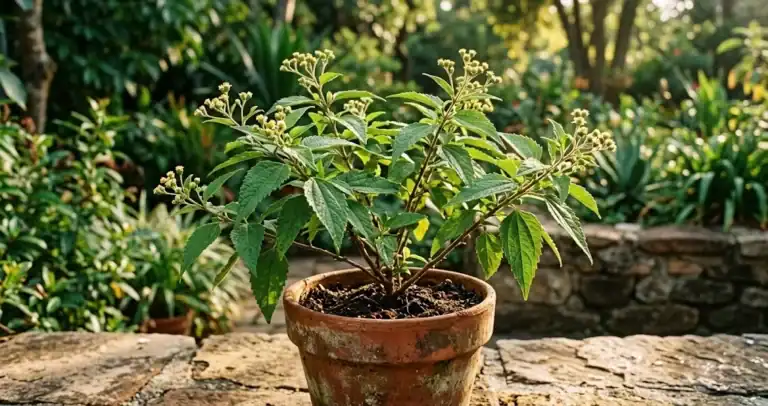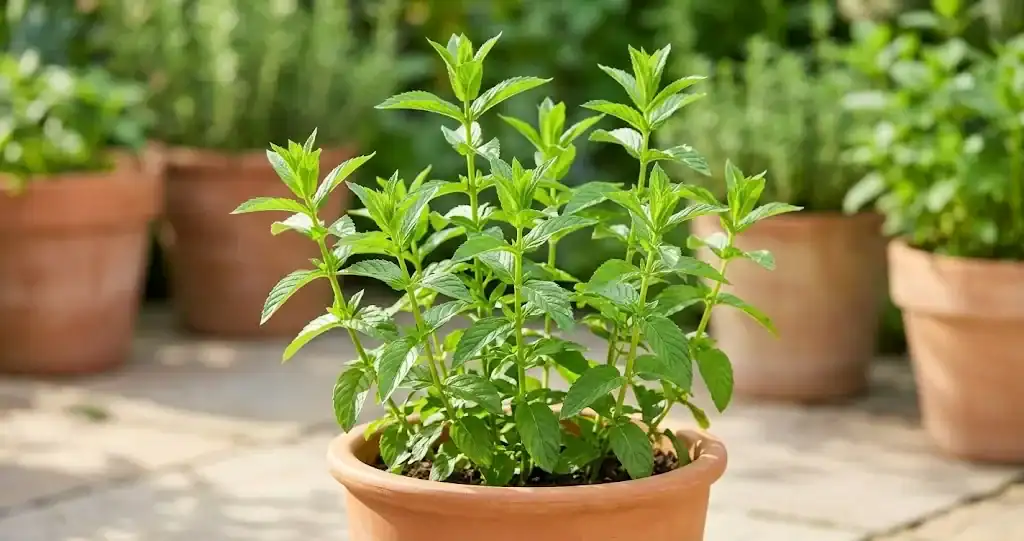
Spearmint (Mentha spicata) is one of the most rewarding and easiest herbs to grow in any home garden. As a hardy herbaceous perennial and a standout member of the mint family (Lamiaceae), this aromatic plant provides abundant leaves throughout the entire growing season. Whether you want fresh sprigs for a refreshing summer mojito, homemade mint sauce, or soothing fresh mint tea, learning how to grow this classic garden herb gives you a constant supply right outside your kitchen door.
Gardeners love this herb because mint is easy to cultivate and adapts well to various climates. However, since mint is a vigorous grower with aggressive spreading underground runners, successful cultivation requires a smart method of growing. When planning your garden layout, understanding the groundwork behind a healthy herb garden will help you place your spreading plants where they thrive without overtaking neighboring vegetables and flowers.
Ideal Growing Conditions: Sunlight, Soil, and Climate
To give the plant the best start, provide growing conditions that match its natural habitat. Mint thrives in full sun to partial shade. In northern climates, all-day sun encourages robust essential oil production, while in regions with intense summer heat, afternoon shade protects the delicate green leaves from scorching. The plant is reliably perennial in USDA zones 3 through 11, dying back naturally in winter and returning with vigorous new growth each spring.
The ideal soil for growing mint is rich, moist, and well-draining. The plant prefers soil with a neutral to slightly acidic pH between 6.0 and 7.0. Before planting in garden beds, enrich native soil with organic compost or well-rotted leaf mold. If your garden soil feels dry or drains too rapidly, adding compost helps retain consistent moisture while preventing waterlogged roots.
Planting in Containers: Keeping Spreading Plants in Check
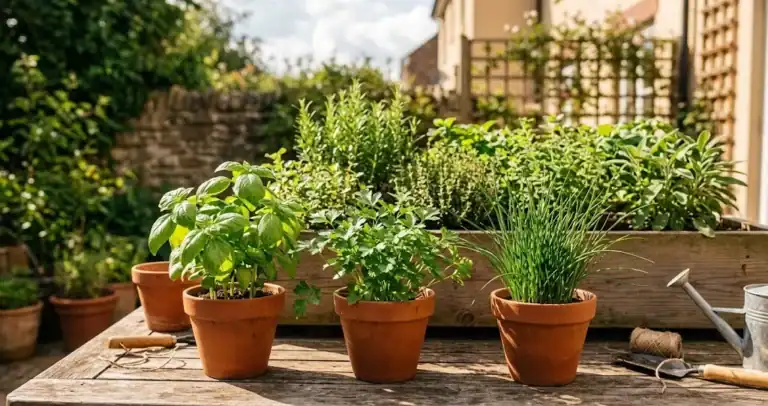
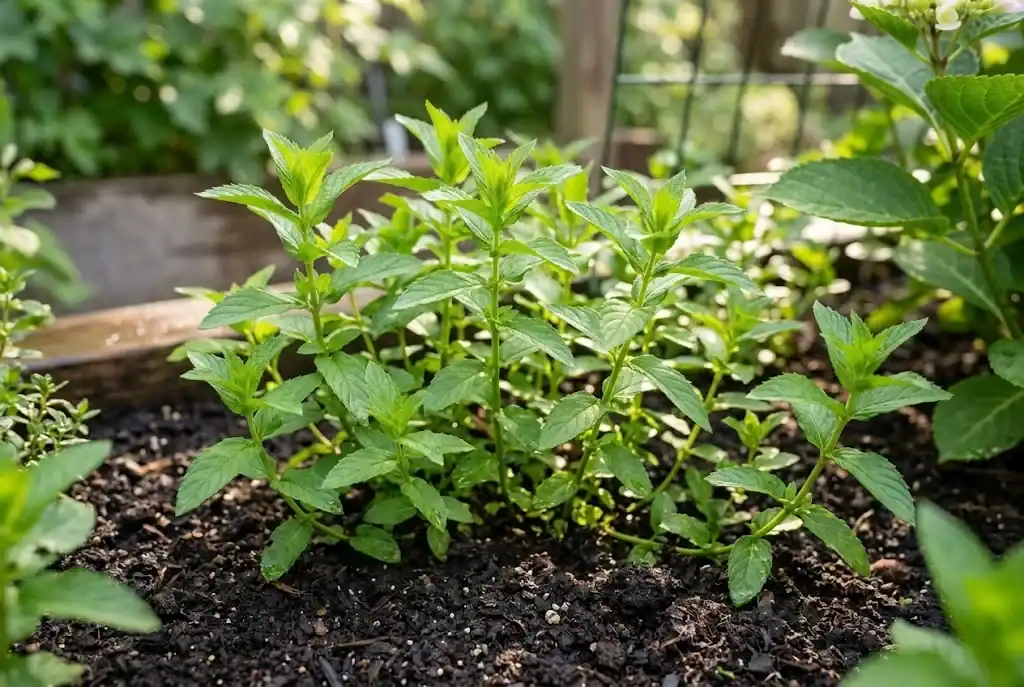
Because mint spreads quickly through creeping stolons and rhizomes, planting in containers is widely considered the best way to grow mint. When grown directly in open ground, the herb can quickly crowd out slower-growing companions. If you choose a pot, select a container that is at least 10 to 12 inches in diameter with ample drainage holes at the base.
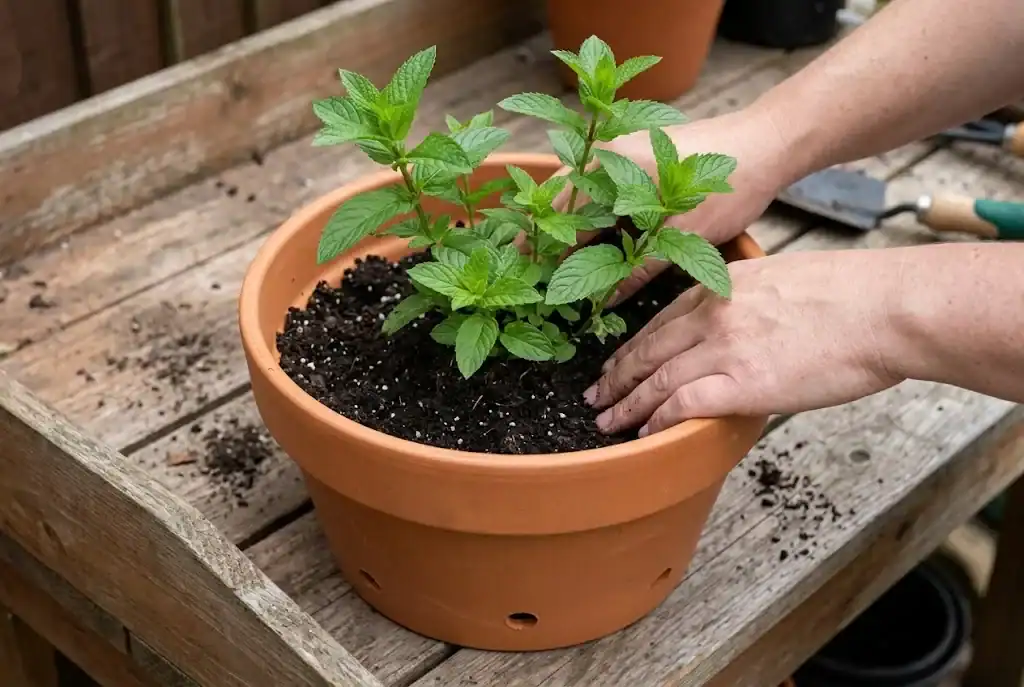
Fill the container with high-quality, lightweight potting soil mixed with a handful of compost. Growing mint in a container keeps plants contained, portable, and simple to manage on a patio, balcony, or sunny windowsill indoors. If you prefer cultivating mint in outdoor borders, plant it in a pot first and sink the pot into the earth with the rim protruding two inches above ground level to keep growth in check.
How to Start Mint: Stem Cuttings vs Growing from Seed
The fastest and most reliable way to start growing this culinary herb is from nursery starts or stem cuttings. If you already have a mint plant or a friend with established plants, take a 4- to 6-inch cutting from healthy new growth in late spring. Strip the bottom leaves, place the stems in water on a bright windowsill, and wait for roots to develop within ten to fourteen days. Once root cuttings show strong root systems, transplant them into potting soil.

You can also grow mint from seed, though mint seeds can be slow and irregular to germinate. If starting mint from seed, sow seeds inside eight to ten weeks before the last spring frost date. Scatter seeds on the soil surface, press them lightly without burying them, and keep the soil evenly moist and warm. Once all danger of frost has passed, harden off your seedlings before setting them outdoors. While this plant and peppermint are classics, exploring other varieties such as chocolate mint, apple mint, orange mint, and pineapple mint can add delightful diversity to your collection.
Routine Plant Care: Watering, Fertilizer, and Pruning
Consistent moisture is the cornerstone of proper mint plant care. Water whenever the top inch of soil feels dry to the touch, taking care to touch the soil rather than guessing. Plants grown in pots dry out faster than those in the ground and may require daily watering during peak summer heat. Ensure containers drain freely, as stagnant water can cause root rot.
The crop requires minimal fertilizer. A light application of balanced liquid organic fertilizer once in early spring is sufficient. Over-fertilizing dilutes the aromatic oils and weakens the characteristic flavor of the leaves. Regularly pinch or cut back the growing tips throughout the season. Pruning the top set of leaves encourages branching stems and keeps the mint plant bushy and dense rather than tall and leggy.
Managing Pests and Garden Diseases
Mint is generally resistant to almost every common garden pest thanks to its potent aromatic leaves. However, indoor plantings or overcrowded outdoor containers may occasionally attract aphids or spider mites. Check the undersides of leaves periodically. If a pest appears, rinse the foliage thoroughly with a steady stream of water or apply an organic insecticidal soap.
Fungal issues like powdery mildew or mint rust can occur in humid weather or when leaves remain wet. Ensure good air circulation around your pots by spacing plants properly. Always water at the base of the stems rather than overhead to keep the canopy dry. If rust appears, cut it back to the ground; healthy new growth will emerge promptly from the root system.
Harvesting the Leaves
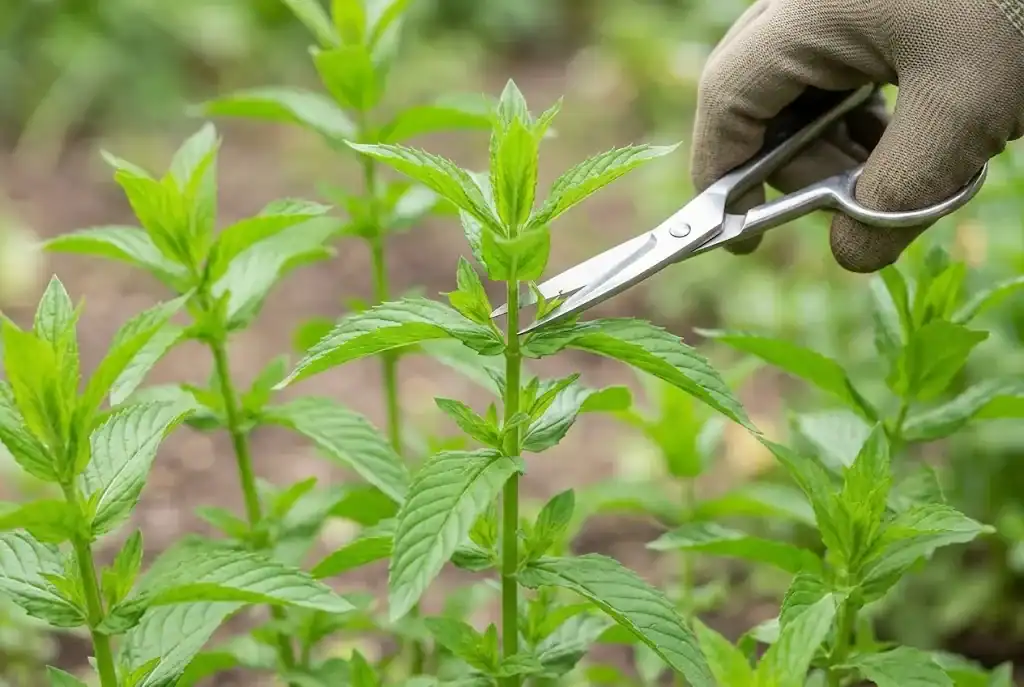
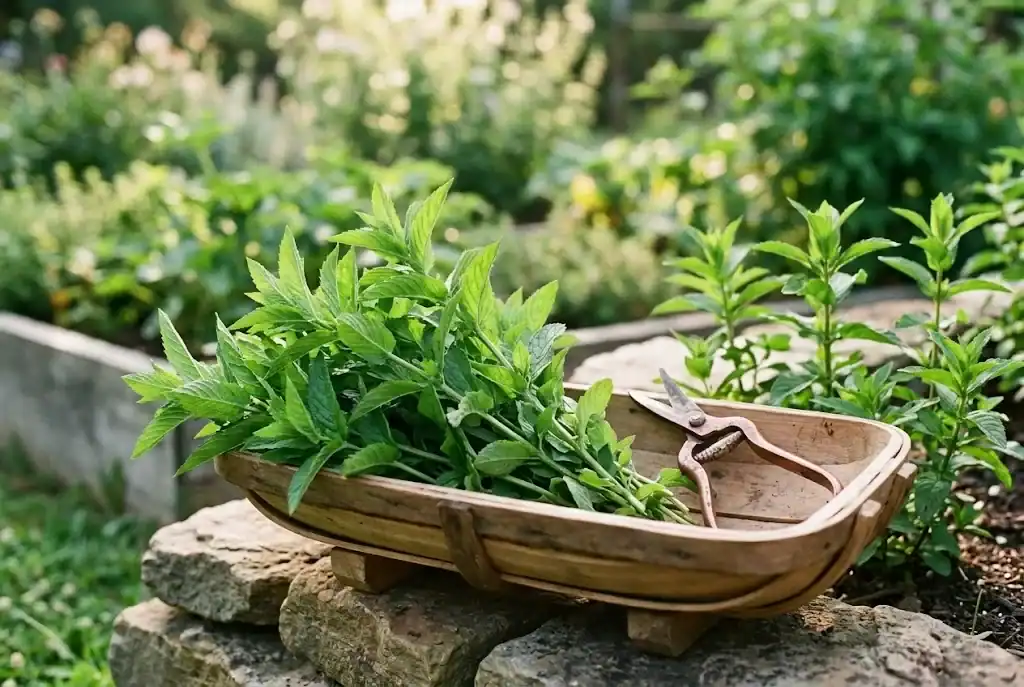
You can begin picking fresh herbal leaves as soon as the plant reaches six to eight inches in height. Regular harvesting actually promotes vigorous, bushy growth. For optimal flavor and aroma, harvest in the morning after dew has evaporated but before the heat of midday warms the leaves. Use sharp herb snips to cut mint stems just above a leaf node.
When harvesting, never remove more than one-third of the total foliage at a single time on younger plants. For end-of-season preservation, you can cut the whole plant back to two inches above the soil line before winter dormancy. For detailed harvesting methods and seasonal schedules, consult our practical guide on harvesting fresh spearmint sprigs.
Preserving and Storing the Harvest
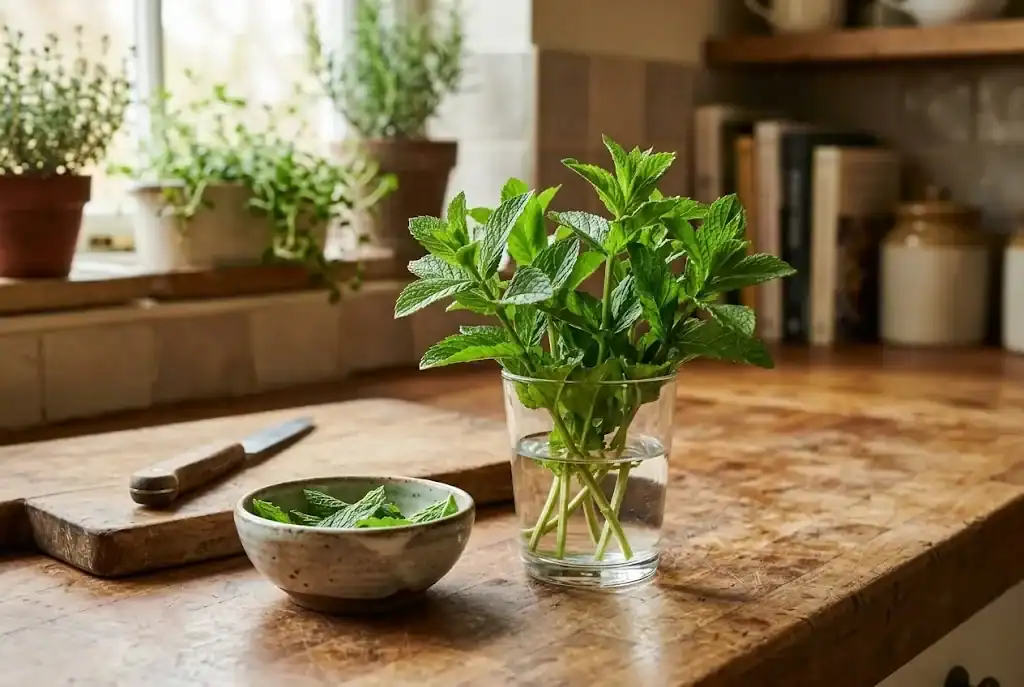
After bringing fresh cuttings inside, keep them fresh by standing stems in a glass of water on your kitchen counter, much like a bouquet of cut flowers. For longer-term storage, leaves can be dehydrated in a food dehydrator or frozen in ice cube trays with water or olive oil for culinary dishes. Explore our complete guide on storing fresh spearmint leaves to keep your harvest flavorful for months.
Frequently Asked Questions About Growing Mint
Do mint plants come back every year?
Yes. The plant is a hardy grower in USDA hardiness zones 3 to 11 that returns reliably each year. It will die back after a heavy freeze in late autumn and generate fresh green shoots in early spring.
Can I grow mint on a windowsill?
Yes. Mint grows well inside if placed on a sunny south- or west-facing windowsill that receives at least four to six hours of bright light daily.
Why is my plant becoming leggy?
Leggy growth usually indicates insufficient sunlight or a lack of regular pruning. Move the pot to a brighter location and pinch back the stem tips to stimulate compact, bushy growth.