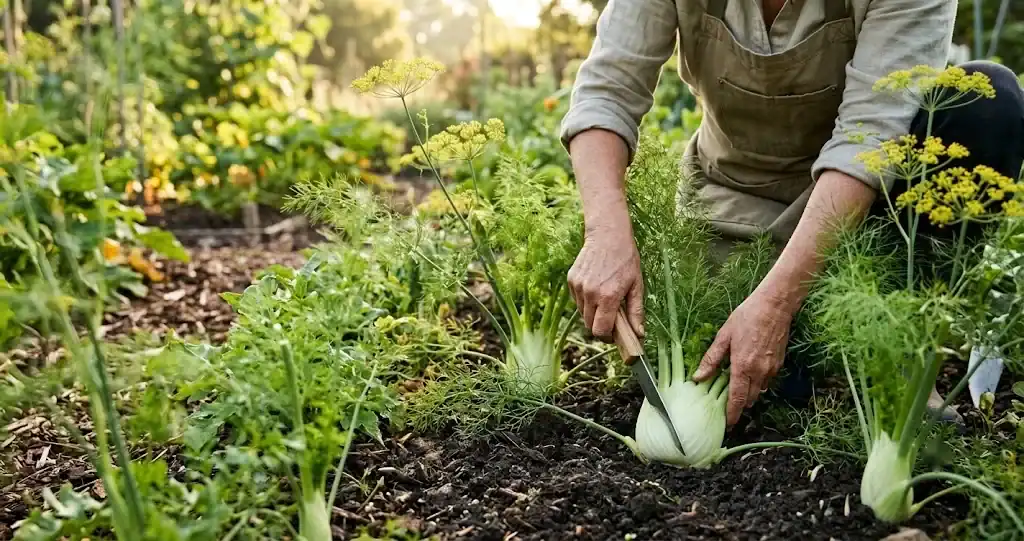
Fennel gives you more than one harvest. Florence fennel can yield a crisp bulb and feathery foliage, while herb fennel can supply flowers, green seeds, and dried fennel seeds. The right harvest depends on which part you want, then cutting it at the moment when texture and flavor are at their best.
For a broader look at timing and tools across the garden, see our complete herb harvesting guide. This page focuses on the choices that matter for fennel.
Choose the fennel you are harvesting
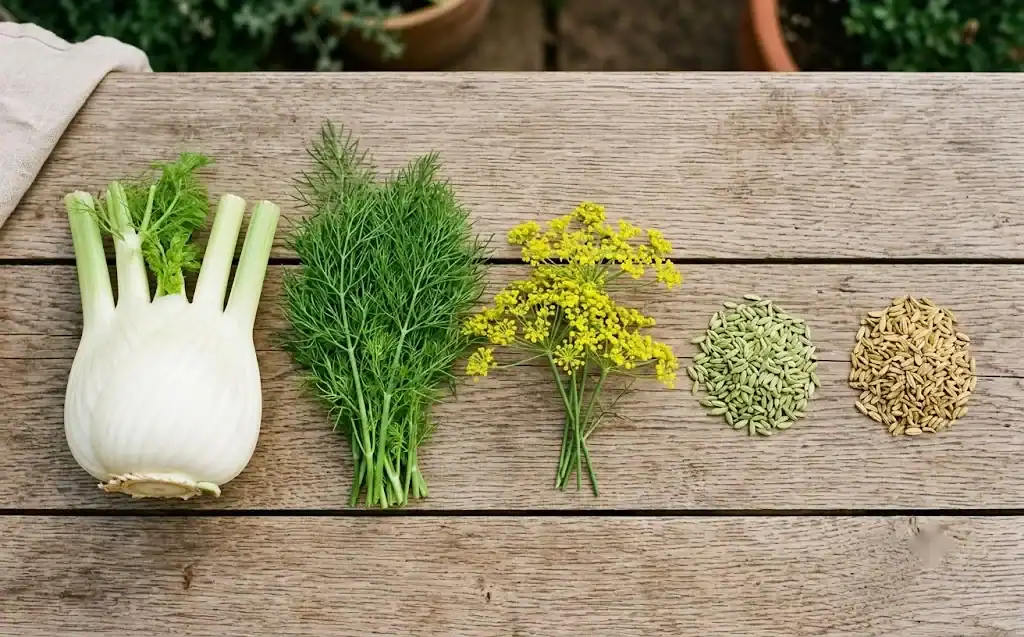
Gardeners commonly grow two forms of Foeniculum vulgare. Florence fennel, also called bulb fennel, is grown for the swollen, layered base at the soil line. Herb fennel grows tall and produces foliage, flowers, and seed heads. Both have a sweet anise scent, but they are harvested differently.
Look at the plant before you cut. A firm white or pale green bulb calls for a bulb harvest. Soft, feathery foliage can be snipped for the kitchen. Flat yellow flower clusters lead to a later seed harvest. Do not wait for every part to mature if you want tender fennel for the kitchen.
When to harvest fennel
Fennel is ready when the part you plan to use has reached its best size and texture. For Florence fennel, harvest before the bulb becomes oversized, split, or tough. A bulb about the size of a tennis ball is usually a good cue. It should feel solid when you press it gently and have tight layers rather than a loose, elongated shape.
Gather foliage whenever the plants are well established and have enough leaves left to keep growing. Pick fennel flowers when the tiny yellow blooms have opened. For green fennel seeds, wait until the flowers fade and the developing seeds look plump and green. For dried fennel seeds, wait until seed heads begin to turn tan or brown and feel dry.
How to pick fennel bulbs
- Choose a cool, dry morning after dew has dried. Bring a sharp knife, pruners, and a clean basket.
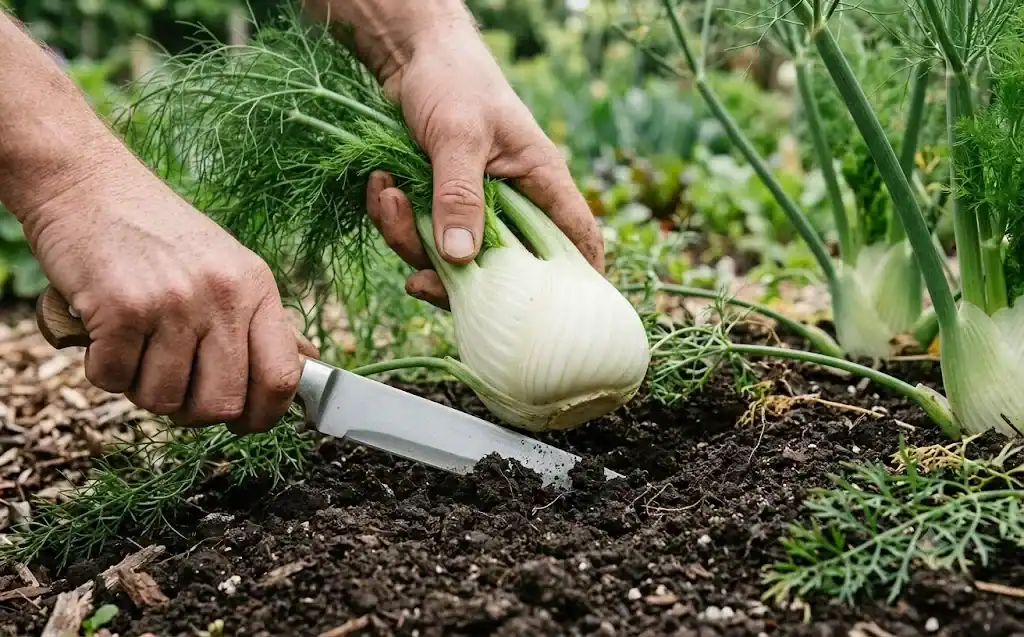
- Brush soil away from the base so you can see the base and the soil line.
- Cut the base just below the soil line, keeping the layers intact. Do not pull hard on the stalks, which can tear the base or leave the root in the ground.
- Trim the stalks, leaving a short handle if that makes washing easier. Save the fresh fennel fronds for cooking.
- Shake off loose soil. Rinse the base only when you are ready to use or store it, then dry it well.
Some gardeners harvest a few outer stalks first and let the base continue bulbing. That works for foliage, but once you cut the entire base from the root, that plant will not make another base. If you want a continuing supply, sow or plant fennel in small batches rather than relying on one mature plant.
How to pick fennel foliage and stalks
Use clean scissors or pruners to cut a few outer leafy tops close to the stalk. Take no more than about one third of the foliage at a time from a growing plant. Young foliage has the mildest texture and a bright licorice-like flavor. Older stalks are more fibrous, but they can still flavor stock, fish, beans, or roasted vegetables.
Keep the harvest in the shade while you work. The leafy tops wilt quickly in sun and lose their lively aroma. At home, put unwashed fennel leaves in a loosely closed container or bag with a dry paper towel. Use them within a few days for the freshest flavor.
How to pick fennel flowers and pollen
Cut fennel flower heads on a dry day when the yellow flowers are fully open and fragrant. Use them fresh as a delicate garnish or steep them briefly in vinegar, syrup, or broth. For fennel pollen, hold a clean bowl or tray beneath a flower head and tap it gently. Collect only a small amount from each plant so pollinators still have flowers to visit and seeds can develop if you want a later harvest.
Fennel pollen is intensely aromatic, so use a light hand. Keep it in a small airtight jar away from heat and light. If you are harvesting flowers from a plant you did not grow, be certain of the identification and collect only where foraging is permitted. Fennel is in the carrot family, which includes poisonous look-alikes. University of Minnesota Extension advises correct identification for edible flowers and notes that poison hemlock can be confused with other lacy-leaved plants. See its guidance on edible flowers and poison hemlock identification before eating a wild pick.
Picking green and dry seeds
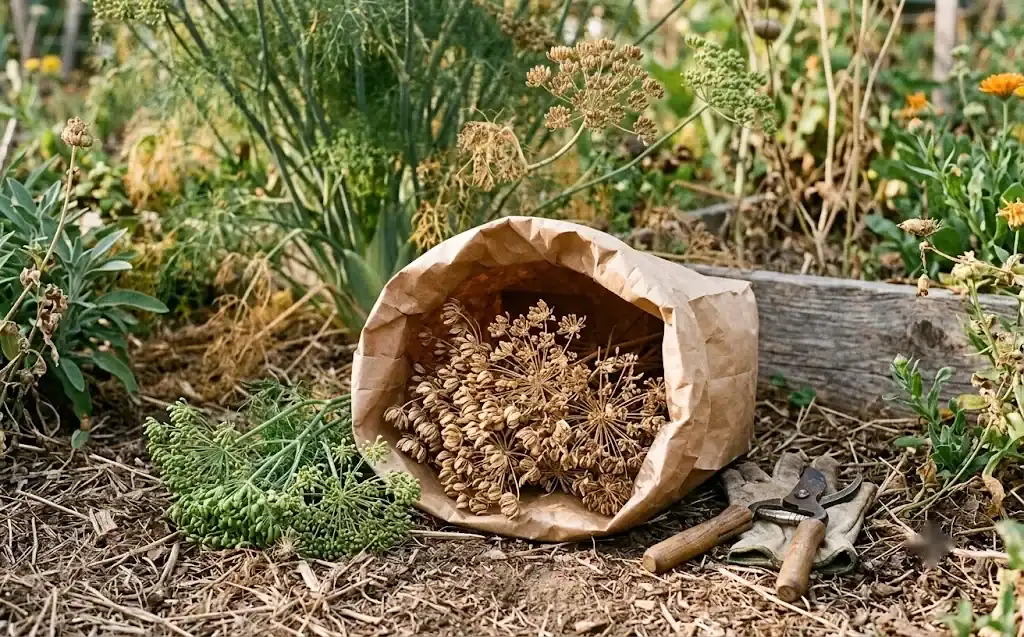
Watch the seed heads as summer ends. Green seeds are tender and bright, with a fresh anise flavor. Snip whole flower heads into a bowl or paper bag before the seeds drop. Use green seeds right away, or freeze them in a small airtight container.
For dried seeds, wait until most seed heads have turned tan to light brown. Cut the stems on a dry day and place the heads upside down inside a paper bag. Leave the bag in a warm, airy place out of direct sun until the heads are fully dry. Rub the heads between your hands to release the seeds, then separate out the larger stems and chaff.
Store completely dry seeds in a labeled airtight jar in a cool, dark cupboard. If they feel soft, let them dry longer before sealing the jar. Moisture is the usual reason stored seeds lose quality or develop mold.
What to do if fennel bolts
When a fennel plant sends up a tall flower stalk before its base has sized up, gardeners call it bolting. The base may become smaller or tougher, but the plant is still useful. Cut and use the foliage, let the fennel flower for pollinators, then pick green seeds or dried seeds. If the stalks are woody, use them to flavor stock instead of serving them raw.
For future crops, choose a variety suited to your season and keep young plants evenly watered. Heat, transplant stress, and abrupt weather changes can encourage a plant to bolt. Florence fennel is especially sensitive, so many gardeners sow it when the weather is moving toward cooler conditions.
Handle fennel right after pick
Remove damaged leaves and loose soil, but do not soak a freshly cut base. Chill it promptly and keep the base dry until you are ready to prepare fennel. Treat the leafy tops like a tender herb, while a clean, dry seed pick needs airflow until it is fully cured.
If you want to hold the pick longer, follow our guide on how to store fennel. It covers the best next steps for keeping the base, leafy tops, and seeds in good condition.
Use every edible part of fennel
Slice a raw fennel base thinly for salads, roast wedges until sweet at the edges, or stir chopped fennel into soups. Add fresh foliage near the end of cooking. Flowers and green seeds bring a softer aromatic note, while dried seeds work well in bread, sausage, pickles, and spice blends.
Once you have a basket of fresh fennel, explore more ways to cook with fennel. Harvesting fennel at the right stage gives you the ingredient you want, whether that is a crisp base for a salad or a jar of seeds for winter cooking.
Frequently asked questions
What helps fennel grow well before picking?
To grow fennel well, sow seed. Fennel growing is simplest when you sow seed into loose soil that drains well and contains organic matter or finished compost. Avoid disturbing a young seedling with unnecessary transplanting. Good air circulation, steady water, and space of about 12 inches between plants help the crop grow well. Watch for aphids or other pests on the feathery foliage, then rinse them away before they build up.
How do you prepare a fennel base for food?
Trim the stalks, peel away a tough outer layer, and chop the crisp base for a salad or vegetable tray. You can also blanch the base briefly, then use it in salads or roast it with other garden vegetables. A few fresh leaves are a useful culinary herb, especially with fish.
Can you keep fennel growing after picking?
You can keep gathering a few leafy tops from an established plant. You cannot regrow a Florence fennel base after cutting it away from the root, so leave the base in place until you are ready to pick it.
Can you eat fennel after it flowers?
Yes. The leafy tops, flowers, green seeds, and mature seeds can all be useful in the kitchen. A bolted Florence fennel base may be tough, so use the other edible parts instead.
What part of fennel do you pick?
It depends on the type and season. Pick Florence fennel for the base and foliage. Pick herb fennel for foliage, flower heads, green seeds, or dried seeds.
Can you eat raw fennel?
Yes. A fresh, firm Florence fennel base is crisp and mild enough to slice thinly for salads. Remove any tough outer layer first and save the feathery tops for garnish.
Can you pick wild fennel?
Pick wild fennel only when you can identify it with confidence, have permission to collect it, and know local rules. If there is any doubt about a wild plant, leave it alone.
