This leafy annual grows fast, asks for little, and rewards the home gardener with spicy leaves that turn plain sandwiches and pasta into something worth eating. Pick a sunny patch with rich, free-draining soil, plant seeds about 1 cm deep and 10 cm apart, keep the ground moist, and you can cut your first leaves in roughly four weeks. That is the whole job, and it fits comfortably into an organic garden because the basic rules of healthy soil and steady water do nearly all the work.

Why rocket suits an organic garden
Also known as arugula, it is a leafy annual from the brassica family. It germinates quickly, sets leaves before most pests really wake up, and bolts when it gets hot, so a steady planting schedule gives you fresh leaves from spring through autumn without a fuss. Organic growers like it because the basics of healthy soil and steady water do nearly all the work. You will not need sprays, and you will not be tempted to buy liquid fertiliser when the soil is already alive.
If you are just getting the wider garden going, the practical sequence in the beginner’s guide to growing an herb garden covers the planning, bed prep, and seasonal rhythm that this crop slots into.
Pick the right rocket variety
Two main types are sold as seed. Salad rocket, also written as Eruca sativa, has rounded, mild leaves and grows fast. Wild rocket, sometimes called arugula or Diplotaxis tenuifolia, has narrower, deeply lobed leaves, a stronger flavour, and a longer harvest window because it stays productive in heat a little longer. Both are annuals that go to seed in their first year, even though some packets describe the wild form as a short-lived perennial in mild winters.
If you want cut-and-come-again harvests, pick a slow-bolting salad variety. If you want stronger flavour and a tougher plant for a balcony pot, wild rocket is the better choice. Many gardeners plant both at once and let the season decide.
Prepare the bed without chemicals
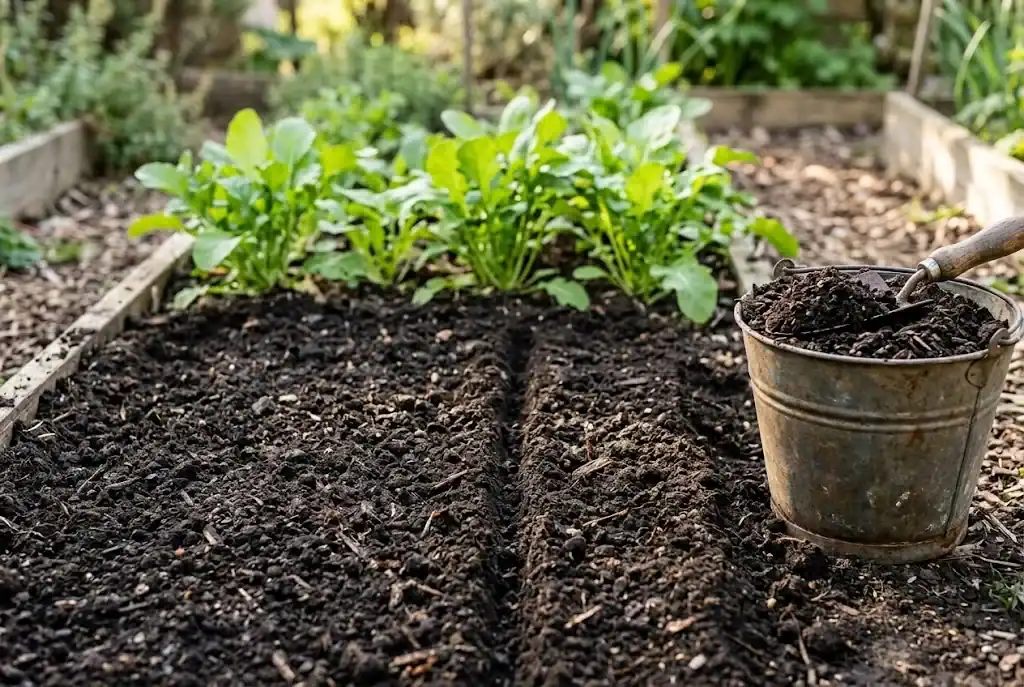
The plant has shallow roots and wants rich, well-drained soil that holds moisture without going soggy. A few weeks before planting, dig in a 5 cm layer of well-rotted homemade compost. If your soil is heavy clay, work in some coarse grit and more organic matter so the bed drains freely. Rocket prefers a pH near neutral, so a handful of garden lime is helpful in acidic beds.
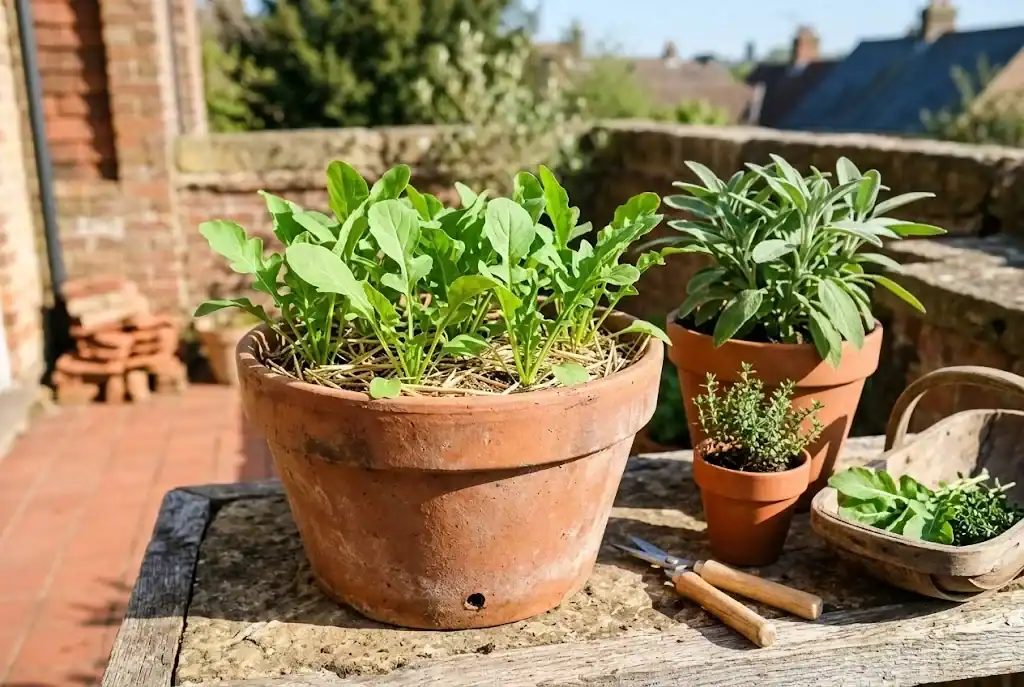
For containers, mix two parts peat-free potting soil with one part well-rotted compost, and add a little perlite or grit for drainage. Choose a pot at least 15 cm deep so the roots have somewhere to go, and check it has drainage holes. Plants in pots dry out faster than plants in the ground, so a top layer of straw or shredded leaves helps even out watering.
Sowing at the right time
Rocket prefers cooler temperatures, somewhere between 10 and 20 degrees Celsius, and bolts when summer turns hot. Plant outdoors from early spring, as soon as the soil is workable, through late summer. In mild climates you can also plant in early autumn for a cool-season crop.
Sow directly where the crop will grow. Make a shallow drill about 1 cm deep, sprinkle seeds roughly 2 to 3 cm apart, cover lightly, and water gently. Once the seedling has two true leaves, thin to 10 cm apart for salad rocket or 15 cm apart for the wild form. The thinnings are tender enough to toss into a salad.
For a continuous supply rather than one overwhelming glut, sow a short row every two or three weeks. A small seed packet covers a long season when you spread the planting like this.
Grow in pots or in the ground
Both work, and most home gardeners end up with a bit of each. In the ground, this leafy crop is a useful catch crop between slower brassicas like cabbage or kale, and it pulls double duty as a living cover while the main crop is still small. In pots, it fits on a sunny windowsill, a balcony ledge, or a fire escape, where the soil warms earlier in spring and you can move the container into part shade once summer arrives.
If you only have a small space, pick a pot at least 20 cm wide and treat it like a mini bed. Plant a pinch of seeds across the surface, thin to 8 to 10 cm apart, and harvest the outer leaves as they grow.
Water, feed, and mulch the organic way
Rocket has shallow roots, so it suffers fast in dry weather and the leaves turn bitter and tough. Water deeply once or twice a week rather than a light sprinkle every day, and aim at the soil rather than the leaves to keep foliar disease down. A 2 to 3 cm mulch of straw, grass clippings, or shredded leaves holds moisture in the bed and feeds the soil as it breaks down.
If growth slows and the leaves look pale, a single dose of diluted seaweed or compost tea is usually enough. Strong chemical fertilisers push soft leafy growth that aphids love, which is the opposite of what an organic patch wants.
Keep slugs and flea beetles off your crop
Two pests show up reliably on organic rocket. Slugs and snails make ragged holes in the leaves, and flea beetles pepper the foliage with tiny round shots. Both are manageable without sprays, especially if you stay ahead of them with a single physical barrier.
For slugs, encourage ground beetles and birds by leaving a small wild corner in the garden. Hand-pick at dusk, use beer traps at the bed edge, or lay a damp piece of wood or grapefruit skin on the soil and collect the slugs sheltering underneath in the morning. A single slug can wipe out a small seedling overnight, so check after dark in warm damp weather. A ring of crushed eggshells or coarse grit around a young bed helps until the plants are large enough to outgrow minor damage.
For flea beetles, the simplest organic defence is a fine mesh row cover, often sold as insect netting, floating over the bed from sowing through the first few weeks of growth. The beetles are most active in warm, dry weather, so steady watering also reduces their numbers. Intercropping with onions, chives, or garlic confuses them a little, which can be enough in a small garden.
Harvest leaves without killing the plant
Pick outer leaves once they are about 10 cm long and the plant has at least six true leaves. Cut or pinch individual leaves at the base, leave the central crown intact, and the plant will keep producing new growth for several weeks. This cut-and-come-again method is the backbone of a long harvesting season.
For a quick meal, you can shear the whole plant to about 5 cm and let it regrow, but constant full cuts shorten the plant’s life. A better rhythm is one or two leaves per plant, three times a week, and let a few plants run to flower for the pollinators.
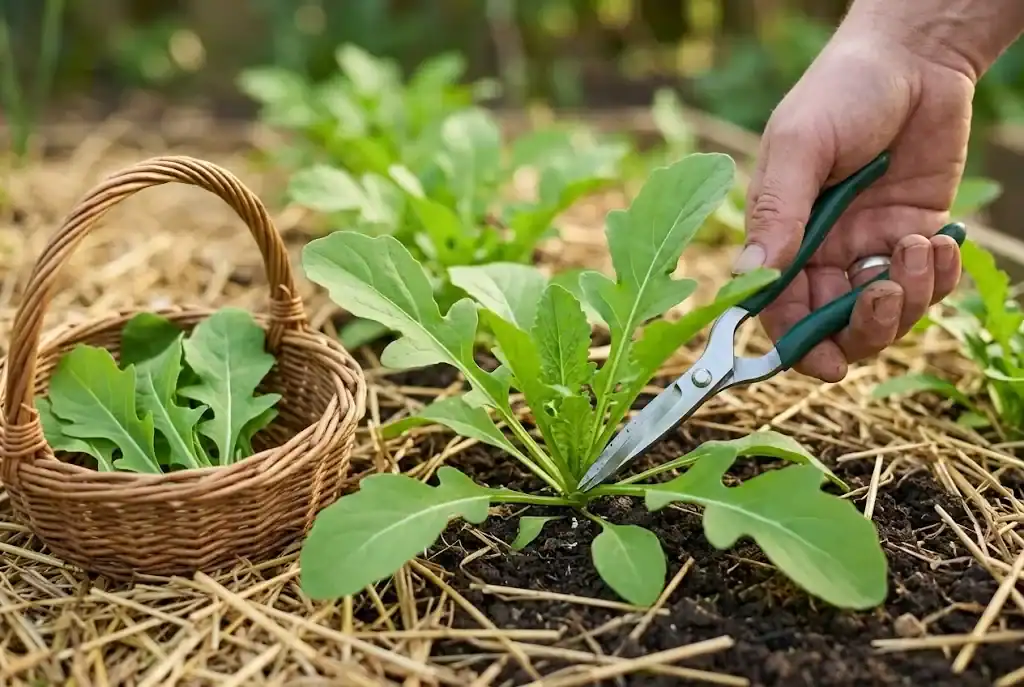
When the season shifts and the crop starts to bolt, the leaves turn sharp and a little fierce. You can still eat them briefly, but most gardeners let bolted plants finish and save seed instead. For the full timing on picking, see the simple way to harvest rocket.
Save seeds and let some plants flower
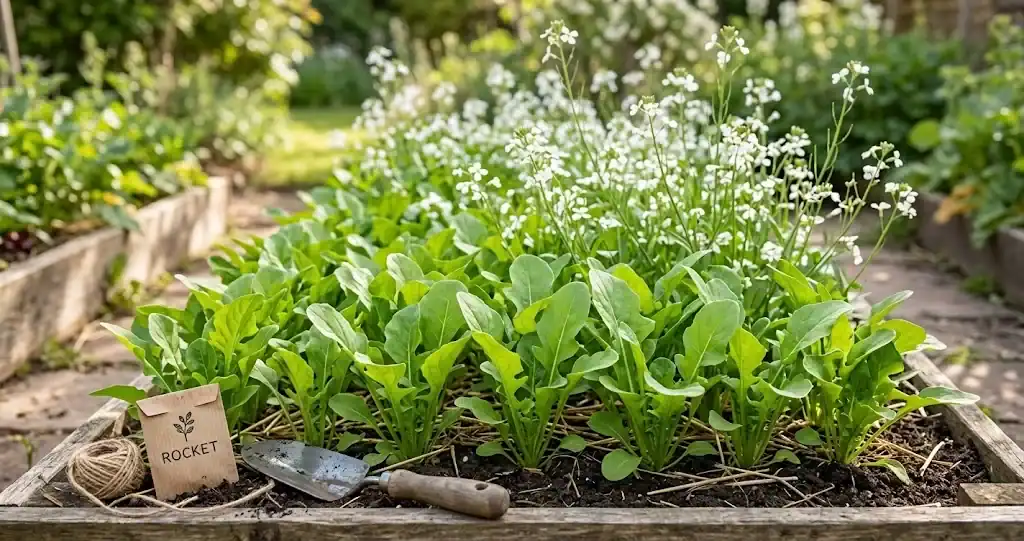
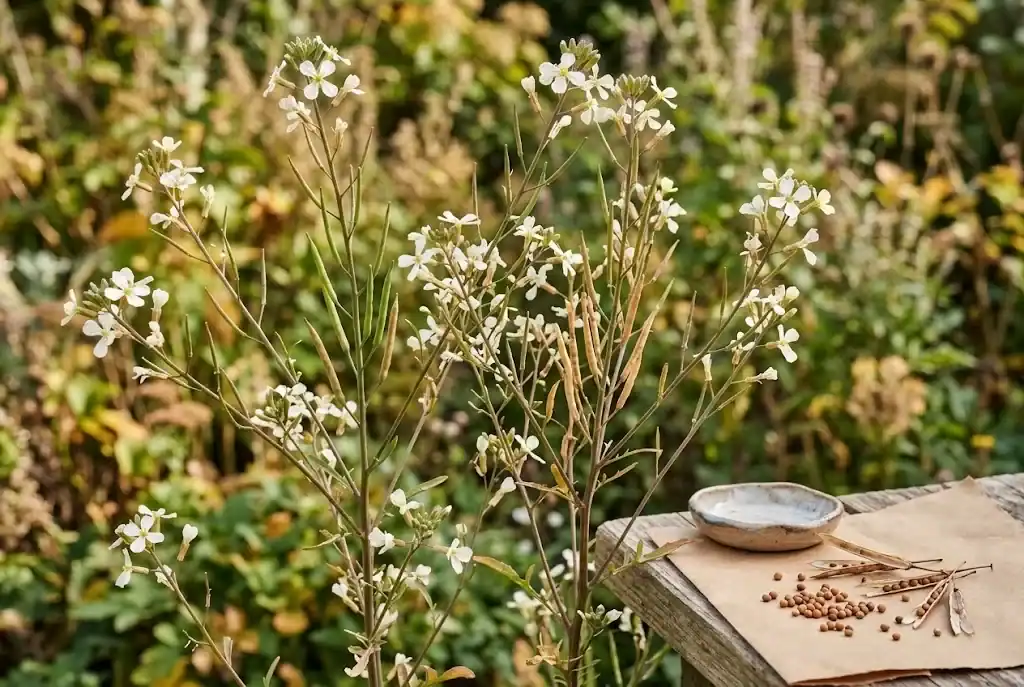
Rocket flowers are small, four-petalled, and usually white or pale yellow. Once a plant bolts, the flowers turn into slender seed pods that ripen from green to tan. Stop picking leaves on a few marked plants and let them run. Harvest the pods when they start to dry but before they split, finish drying them on a tray indoors, and thresh the small round seeds out by hand.
Stored seed stays viable for three to four years in a cool, dry, airtight container, which is more than enough for most home gardeners. Saving your own seed also lets you select the slowest-bolting plants in your patch, which makes next year’s planting a little easier.
For everything you do with rocket after it leaves the garden, the practical guide to storing rocket herbs covers washing, drying, refrigerating, and freezing so the harvest you grew is the harvest you actually eat.
Quick answers
How long does rocket take to grow?
Most varieties are ready for their first cut about four weeks after sowing, with full harvesting from week five through week eight. Wild rocket is slower to start but holds in the ground longer.
Is rocket easy to grow?
Yes. Rocket is one of the easiest salad crops for a beginner gardener. It germinates fast, needs only basic soil, and gives useful leaves within a month.
Can you grow rocket in shade?
It grows best in full sun, but it copes with three to four hours of direct light and benefits from part shade in midsummer. Too much shade slows growth and makes leaves thin and mild.
What should you not plant with rocket?
Keep rocket away from other brassicas like cabbage, kale, and broccoli when you can, because they share the same pests. Onions, chives, garlic, beans, and carrots are good neighbours.
Does rocket come back every year?
No. Rocket is an annual that finishes its life in one season. Letting a few plants self-seed usually gives you volunteer seedlings the following spring, which behaves like a perennial without actually being one.
Are rocket leaves edible after the plant flowers?
The leaves stay usable for a short while once a plant bolts, but they turn sharply peppery and the plant soon stops producing useful new growth. Most gardeners stop picking and save seed at that point.